Butt Pain During Period: Why It Happens and What Helps

Why does my butt hurt on my period?
Butt pain on your period is common and usually comes from cramps. Period pain starts in the womb and can spread to your back and thighs, and your buttocks sit between them. The chemicals behind cramps also act on the bowel and can make the back passage sore. Pain down a leg or when you poo needs a doctor's check.
Less often, butt pain during your period points to something more. Endometriosis deep in the pelvis can hurt in the back passage, and in rare cases it grows on the nerves that run through the buttock. This guide covers each cause, what is normal, what helps and when to see a doctor.
Causes of butt pain during your period
Period cramps that spread
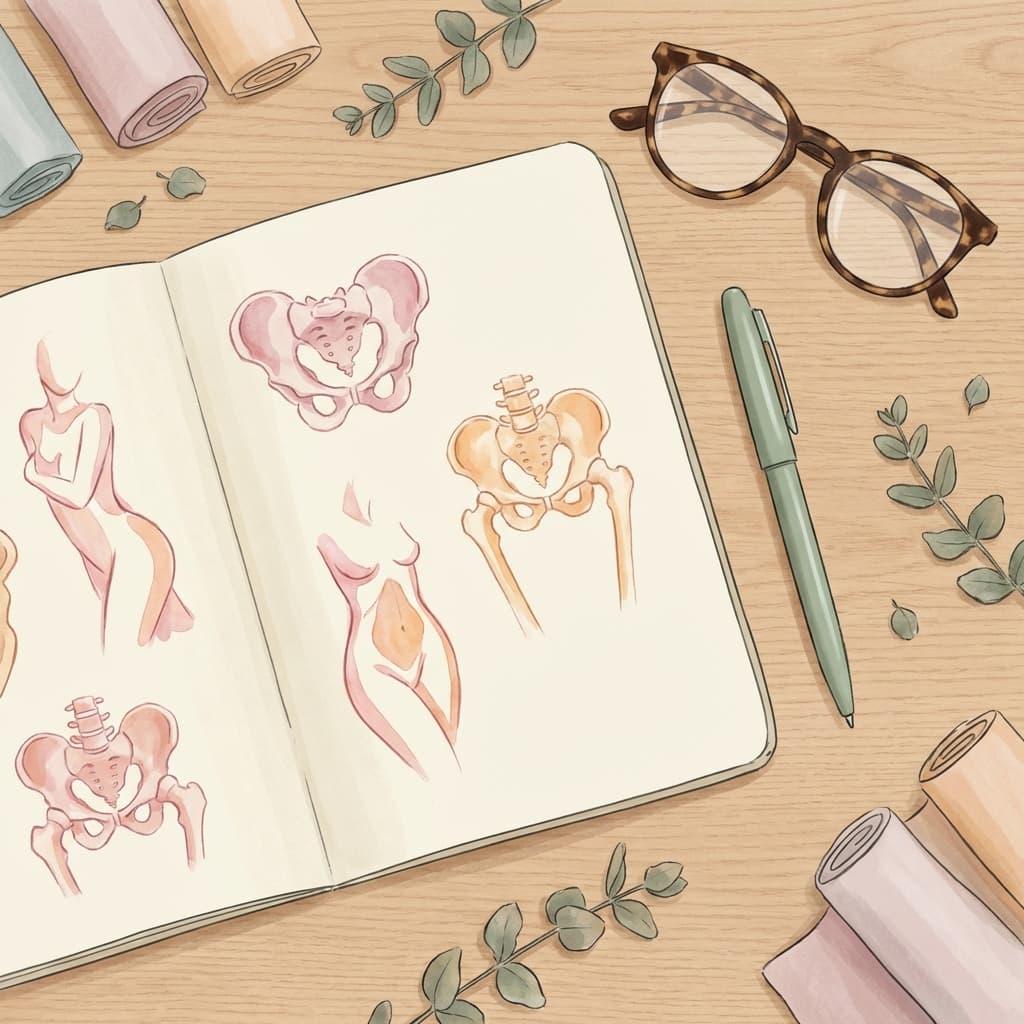
Period pain happens when your womb tightens during your period. The pain is not only felt in the tummy. It can spread to your lower back and the tops of your legs, and your buttocks sit between those two areas. This is referred pain: the pain starts in the womb, but you feel it somewhere else.
This kind of butt pain follows the pattern of your cramps. It often feels like a dull, heavy ache low in the back and buttocks.
If the ache sits mostly in your lower back, read back pain during period. If it spreads down the backs of your legs, read leg pain during period.
Prostaglandins and your bowel
The chemicals that make your womb tighten are called prostaglandins. Around your period they also relax the smooth muscles in your abdomen and pelvis, which is why many people poop more often on their period. Loose stools, urgency and cramps in the bowel can make the area around the back passage feel sore and achy.
The bowel sits right behind the womb. When both are cramping, it can be hard to tell where the pain starts. For more on this, read painful bowel movement during period.
Common types of butt pain during period
The type of pain you feel gives a clue to the cause. Note what it feels like and when it starts.
- A dull, deep ache in the buttocks and lower back that comes and goes with your cramps. It is usually referred cramp pain.
- Pain in or around the back passage, often worse when you poo. Bowel changes during your period can cause it. Endometriosis behind the womb can also cause it, and it is worth checking if it is strong or comes back every cycle.
- Sharp, burning or shooting pain that starts in the buttock and travels down the back of one leg, sometimes with tingling or numbness. This is sciatica-type pain, from a nerve. It needs a closer look, especially if it comes back with every period.
Underlying conditions that contribute to butt pain
Endometriosis and butt pain
Endometriosis is when tissue like the lining of the womb grows in other places, such as the pelvis. Its symptoms include severe period pain, pain in your lower tummy and back, pain when you poo or pee, and pain during or after sex.
Endometriosis can grow deep behind the womb, in the area between the vagina and the rectum. This is called rectovaginal or deep endometriosis. It can cause painful periods, deep pain during sex, pain when you poo and bleeding from the rectum. Because the rectum is so close, people often feel this pain in the back passage or deep in the buttocks.
A doctor can look for deep endometriosis with an internal exam, a transvaginal or transrectal ultrasound, or an MRI scan. It can take a long time to diagnose endometriosis, so keep a record of your symptoms to bring to appointments. If you have bowel symptoms as well, read bowel endometriosis symptoms and red flags.
Sciatic or pudendal nerve endometriosis
In rare cases, endometriosis grows on or near the nerves of the pelvis. The nerves most often affected include the sciatic and pudendal nerves.
- Sciatic nerve. The main sign is sciatica that comes back with each period, with pain-free gaps between periods that get shorter over time. The pain can start in the buttock and run down the back of the leg.
- Pudendal nerve. This nerve gives feeling to the area between the legs and around the anus. When endometriosis affects it, the pain is felt in the perineum as pain or burning, and is often worse when you sit.
Nerve endometriosis is often missed. MRI is the best test to find it, and early diagnosis helps prevent lasting nerve damage. Tell your doctor if your leg or buttock pain comes and goes with your cycle.
Sciatica from your back
Sciatica is also common without endometriosis. It happens when something presses on or rubs the sciatic nerve, most often a slipped disc. Its symptoms usually affect your bottom and the back of one leg, with sharp or burning pain, tingling, numbness or weakness. A period can make you more aware of this pain. The main clue is timing. Sciatica from the back does not follow your cycle.
Is butt pain during your period normal?
A mild to moderate ache that follows your cramps, eases with simple pain relief and goes away when your period ends is common. It is part of normal period pain for many people.
These signs point away from normal period pain and need a doctor:
- The pain stops you doing your usual daily activities.
- Your periods get more painful, heavier or irregular than before.
- You have pain when you poo, pain during sex or bleeding from the back passage.
- The pain shoots down your leg, or you have numbness, tingling or weakness, and it comes back with each period.
- The pain lasts after your period ends, or the pain-free days between periods get fewer.
Relief strategies for menstrual butt pain
For butt pain from period cramps, the same things that ease cramps help. These self-help steps for period pain are a good start:
- Pain relief. Ibuprofen or paracetamol from a pharmacy can help. Follow the dose on the pack, and ask a pharmacist if you are not sure a medicine is safe for you.
- Heat. Use a heat pad or a hot water bottle wrapped in a tea towel on your tummy. A warm bath or shower also helps.
- Massage. Gently massage your tummy and lower back.
- Gentle movement. Yoga, swimming, walking or cycling can ease period pain.

Rest in whatever position feels easiest. If you have endometriosis, you can also read about an anti-inflammatory diet for endometriosis.
If your butt pain comes from the bowel, nerves or endometriosis, these steps may not be enough. That is a sign to see a doctor.
When to seek medical advice
See a GP or your doctor if:
- Your periods become more painful, heavier or irregular.
- Your period pain stops you doing your usual daily activities.
- You have any of the signs listed above under "Is butt pain during your period normal?"
Get urgent medical help, for example from NHS 111 in the UK or an urgent care service, if your period pain is severe or worse than usual and painkillers have not helped.
Call 999 (or your local emergency number) or go to A&E if you have any of these signs of a serious back problem:
- Sciatica on both sides.
- Weakness or numbness in both legs that is severe or getting worse.
- Numbness around or under your genitals, or around your bottom.
- New difficulty peeing, or new loss of bladder or bowel control.
Track your butt pain across your cycle
The timing of butt pain is one of the best clues to its cause. Documenting your symptoms helps you and your doctor see the pattern. Note:
- the day of your cycle the pain starts and stops
- where you feel it: buttocks, back passage, perineum or down a leg
- what it feels like: dull, sharp, burning or shooting
- any tingling, numbness or weakness
- pain when you poo, pee or have sex
- what helps and what makes it worse
A few months of notes show if your butt pain follows your cramps and fades with your period, or if it is changing in a way your doctor should look at. Endolog is a pain and symptom diary made for this, so you can bring a clear record to your appointment.
FAQ: butt pain during your period
Can you get butt pain before your period?
Yes. Period pain can start at the start of your period, or just before it, so cramps in your buttocks just before bleeding starts fit the usual pattern. Butt pain that starts many days earlier, lasts after your period ends, or comes with pain when you poo is worth raising with a doctor. Endometriosis can cause pain when you poo, and it can take a long time to diagnose.
Why do I get a sharp, stabbing pain in my bum on my period?
Pain in or around the back passage can come from bowel cramps and loose stools, because prostaglandins also act on the bowel. Deep endometriosis behind the womb can cause pain when you poo and bleeding from the rectum. Sharp, burning or shooting pain from the buttock down one leg is nerve pain, such as sciatica. Sharp pain that comes back every period needs a doctor's check.
How do I stop cramps in my buttocks during my period?
Treat them like period cramps. Ibuprofen or paracetamol, heat on your tummy, a warm bath, massage and gentle exercise can all help. Follow the dose on the pack. See a doctor if these steps do not ease the pain, or if it shoots down your leg or hurts when you poo. The section on relief for menstrual butt pain has more detail.
Sources
- Period pain, NHS
- Frequent Bowel Movements, Cleveland Clinic
- Endometriosis, NHS
- Diagnosis, management, and long-term outcomes of rectovaginal endometriosis, International Journal of Women's Health (Moawad and Caplin, 2013)
- Pelvic nerve endometriosis: MRI features and key findings for surgical decision, Insights into Imaging (Bourg et al., 2025)
- Sciatica, NHS
This article is general information, not medical advice. Read how we write and check our articles in our editorial policy.
Explore this topic
Related articles

January 31, 2026
Endo Belly: Causes, Symptoms, and What Helps
What endo belly is, why endometriosis causes severe bloating, what to track, and the dietary, lifestyle, and medical options that actually help.

January 5, 2026
Vaginal Pain During Period: Causes and When to See a Doctor
Vaginal pain during your period is often cramp pain that spreads down. Endometriosis, vulvodynia or infection can also cause it. Know when to see a doctor.
January 3, 2026
Sudden Stabbing Pelvic Pain: How It Feels and When It Repeats
Sudden stabbing pelvic pain, including sharp pain during your period that does not feel like cramps: common causes, what to track, and when to get help.
December 22, 2025
Heavy Feeling in the Pelvis: Causes and When to Worry
A heavy feeling in the lower abdomen or pelvis often comes with a period, but adenomyosis, fibroids, cysts or a prolapse can cause it. Learn when to get help.
December 21, 2025
20 Symptoms of Endometriosis and What the Pain Feels Like
20 symptoms of endometriosis, from painful periods to bladder and bowel pain. Learn what the pain feels like and how to describe it clearly to a doctor.
October 7, 2026
Tranexamic Acid for Heavy Periods: Uses and Side Effects
Tranexamic acid for heavy periods: how this non-hormonal tablet cuts blood loss, when to take it, side effects, who should avoid it and what to track.
