Published on December 19, 2025 | Last updated on December 31, 2025

Laparoscopy for Endometriosis: Your Complete Preparation and Recovery Guide

Laparoscopy for Endometriosis: Your Complete Preparation and Recovery Guide
Endolog Content Team
Stop the medical gaslighting - Pain & symptoms diary app for endometriosis, adenomyosis, PCOS.

When your doctor says "we need to do a laparoscopy," the flood of questions starts immediately. What will they find? How bad will the recovery be? Will this actually help? And perhaps most pressingly: how do I prepare for surgery when I'm already exhausted from years of chronic pain?

Laparoscopic surgery for endometriosis is currently the gold standard for both diagnosis and treatment, with studies showing 84.1% diagnostic accuracy. For many patients, it represents hope after years of dismissal and the chance to finally see what's causing the pain. But it's also surgery, which means real risks, real recovery, and a need for real information beyond the generic pamphlet your doctor's office hands you.

This guide covers everything from the week before surgery through the months after, with the kind of specific, practical details that matter when you're actually living through it. We've drawn from medical research, patient experiences, and the reality that recovery doesn't follow a neat timeline printed on a discharge sheet.

Understanding what laparoscopy actually means

Laparoscopy involves making small incisions (typically 2-4 cuts, each about 0.5-1cm) in your abdomen to insert a camera and surgical instruments. For endometriosis, the goal is usually diagnostic (confirming and staging the disease) or therapeutic (removing lesions, adhesions, cysts, or affected tissue).

The specific procedure varies dramatically based on what the surgeon finds and their approach:

Diagnostic laparoscopy means the surgeon looks around, takes photos or biopsies, and closes you up. Recovery is typically shorter, though you still had abdominal surgery and anesthesia.

Excision surgery involves cutting out endometrial lesions and scar tissue. Skilled excision surgeons can remove disease from bowel, bladder, diaphragm, and other locations. This is more extensive than ablation (burning lesions) and has better long-term outcomes, with studies showing 67% of patients achieve at least 75% symptom reduction.

Additional procedures might include removing endometriomas (chocolate cysts), separating adhesions, removing sections of affected bowel, or addressing uterine issues like fibroids. Some patients have bowel resections, appendectomies, or other procedures performed simultaneously.

Understanding what type of surgery you're having matters for preparation and recovery expectations. A diagnostic lap might have you back to light activity in a week. A complex excision with bowel work might require 6-8 weeks of modified activity.

The week before surgery: practical preparation steps

Your pre-op appointment matters more than you think

This appointment is your chance to get specific answers. Don't let anyone rush you through it. Bring written questions because pain, anxiety, and medical jargon make it easy to forget what you wanted to ask.

Critical questions to actually ask:

  • What exactly are you planning to do once you're inside? (Get specifics: excision vs ablation, what organs they'll check, whether they'll address adhesions)
  • What's your experience level with endometriosis excision? (You want a surgeon who does this regularly, not occasionally)
  • Will you remove disease or just diagnose? (Some surgeons do diagnostic laps first, requiring a second surgery for treatment)
  • What happens if you find bowel involvement? (Will they handle it or refer you to a colorectal surgeon?)
  • What type of anesthesia will I have? (General is standard, but specifics matter for recovery)
  • How many incisions and where? (Usually 2-4: belly button, lower abdomen, sometimes one near your pubic bone)

Write down the answers. You'll want to reference them later, and the information matters for insurance, recovery planning, and managing expectations.

The bowel prep situation

If there's any possibility of bowel involvement, many surgeons require bowel prep. This is the colonoscopy-style cleanout that patient forums describe with phrases like "the prep was worse than surgery."

Bowel prep typically happens the day before surgery and involves:

Clear liquid diet starting 24 hours before surgery. This means broth, clear juice, jello, popsicles, sports drinks. No solid food, no dairy, nothing red or purple colored (it looks like blood in your system).

Laxative protocol usually with products like MiraLAX, magnesium citrate, or prescription preparations. You'll spend significant time in the bathroom. This is not subtle. Plan to stay home, stay near a bathroom, and have entertainment ready.

Practical survival tips from those who've done it:

  • Start hydrating heavily 48 hours before prep day (electrolytes help)
  • Get flushable wipes and diaper cream (toilet paper alone won't cut it)
  • Set up a comfortable bathroom station with your phone charger, reading material, and something to make the time pass
  • Keep sipping the prep mixture cold (warm is harder to get down)
  • Use a straw to bypass some taste buds
  • Have multiple clear liquids available so you can switch if one becomes unbearable

Some surgeons don't require bowel prep unless they're specifically planning bowel work. Ask directly rather than assuming.

Medication management

Your surgeon's office should give you specific instructions about which medications to continue and which to stop. The standard guidance usually includes:

Stop before surgery (timing varies, ask your doctor):

  • Aspirin and NSAIDs like ibuprofen (usually 7-10 days before, they increase bleeding risk)
  • Blood thinners (timing depends on the specific medication)
  • Some supplements, especially those affecting clotting: fish oil, vitamin E, ginkgo, garlic supplements

Continue taking:

  • Most prescription medications for chronic conditions
  • Birth control (unless specifically told otherwise)
  • Thyroid medication
  • Psychiatric medications (stopping suddenly can be dangerous)

Special considerations: If you take continuous birth control to suppress endo symptoms, discuss whether to continue through surgery. Some surgeons want you to stop hormones before surgery, others recommend continuing to reduce post-op flare risk.

What to actually pack for the hospital

Most laparoscopies are outpatient or 23-hour observation stays unless complications arise or extensive work is done. Pack light but pack smart.

Essential items:

  • Loose, high-waisted pants or a dress (anything touching your incisions will be uncomfortable)
  • Slip-on shoes (bending to tie shoes will hurt)
  • Phone charger with long cord
  • Chapstick (intubation dries out your mouth)
  • Small pillow for the car ride home (holding it against your abdomen helps with movement and seatbelt pressure)
  • List of current medications and allergies
  • Insurance cards and ID
  • Someone to drive you home and stay with you for 24 hours

Helpful but not essential:

  • Your own pillow in a distinctive case (hospital pillows are terrible)
  • Comfortable underwear (they'll give you disposable mesh ones, but some people prefer their own)
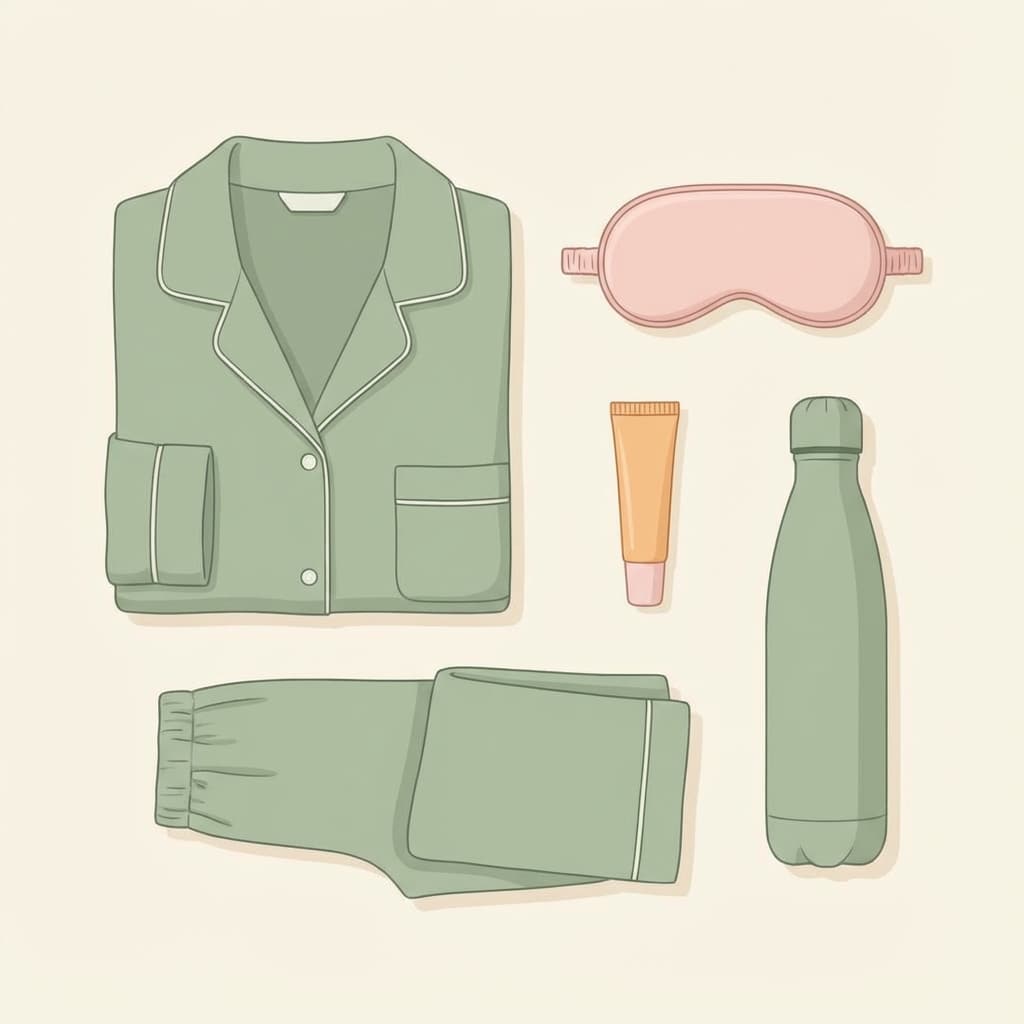
  • Eye mask and ear plugs if staying overnight
  • Pads (you'll likely have some bleeding)

Leave at home:

  • Jewelry, including wedding rings (they make you remove it anyway)
  • Contacts (wear glasses, your eyes will be dry after anesthesia)
  • Anything valuable
Hospital Packing Essentials

Home recovery station setup

Set this up before surgery while you still have energy. Your future self will thank you.

Bedroom setup:

  • Extra pillows for positioning (you'll want options for sleeping semi-elevated)
  • Nightstand organization: water bottle, medications, phone charger, tissues, chapstick, light snacks
  • Heating pad within reach
  • Clean, loose pajamas ready

Bathroom preparation:

  • Stool softeners and MiraLAX (constipation after surgery is real and painful)
  • Pads for bleeding
  • Dry shampoo (showering is limited at first)
  • Face wipes for easy freshening up
  • Step stool if you have a high toilet (standing up from sitting will be difficult)

Kitchen/living area:

  • Easy meals prepped or ready: broth, crackers, applesauce, bland foods your stomach can handle
  • Ginger tea or ginger ale for nausea
  • Straws (makes drinking while lying down easier)
  • Entertainment downloaded (you'll be awake but not productive)

Ice packs and heating pads ready for rotation. Some people prefer cold for incisions, heat for gas pain and cramping.

Home Recovery Station

Surgery day: what actually happens

Arrive at the scheduled time, usually very early morning for first-case surgery. You'll be nervous. This is completely normal, even if you're simultaneously relieved to finally be having the procedure.

Pre-op process

Check-in and changing: You'll change into a hospital gown, get an IV placed, and answer the same medical history questions you've answered five times already. Everyone will verify your identity and what procedure you're having (annoying but important for safety).

Meeting the team: You'll meet various staff members: pre-op nurse, anesthesiologist, surgical nurse, possibly the surgeon again. Each will ask questions. The anesthesiologist will discuss your anesthesia plan and ask about previous experiences with anesthesia, allergies, and concerns about nausea.

The waiting: This is often the hardest part. You're sitting in a pre-op bay, IV in, waiting for your turn. Some hospitals let a support person stay with you until they wheel you to the OR. Bring something to distract yourself or someone to talk with.

What you'll remember (and what you won't)

Going to the OR: You'll either walk to the operating room or be wheeled there. The OR is cold and bright, with lots of equipment. Staff will help position you on the table, put monitors on you, and start oxygen through a mask.

Anesthesia: The anesthesiologist will say something like "I'm giving you something to relax now." Within seconds, you'll feel warm, heavy, and then nothing. There's no counting backward, no gradual drift. It's like someone turned off a switch.

Lost time: From your perspective, no time passes. They could tell you surgery took 30 minutes or 4 hours, and you'd have no internal sense of which was true.

Waking up: You'll wake in the recovery room, probably feeling confused and groggy. Your throat will hurt from the breathing tube. You might feel cold, nauseous, or in pain. Tell the nurses about pain or nausea immediately. They have medications for both and can't help if you try to tough it out.

The immediate post-op period

Pain: You'll have several types of pain that feel different from each other. Incision pain at the cut sites (sharp, localized). Deep internal pain where they worked (aching, pressure). Gas pain in your shoulders and upper chest (this one surprises people most).

The shoulder pain happens because during laparoscopy, surgeons inflate your abdomen with carbon dioxide gas to create space to work. Some gas remains after surgery and rises to irritate your diaphragm. The phrenic nerve, which serves your diaphragm, sends referred pain signals to your shoulder tips. This can actually hurt worse than the incision sites and peaks around day 2-3.

Nausea: Anesthesia, pain medications, and having your insides moved around all contribute. Anti-nausea medication helps. Some people find that eating small amounts of bland food actually helps more than fasting.

Grogginess: You'll be foggy for hours after waking. Don't make important decisions, sign documents, or have serious conversations during this time. You might say things you don't remember later.

Emotional responses: Some people wake up crying, anxious, or emotionally fragile. This is a known response to anesthesia and the stress of surgery. It passes. Others feel relief, especially if the surgeon reports finding and removing significant disease.

Discharge criteria

Before you can leave, you must:

  • Urinate on your own (sometimes harder than expected)
  • Keep down fluids without vomiting
  • Have pain controlled with oral medication
  • Be able to walk without dizziness or falling
  • Have stable vital signs
  • Have someone to drive you home and stay with you

If you're staying overnight, the same criteria apply for discharge the next day.

The first 48 hours: managing immediate recovery at home

Movement and positioning

Getting up and down is the hardest part initially. Use your arms to push yourself up, not your abdominal muscles. Roll to your side first, then use your arms to push to sitting, then stand. Reverse the process to lie down.

Walking helps move gas through your system and prevents blood clots. Start with short walks around your home, gradually increasing distance. Walk hunched over if that feels better. Everyone looks like this initially, and it's fine.

Sleeping position: Most people sleep semi-reclined (pillows behind back) or on their side with a pillow between their knees for the first few nights. Lying flat can hurt. Experiment to find what works for your body.

Getting dressed: High-waisted, loose elastic pants or dresses. Sports bras or no bra (underwire near incisions hurts). Slip-on shoes only.

The gas pain problem

That shoulder and upper chest pain from trapped gas often hurts worse than surgical pain. Walking helps move gas through your system. Some strategies that patients report help:

  • Frequent short walks, even just around your home
  • Heating pad on shoulders and chest
  • Drinking warm liquids (peppermint or ginger tea)
  • Moving through gentle stretches or yoga poses (within your restrictions)
  • Lying with hips elevated on pillows
  • Gas-X or simethicone (ask your doctor, but it's usually approved)

The gas pain typically peaks day 2-3 and improves significantly by day 5-7. If it's getting worse instead of better, call your surgeon.

Eating and bowel function

Your digestive system is annoyed. Between the anesthesia, pain medications, not eating normally, and having instruments near your bowel, constipation is almost guaranteed and can be extremely painful.

Start prevention immediately:

  • Take stool softeners (docusate/Colace) starting day one
  • Drink plenty of fluids
  • Eat when you're hungry, focusing on easy-to-digest foods
  • MiraLAX daily if you haven't had a bowel movement by day 2-3
  • Walk to stimulate gut motility

First bowel movement anxiety: Many people worry that having a bowel movement will hurt their incisions or internal healing. It won't. Straining will hurt, which is why stool softeners matter, but normal bowel movements won't damage anything.

When to eat: Start with small amounts of bland food when you feel ready. Some people are hungry right away. Others need 24 hours before food sounds appealing. Listen to your body, but make sure you're drinking fluids regardless.

Incision care

Your incisions will be closed with either stitches, staples, surgical glue, or steri-strips (paper tape). Your discharge papers will specify care instructions, but generally:

Keep them clean and dry for the first 48 hours. After that, gentle showering is usually fine (no baths, pools, or hot tubs until cleared by your doctor, typically 2 weeks).

Watch for infection signs:

  • Increasing redness spreading beyond the incision line
  • Warmth to touch
  • Pus or drainage that smells bad
  • Fever over 101°F
  • Red streaks spreading from the incision

Some clear or slightly bloody drainage is normal in the first few days. Pat dry gently after showering.

Bruising around incisions is normal, especially if you bruise easily. The biggest incision is usually at your belly button and might look pretty rough initially.

Pain management

You'll likely be prescribed opioid pain medication (oxycodone, hydrocodone, or similar) for the first few days. These medications:

  • Work well for pain but cause constipation (hence the stool softeners)
  • Make you drowsy and foggy (don't drive or make decisions)
  • Should be tapered down as pain improves, usually by day 3-5
  • Can cause nausea (taking with food helps)

Alternative pain strategies:

  • Ice packs on incision sites (20 minutes on, 20 minutes off)
  • Heating pad for internal cramping and gas pain
  • Tylenol as your surgeon allows (usually OK, but ask about timing)
  • NSAIDs only when cleared by surgeon (usually after 1-2 weeks, since they can increase bleeding)

Knowing what pain is normal: Surgical pain should steadily improve day by day. If pain is:

  • Getting worse instead of better after day 3
  • Localized to one area and increasingly sharp
  • Accompanied by fever, severe nausea, or vomiting
  • Different in character from general post-op discomfort

Call your surgeon. These can indicate complications like infection, bleeding, or damage to bowel that wasn't apparent initially.

What "normal" recovery bleeding looks like

Vaginal bleeding after laparoscopy is common and expected. The uterus and surrounding tissue were disturbed during surgery, triggering menstrual-like bleeding. This is usually:

  • Light to moderate (lighter than a normal period for most)
  • Red to brown in color
  • Lasting 3-14 days
  • Gradually decreasing

When bleeding is concerning:

  • Soaking through a pad per hour for multiple hours
  • Large clots (golf ball size or bigger)
  • Bleeding that stops then restarts heavily
  • Foul-smelling discharge

Some surgeons prescribe continuous birth control starting right after surgery to prevent a period during healing. Ask about this strategy if you're concerned about managing both recovery and menstruation.

Week one through week four: gradual return to activities

The reality of recovery timelines

Generic advice says "2 weeks off work, 6 weeks no lifting." Reality is messier. Recovery varies based on:

  • What was actually done during surgery (diagnostic lap vs extensive excision)
  • Your body's healing speed
  • Your job type (desk work vs physical labor)
  • Whether complications arise
  • Your pre-surgery health status

Realistic benchmarks for uncomplicated recovery:

  • Days 1-3: Mostly resting, short walks, managing pain and gas
  • Days 4-7: Increasing activity, might feel almost normal then crash
  • Week 2: Many people feel significantly better, but tire easily
  • Week 3-4: Returning to more normal activity but not full capacity
  • Week 6: Most restrictions lifted

These are averages. Some people bounce back faster. Others need more time. Neither is wrong.

The week two deception

Many patients report feeling great around day 10-14, trying to do too much, then crashing hard. Your outsides heal faster than your insides. Those small incisions close within days, creating the illusion of complete healing. But internal tissues need weeks to heal properly.

Prevent the crash:

  • Increase activity gradually, not all at once
  • When you feel good, don't immediately test your limits
  • Rest before you're exhausted, not after
  • Listen when your body says stop

Warning signs you're doing too much:

  • Increasing pain after improvement
  • Exhaustion that sleep doesn't fix
  • Incision sites that were healing becoming sore again
  • Feeling emotionally fragile or weepy (can indicate physical overdoing)

Returning to specific activities

Driving: Usually OK after 1-2 weeks if you're off opioid pain medication and can perform an emergency stop without hesitation. Test this in a parking lot before driving on roads.

Work: Highly variable based on job demands. Desk work might be possible at 1-2 weeks with modifications (working from home, shorter days initially). Physical jobs or those requiring lifting typically need 4-6 weeks.

Sex: Usually cleared at 2 weeks if you feel ready, though many people need longer. Start gently. Use positions that don't put pressure on your abdomen. You might discover sex feels different after surgery, either better (if adhesions or lesions were causing pain) or temporarily more sensitive.

Exercise: Walking is encouraged from day one. More intense exercise follows a progression:

  • Week 2-3: Gentle stretching, slow walking
  • Week 3-4: Light yoga, longer walks, stationary bike
  • Week 4-6: Gradually increasing intensity, but still no heavy lifting
  • Week 6+: Usually cleared to return to full activity

Always get specific clearance from your surgeon before resuming intense exercise, running, or lifting over 10-15 pounds.

Lifting restrictions usually last 4-6 weeks. This includes:

  • Laundry baskets
  • Grocery bags
  • Children
  • Vacuum cleaners
  • Heavy purses

People consistently underestimate how much they lift daily until they can't.

Tracking your recovery

This is where systematic tracking helps enormously. You'll have a follow-up appointment 2-6 weeks after surgery, and your surgeon will ask how you're doing. "Fine, I guess?" doesn't help them understand your recovery.

Track daily or every few days:

  • Pain levels (overall and by location: incisions, internal, gas pain)
  • Activity level (what you were able to do, how you felt after)
  • Bowel movements (constipation is serious business post-op)
  • Bleeding (amount, color, any concerns)
  • Energy levels (rate your fatigue)
  • Emotional state (surgery affects mood)
  • Any new symptoms or concerns

Use Endolog to document this recovery period. You can note specific symptoms, pain locations using body mapping, and any patterns you notice. This creates a clear record for your follow-up appointment and helps you identify actual improvement versus just getting used to discomfort.

Tracking Recovery Progress

When recovery isn't straightforward

Persistent pain: Some pain lasting a few weeks is normal as everything heals. Pain that doesn't improve or worsens can indicate:

  • Infection (watch for fever, increasing incision redness)
  • Internal bleeding or hematoma
  • Undiagnosed adhesions forming
  • Bowel injury that wasn't caught during surgery (rare but serious)

Unusual symptoms requiring immediate attention:

  • Fever over 101°F that persists or worsens
  • Severe abdominal pain that's different from post-op discomfort
  • Vomiting that prevents keeping down fluids
  • Inability to urinate or severe pain with urination
  • Chest pain or difficulty breathing
  • Severe leg pain or swelling (blood clot warning)
  • Incision that opens, drains pus, or shows spreading redness

Don't tough it out or wait to see if it improves. Call your surgeon's office immediately. After hours, use their answering service or go to the ER.

The emotional and mental side of recovery

Surgery is physically demanding. It's also emotionally complex, especially when you've fought for years to be taken seriously and finally have a procedure that might help.

Processing what they found

Your surgeon will tell you what they found, often while you're still groggy from anesthesia. Ask them to explain again at your follow-up, and request operative photos if available (many surgeons take them). Common emotional responses:

Relief if they found significant disease: "See, I wasn't making it up. There was something wrong." This validation matters after years of dismissal.

Frustration if they found minimal visible disease: Some people have severe symptoms with minimal visible endo. This doesn't mean your pain isn't real. Adenomyosis, central sensitization, pelvic floor dysfunction, and other factors can cause significant pain even with "mild" endo.

Anxiety about recurrence: Endometriosis can grow back. Excision has better long-term outcomes than ablation, with up to 70% five-year disease-free rates, but it's not a cure. This reality is hard to sit with after undergoing surgery.

Grief about diagnosis: Even if you suspected endo, having it confirmed means accepting a chronic condition. This is a loss of the healthy future you imagined.

Dealing with unhelpful responses

People in your life might say things that hurt, usually trying to be helpful but missing the mark:

"At least they found something!" (Minimizing that you still have a chronic condition) "Now you can just have it removed and be done!" (Not understanding endo can recur) "My friend had endo and got pregnant right after surgery!" (Unwanted fertility pressure) "I'm sure you'll feel so much better now!" (Creating pressure to be immediately improved)

You don't owe anyone detailed explanations of your surgery or recovery. "I'm healing" or "It's a process" are complete answers.

When improvement takes time or doesn't come

Not everyone feels dramatically better after laparoscopy. Pain improvement can take 3-6 months as inflammation settles. Some people need multiple surgeries. Others discover their pain has multiple causes beyond endo alone.

This doesn't mean surgery was pointless or that you made the wrong choice. It means endo is complicated and your body is unique. If you're not improving as expected:

  • Give it time (6 months is reasonable for assessing surgical outcomes)
  • Track symptoms systematically to identify patterns
  • Work with your care team on other contributing factors
  • Consider pelvic floor physical therapy (many endo patients have pelvic floor dysfunction)
  • Address any mental health impacts (chronic pain and mood are connected)

Looking ahead: life after the acute recovery phase

Your follow-up appointment

This usually happens 2-6 weeks after surgery. Your surgeon will examine your incisions, discuss pathology results, review what they found and did during surgery, and make recommendations going forward.

Bring to this appointment:

  • Your symptom tracking data showing how recovery has gone
  • Written questions (you'll forget to ask things otherwise)
  • Any concerns about your recovery
  • Someone to help remember what's discussed

Questions to ask:

  • What exactly did you find and remove? (Get specifics)
  • What was the stage/severity of disease?
  • Did pathology confirm endometriosis? (Not all lesions test positive)
  • What's my recurrence risk?
  • What do you recommend for ongoing management?
  • When can I resume all normal activities?
  • What symptoms should I watch for?
  • When should I follow up again?

Ongoing management strategies

Laparoscopy is part of endo management, not a cure. Most patients need ongoing treatment to manage symptoms and potentially reduce recurrence risk.

Hormonal suppression: Many doctors recommend continuous birth control or other hormonal therapy after surgery to reduce the chance of endo growing back. This is a personal decision weighing symptom control against side effects.

Pain management: You might still have pain, though hopefully less. Ongoing strategies might include pelvic floor physical therapy, pain psychology approaches, supplements, dietary modifications, or medications.

Monitoring symptoms: Continue tracking symptoms to identify if and when they return. Catching recurrence early means potentially less extensive surgery if you need a second procedure.

Addressing other factors: Many endo patients have coexisting conditions like adenomyosis, PCOS, pelvic floor dysfunction, IBS, or interstitial cystitis. Managing the whole picture matters.

The long-term reality

Studies show that with complete excision by a skilled surgeon, 67% of patients report at least 75% symptom reduction, and over 50% report at least 90% pain improvement. These are encouraging statistics, but they also mean some people don't get dramatic relief.

Long-term outcomes are better with:

  • Complete excision (not ablation)
  • Experienced excision surgeon
  • Addressing all visible disease
  • Ongoing management plan
  • Multidisciplinary care approach

Even with optimal treatment, endometriosis is a chronic condition. Having surgery doesn't mean your endo journey ends. It means you have more tools and information to manage it.

You're not alone in this

Laparoscopy is common, but it's still surgery on your body, interrupting your life, requiring recovery time you might not have, and carrying uncertainty about outcomes. It's OK to feel anxious about it. It's OK if recovery is harder than you expected. It's OK to need more time than the generic timeline suggests.

Thousands of people go through this surgery every year. The experiences vary, but the uncertainty, the hope, the fear, and the relief are universal. Connect with support communities, whether online or in person. Hearing from others who've been through it helps you feel less alone and gives you practical tips that medical handouts miss.

Track your recovery journey so you can look back and see how far you've come. Some days, week three feels exactly like week one. Having data showing actual improvement helps fight that perception. It also provides valuable information for your care team and helps you advocate for yourself if recovery isn't progressing as expected.

The goal isn't just surviving surgery. It's using this opportunity to reduce your pain, improve your quality of life, and move forward with better information about what's happening in your body. That's worth the temporary discomfort of recovery, even when recovery is harder than you hoped it would be.


Track your pre-op symptoms, surgery details, and recovery progress in Endolog. Having a complete timeline of your surgical journey helps you communicate effectively with your care team and recognize patterns in your healing. Download Endolog to document your experience and build evidence of your recovery.

Stop the medical gaslighting

Endolog is launching soon! Be one of the first to explore comprehensive symptom tracking for endometriosis, adenomyosis, and PCOS. Monitor pain levels, log symptoms, and generate printable PDFs to bring to your next doctor’s appointment—helping you stay prepared and informed.