No Appetite on Your Period? Why It Happens and What Helps
Why am I not hungry on my period?
Many people are not hungry on their period because hunger drops once the premenstrual phase ends: food intake tends to be highest in the days before a period. Cramps, nausea, and bloating in the first days of a period can also make food feel unappealing, since severe period pain can come with nausea and vomiting.
Losing your appetite is normal for many people. Appetite changes are a common part of the menstrual cycle, and "changes in appetite or food cravings" are among the usual symptoms of premenstrual syndrome.
A short dip in appetite that comes back as your period ends is usually nothing to worry about. See a doctor if you cannot keep food or fluids down, if you are losing weight without trying, or if the appetite loss comes with severe pain or heavy bleeding.
Why your appetite drops during your period
Your appetite changes through the cycle
Hormones affect how hungry you feel. Food intake tends to be highest in the days before a period (the luteal phase) and lowest around ovulation. So when your period starts and that premenstrual hunger fades, it can feel like your appetite has disappeared.
Cramps and nausea
Period pain comes from chemicals called prostaglandins, which are made in the lining of the womb and make its muscles contract. Levels are highest on the first day of a period and fall as bleeding continues. Severe period pain can come with nausea, vomiting, diarrhea, headache, and dizziness. It is hard to feel hungry when your stomach is unsettled or your belly hurts, and this is often the main reason people stop eating on the heaviest days. Our guide to nausea during your period explains what eases it.
Bloating and bowel changes
Bloating and cramping are also common before and during a period. A full, swollen feeling in your belly can make even small meals feel like too much.
Mood and tiredness
Low mood, anxiety, tiredness, and poor sleep are common PMS symptoms. Any of these can change how much you want to eat.
When appetite loss can point to something else
Appetite loss on its own is rarely a sign of a condition. It is worth a closer look when it comes with other symptoms.
Endometriosis and adenomyosis. Severe period pain, pain during sex, pain when you poo or pee, bloating, nausea, and extreme tiredness are common symptoms of endometriosis. Bloating and nausea are among its main symptoms. Adenomyosis, where womb-lining tissue grows into the muscle wall of the womb, can cause heavy, painful periods. If your appetite loss comes with pain that stops you from doing your usual activities, see a doctor. The endometriosis symptom quiz can help you put your symptoms in one place before your appointment.
Severe PMS or PMDD. Premenstrual dysphoric disorder (PMDD) is a more severe form of PMS. Its symptoms are much more intense and can include feeling very anxious, angry, or depressed. If your mood changes are this strong, a GP can help. If you have thoughts of harming yourself, call emergency services.
Pregnancy. Nausea and loss of appetite can be early signs of pregnancy. If your "period" is lighter or shorter than usual, or late, and pregnancy is possible, take a test.
Other causes. Appetite loss that lasts beyond your period, or that comes with weight loss you cannot explain, is not a period symptom. See a GP if you keep losing weight without changing your diet or exercise.
When to see a doctor
See a doctor if:
- You cannot keep food or fluids down for more than a day
- You are losing weight without trying
- Your appetite does not come back after your period ends
- Your period pain is severe, getting worse, or stops you from doing your usual activities
- Your periods have become heavier, or you bleed between periods
- Your appetite changes are new and very different from your usual pattern
Get urgent help if you have severe pain that painkillers do not help, pain with a fever, signs of dehydration such as dizziness and very dark urine, or heavy bleeding with dizziness or fainting.
How to eat enough when you are not hungry
These tips are general. If you have a medical condition that affects what you eat, follow your doctor's advice.
Eat small amounts often
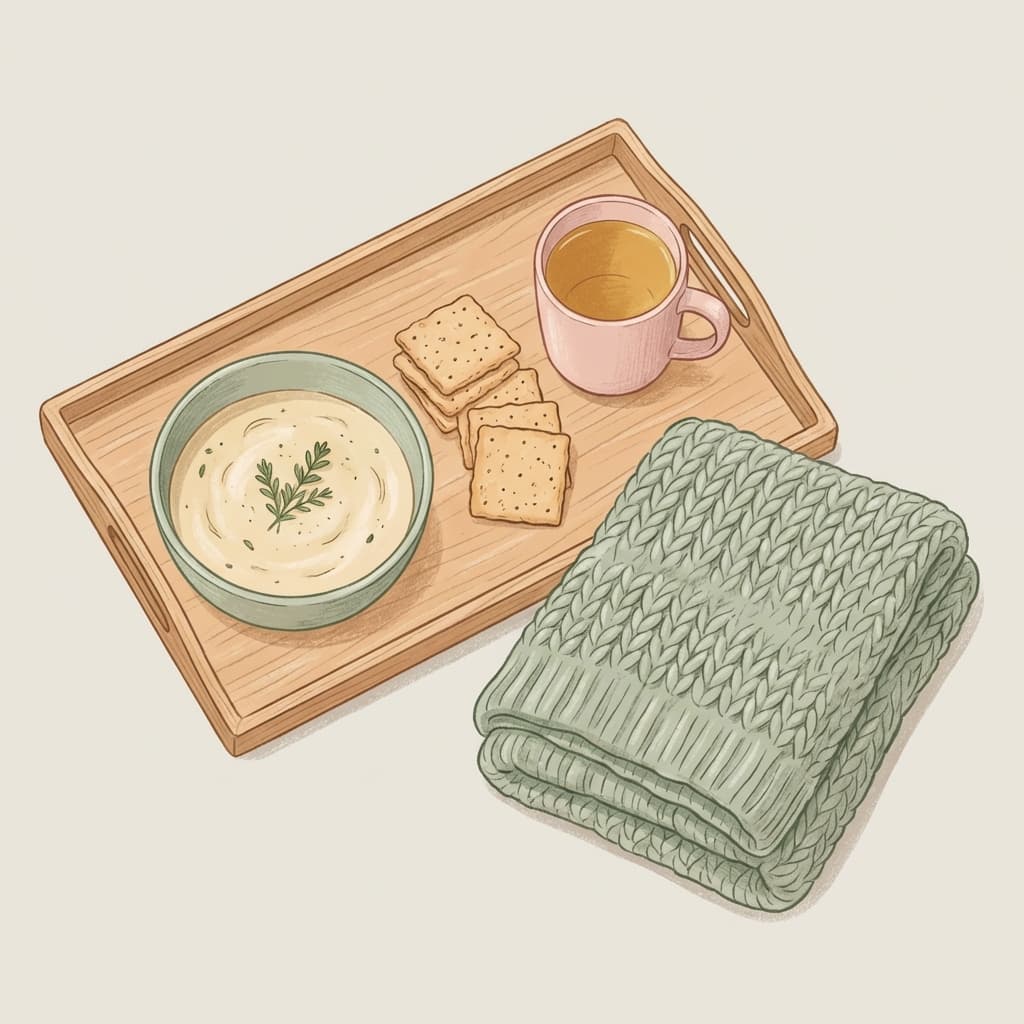
Several small snacks are easier than a full meal. Yogurt, a banana, toast, crackers with cheese, a handful of nuts, or a smoothie can all help.
Drink enough fluids
Keep drinking even when you do not want to eat, especially if you have nausea or diarrhea. Water, herbal tea, broth, or diluted juice all count. Warm drinks can feel soothing when you have cramps.
Choose foods that are easy on your stomach
When you feel sick, plain foods such as rice, toast, crackers, soup, and bananas are often easier to eat.
Prepare before your period starts
If you know your appetite drops on the first days of your period, stock up in advance. Having easy snacks ready means you do not have to cook when you feel unwell.
Include iron if your periods are heavy
Heavy periods can lower your iron levels over time. Foods with iron include meat, beans, lentils, fortified cereals, dried fruit, and dark green leafy vegetables. If you often feel very tired or short of breath, ask your doctor about a blood test.
Treat the pain
If cramps are the reason you cannot eat, treating them may help your appetite come back. Painkillers such as ibuprofen, heat on your belly, and gentle movement can ease period pain. Check with a pharmacist or doctor if you are not sure which painkiller is safe for you.
Track your appetite with your other symptoms
If appetite loss comes back every cycle, a record helps you see the pattern. Note when your appetite drops, how long it lasts, and what comes with it, such as cramps, nausea, bloating, or low mood. The free printable food and symptom diary puts meals, symptoms and cycle day on one page.
A record like this is useful at an appointment. "I cannot eat for two days at the start of every period because of nausea and pain that ibuprofen does not help" gives a doctor more to work with than "my periods are bad". The Endolog symptom tracker app lets you log appetite, pain, and bowel symptoms alongside your cycle and export them as a PDF for your doctor.
FAQ: loss of appetite during your period
Is it normal to lose your appetite on your period?
Yes. Changes in appetite are a common PMS symptom, and many people eat less in the first days of a period, when cramps, nausea and bloating are worst. Prostaglandins, the chemicals that cause period cramps, can also cause nausea and an upset stomach. A short dip that ends with your period is usually nothing to worry about. See a doctor if you cannot keep food or fluids down.
Can you lose your appetite before your period?
It can happen, though most people eat more then: food intake tends to be highest in the days before a period. Changes in appetite are a PMS symptom, so some people feel less hungry instead. Feeling sick and a loss of interest in foods you usually enjoy can be early signs of pregnancy. If your period is late and pregnancy is possible, take a test.
How long does loss of appetite last during a period?
For most people, appetite comes back within the first few days, as cramps and nausea ease. Period pain usually lasts up to 3 days. Appetite loss that lasts after your period ends is not a typical period symptom and is worth checking with a doctor.
Can endometriosis cause loss of appetite?
Endometriosis can cause severe period pain, bloating, and nausea, and any of these can make you eat less. If your appetite loss comes with pain that stops your usual activities, pain during sex, or pain when you poo or pee, talk to a doctor about endometriosis.
Is it bad to not eat on your period?
Eating less for a day or two is usually not harmful, but try to keep drinking fluids and eat small amounts when you can. If you cannot keep food or fluids down, or you are losing weight, see a doctor.
Sources
- Dysmenorrhea: Painful Periods, American College of Obstetricians and Gynecologists (ACOG)
- Menstrual cycle and appetite control: implications for weight regulation (Dye and Blundell, Human Reproduction, 1997), PubMed
- PMS (premenstrual syndrome), NHS
- Period pain, NHS
- Endometriosis, NHS
- Endometriosis fact sheet, World Health Organization
- Iron deficiency anaemia, NHS
- Signs and symptoms of pregnancy, NHS
- Unintentional weight loss, NHS
This article is general information, not medical advice. Read how we write and check our articles in our editorial policy.
Explore this topic
Related articles
September 29, 2026
Nausea During Your Period: Why It Happens and What Helps
Nausea during your period is common on heavy cramp days. Learn why it happens, what eases it, what to track, and when feeling sick needs a doctor.
December 22, 2025
Heavy Feeling in the Pelvis: Causes and When to Worry
A heavy feeling in the lower abdomen or pelvis often comes with a period, but adenomyosis, fibroids, cysts or a prolapse can cause it. Learn when to get help.
October 6, 2026
Ibuprofen or Naproxen for Period Cramps: Which and When
Ibuprofen for period cramps works about as well as naproxen. See how often to take each, when to start, who should avoid them and when to see a doctor.
October 5, 2026
Heating Pads for Endometriosis and Period Pain: Safe Use
How to use a heating pad for endometriosis and period pain: how hot, how long, where to put it, why not to sleep on it, heat rash, and when to see a doctor.
October 3, 2026
What Helps With Period Cramps? Options With Evidence
What helps with period cramps: anti-inflammatory painkillers taken early, heat, exercise and hormonal birth control. See the evidence and when to get help.
October 2, 2026
Signs You're Losing Too Much Blood During Your Period
Signs you're losing too much blood during your period: soaking a pad every 1 to 2 hours, periods over 7 days, big clots and night leaks. When to get help.
