Why Period Cramps Happen on One Side (Left or Right)
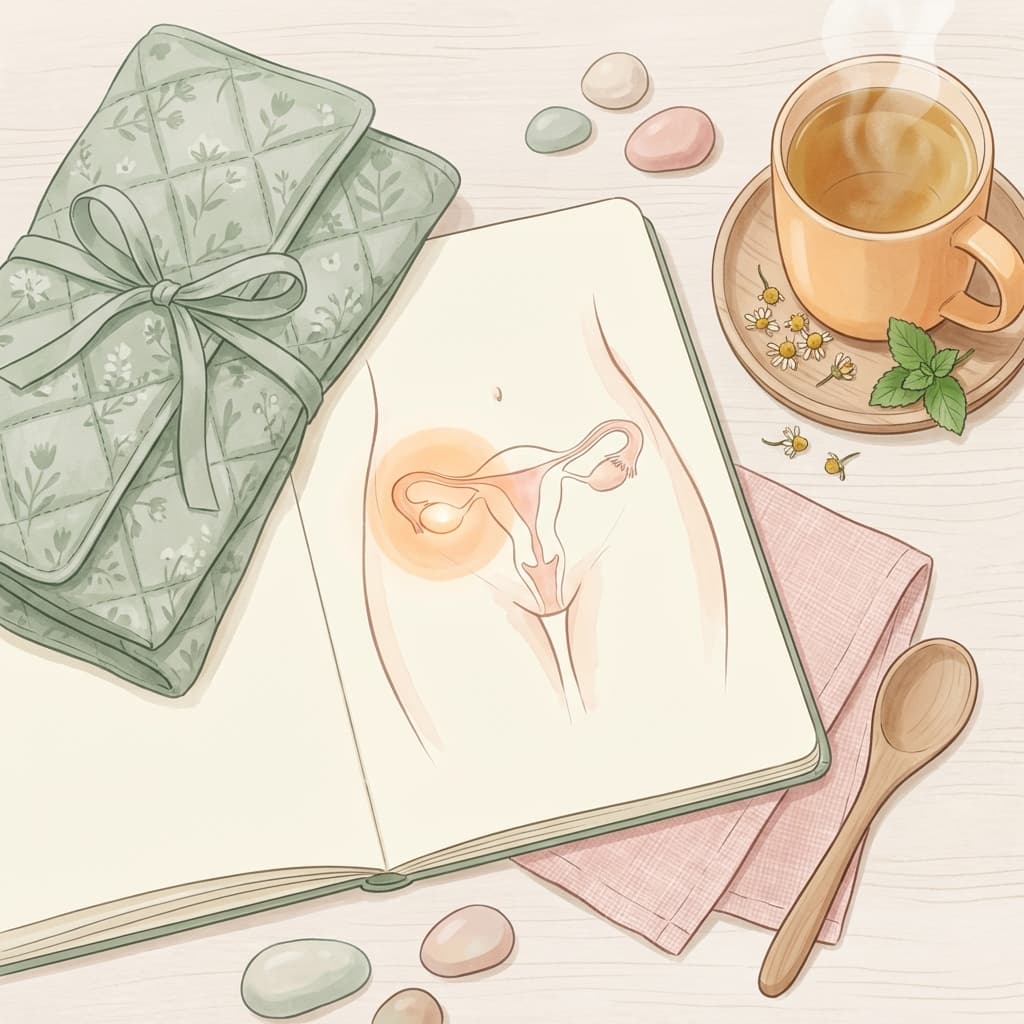

Why do I only get period cramps on one side?
Period cramps often favor one side, and this is usually harmless. Period pain comes from the womb tightening, which is a normal part of the cycle for many people, and you can feel it more on one side. Pain on the same side every cycle can come from one ovary or tube, such as an ovarian cyst or an endometrioma.
See a doctor if the pain is on the same side every cycle, gets worse over several cycles, or stops you from doing your usual activities. Get urgent help for sudden severe pain, fainting, fever, or vomiting. If you could be pregnant, one-sided pain with bleeding needs urgent care, because it can be a sign of an ectopic pregnancy.
One-sided period pain explained
Most period pain is felt in the middle of the lower belly or on both sides. One-sided pain can point at structures that are not symmetrical: one ovary, one fallopian tube, a single fibroid, an endometrioma on one ovary, a ureter, or the appendix. So the useful question is not whether the pain is one-sided in a given cycle. It is whether it lands on the same side cycle after cycle, whether it gets worse over time, and whether other symptoms come with it.
This article covers the common causes of one-sided pain during a period and the patterns doctors look for when they decide whether to scan, refer, or wait.
Distinguishing one-sided from central pelvic pain
Understanding the difference between true one-sided pain and central pain that seems to favor one side helps you describe your experience accurately.
True one-sided pain originates in structures on one side of your pelvis and stays localized there or radiates in patterns that follow one-sided anatomy. The right ovary, right fallopian tube, right side of the uterus, right round ligament, right appendix, right ureter, and right side of the pelvic floor muscles all contribute to true right-sided pain. Similar structures on the left create left-sided sensations. When pain originates in one of these structures, it typically stays on that side even when intense.
Central pelvic pain originates in the uterus, cervix, or pelvic midline structures and typically feels like it's coming from the middle of your lower abdomen. This pain may seem to favor one side when you press on it or when you're in certain positions, but it doesn't truly lateralize. Many people describe central cramping as feeling "across my lower belly" rather than specifically on one side.
Perceived one-sidedness often occurs when pain is more intense on one side but actually involves both. The more painful side dominates your awareness while the other side's contribution goes unnoticed. This perceived lateralization differs from true one-sidedness that stays consistent regardless of how you position yourself or where you direct your attention.
Causes of one-sided pelvic pain during period
Ovarian cysts and one-sided pain
Ovarian cysts commonly cause one-sided pelvic pain because they develop on specific ovaries rather than affecting both equally at the same time. The location of pain usually indicates which ovary is affected, making this an important diagnostic clue. If you want to know what ovary pain feels like, or how ovarian cyst pain differs, see those guides.
Follicular cysts develop on the ovary surface when a follicle fails to release its egg. These cysts often cause mild one-sided aching or pressure that may worsen during certain activities. Many follicular cysts resolve spontaneously within a few cycles, with pain subsiding as the cyst shrinks. If you consistently feel one-sided pain that correlates with cyst development on ultrasound, this pattern suggests functional cysts as the cause.
Endometriomas, sometimes called chocolate cysts, form when endometrial tissue grows inside the ovary and creates a fluid-filled cavity. These cysts typically cause persistent one-sided aching that may worsen during your period as the embedded tissue responds to hormonal changes. Endometriomas often grow over time rather than resolving spontaneously, and pain typically progresses as the cyst enlarges. The one-sided nature of this pain helps distinguish endometriomas from other causes of bilateral discomfort.
Dermoid cysts contain various tissue types like hair, teeth, or fat and can develop on either ovary. These cysts may cause one-sided pain if they grow large enough to stretch the ovarian capsule or irritate surrounding structures. Unlike functional cysts, dermoid cysts don't resolve on their own and may require surgical removal if they become symptomatic.
Endometriosis and lateralized pain
Endometriosis doesn't always affect both sides of the pelvis equally. When implants concentrate on one side, they create one-sided pain patterns that provide diagnostic clues. Understanding how endometriosis causes lateralized pain helps you recognize this pattern in your own experience.
Deep infiltrating endometriosis, where tissue grows into ligaments or structures beneath the surface, often affects one side more than the other. The uterosacral ligaments run along both sides of the uterus, and implants on one ligament cause pain specifically on that side. This pain may extend from the uterus toward the rectum or anus on the affected side, creating a characteristic pattern.
Endometriosis on the ovarian ligaments or peritoneum covering one ovary can cause one-sided pain that coincides with your menstrual cycle. The affected side may ache, throb, or cramp more intensely while the other side remains relatively comfortable. Over time, as endometriosis progresses, it may spread to affect both sides, changing a previously one-sided pattern.
Adhesions from endometriosis surgery or previous inflammation can cause one-sided pain by restricting movement of organs on the affected side. When you move in certain ways, the adhered tissue stretches, creating pain specifically on that side. This mechanical pain differs from the inflammatory pain of active endometriosis implants.
Appendicitis and right-sided pain
The appendix sits in the lower right abdomen, and appendicitis causes pain that typically begins around the belly button and migrates to the right lower quadrant. This pattern can make appendicitis seem like one-sided pelvic pain, particularly when it occurs during your period and gets attributed to menstruation.
Appendicitis pain usually begins as vague central discomfort before localizing to the right lower abdomen. The pain typically worsens over hours rather than fluctuating like period cramps. Pressing on the area and then quickly releasing causes sharp pain (rebound tenderness) that suggests peritoneal irritation. Nausea, vomiting, and low-grade fever often accompany appendicitis but may be absent initially.
Because appendicitis can occur at any time, including during your period, don't dismiss right-sided pain as necessarily period-related. If right-sided pain begins differently than your usual period pain, worsens progressively rather than following your typical pattern, or is accompanied by nausea, fever, or changes in bowel function, seek medical evaluation promptly.
Other causes of one-sided pelvic pain
Several additional conditions can cause one-sided pelvic pain during your period, and recognizing these possibilities helps you determine when to seek evaluation.
Pelvic inflammatory disease often affects one side more than the other, particularly in early stages before the infection spreads. This condition typically causes pain on the affected side along with abnormal discharge, fever, and pain during sex. If you have risk factors for PID, such as new sexual partners or untreated STIs, one-sided pain deserves prompt evaluation.
Kidney stones or ureteral stones cause severe one-sided pain that typically starts in the back or side and radiates toward the groin. This pain comes in waves as the stone moves and is often described as the most severe pain people have experienced. If you suspect a kidney stone, seek medical care rather than waiting it out at home.
Musculoskeletal pain from strain, injury, or chronic tension can cause one-sided pain that worsens during your period as general pelvic sensitivity increases. This pain typically worsens with specific movements, stretches, or positions and may improve with rest, heat, or anti-inflammatory measures.
How lateralization helps diagnosis
Healthcare providers use information about pain lateralization to narrow down potential causes and guide further testing. Understanding this helps you provide useful information and understand why your provider asks specific questions about where you feel pain.
Consistent right-sided or left-sided pain that follows your cycle points toward one ovary, one tube, or structures on one side of the uterus. Pain that lands on the same side at every period is worth reporting, because a fixed cause such as an endometrioma or a cyst is more likely.
Pain that moves from one side to the other between cycles fits a different pattern. The NHS describes ovulation pain as affecting one side at a time and switching sides depending on which ovary releases an egg. Pain that moves like this is less likely to come from a fixed problem on one side.
New one-sided pain that develops after years of bilateral or central pain suggests a new condition developing on that side. Don't assume new lateralization is normal—schedule evaluation to rule out cysts, endometriosis progression, or other developing conditions.
Tracking one-sided pain patterns
Consistent tracking of one-sided pelvic pain helps you recognize patterns and provides valuable information for healthcare conversations. The details you document can distinguish between normal variation and concerning changes.
Record which side your pain affects each cycle. Note whether it consistently favors one side, alternates between sides, or varies unpredictably. Document where on each side you feel pain most intensely—whether it's near your hip bone, deep in your pelvis, closer to your spine, or radiating in specific patterns.
Track when one-sided pain occurs relative to your cycle. Does it appear around ovulation, at period onset, throughout bleeding, or at other times? Note how long one-sided pain lasts and whether it shifts sides during an episode or stays consistent.
Pay attention to any factors that seem to affect which side is painful or how intense the pain is. Exercise, stress, diet, sleep, sexual activity, and other factors may influence pain patterns in ways that become clear only through consistent tracking.
When one-sided pain indicates evaluation
While many people experience normal one-sided pelvic pain, certain patterns warrant medical evaluation to rule out conditions requiring treatment.
Call emergency services or go to the emergency department for:
- Sudden, severe pain on one side, especially with nausea or vomiting. A twisted ovary (ovarian torsion) causes this pattern, and it needs surgery fast to save the ovary.
- One-sided pain with bleeding, dizziness, fainting, or shoulder tip pain when you could be pregnant. These can be signs of an ectopic pregnancy, which is an emergency.
- Right-sided pain that starts near the belly button, moves lower, and keeps getting worse, with fever or vomiting. This can be appendicitis.
Seek prompt evaluation for one-sided pain that is severe enough to limit your activities or make it difficult to function normally. Pain accompanied by fever, nausea, vomiting, or significant changes in bowel or bladder function. Pain that wakes you from sleep or occurs at unexpected times. Progressive worsening of one-sided pain over several cycles rather than stability or improvement.
Schedule evaluation for one-sided pain that consistently affects the same side in a pattern different from your usual experiences. Pain accompanied by a palpable lump or visible swelling on one side. One-sided pain during sex that wasn't present before. Any new one-sided pain developing after years of stable menstrual patterns.
Keep records of your one-sided pain to share with your healthcare provider. The ability to say, "My left-sided pain has been getting worse for six months" provides much more useful information than simply reporting occasional left-sided pain without context.
FAQ: one-sided pelvic pain during your period
Is it normal to have period cramps on one side?
Often, yes. Mild cramps that favor one side, ease with painkillers, and change sides from cycle to cycle are usually not a sign of disease. Pain that lands on the same side every period, gets worse over time, or stops your usual activities deserves a doctor's check. Sudden severe pain, fainting, fever, or one-sided pain during a possible pregnancy needs urgent care.
Why does my period pain only hurt on my left side?
Left-sided period pain can come from a cyst or an endometrioma on the left ovary, endometriosis on the left of the pelvis, or the bowel, since the lower large bowel sits on the left. Mild pain that does not always stay on the left is less of a concern. Have pain checked if it is on the left every period, gets worse, or is new. An ultrasound can look for a cyst. Read more about pain in your left ovary during your period.
Why is my period pain only on my right side?
Right-sided period pain can come from a cyst or an endometrioma on the right ovary, or from endometriosis on the right side of the pelvis. The appendix also sits on the right. Appendicitis pain usually starts around the belly button, then moves to the lower right side and gets worse, and that pattern needs urgent help. Pain on the right at every period is worth a check. Our guide to ovary pain or appendicitis shows how to tell them apart.
When should I worry about one-sided pelvic pain?
Worry about one-sided pelvic pain when it's severe enough to limit function, accompanied by fever, nausea, or vomiting, progressively worsens over cycles, wakes you from sleep, or is significantly different from your usual patterns. Any concern about appendicitis or other acute conditions warrants prompt medical evaluation even if it might turn out to be period-related.
Can endometriosis cause one-sided pain?
Endometriosis commonly causes one-sided pain when implants concentrate on one side of the pelvis. Deep infiltrating endometriosis on one uterosacral ligament, endometriomas on one ovary, and adhesions affecting one side all create lateralized pain patterns. One-sided endometriosis pain often worsens during menstruation as the implants respond to hormonal changes.
Understanding your body's signals
One-sided pelvic pain tells you something about what is happening on that side of your body. Learning to read it helps you tell normal variation apart from patterns that deserve attention.
Mild pain that moves between sides and follows a predictable pattern is often normal. Pain that stays on the same side every cycle, gets worse, or comes with new symptoms is worth checking, because conditions such as endometriomas and cysts tend to stay on one side.
Your doctor can do more with a record than with memory. Track your one-sided pain patterns to see which side hurts, when, and how badly, and bring that record to your appointment. If you are not sure whether your symptoms fit endometriosis, the endometriosis symptom quiz can help you decide what to ask.
Related articles
Sources
- Period pain, NHS
- Dysmenorrhea: Painful Periods, American College of Obstetricians and Gynecologists (ACOG)
- Ovulation pain, NHS
- Ovarian cyst, NHS
- Ectopic pregnancy, NHS
- Ovarian Torsion, Cleveland Clinic
- Appendicitis, NHS
This article is general information, not medical advice. Read how we write and check our articles in our editorial policy.
Explore this topic
Related articles
October 4, 2026
Cramps After Your Period: Causes and When to Worry
Cramps after period ends can be leftover womb cramps or ovulation, or a sign of endometriosis, a cyst or infection. Learn the causes and when to worry.

September 24, 2026
Ovary Pain or Appendicitis? How to Tell, and When to Go to the ER
Right-sided pain low in the belly can come from the appendix or the right ovary. Learn how each pain usually starts and moves, which signs mean you should go to the ER now, and why only a doctor can tell them apart.
September 24, 2026
Where Are Period Cramps Felt? A Map of Period Pain
Period cramps are usually felt low in the belly and can spread to the back and thighs. See where period pain is located and which places need a doctor.

January 5, 2026
Vaginal Pain During Period: Causes and When to See a Doctor
Vaginal pain during your period is often cramp pain that spreads down. Endometriosis, vulvodynia or infection can also cause it. Know when to see a doctor.

December 29, 2025
Ovary Pain During Your Period: Left, Right, or Both Sides
Ovary pain during your period can feel like a dull ache, a sharp twinge or pressure on one side. See left and right causes and when to see a doctor.
October 17, 2026
Endometriosis in Teens: Signs Not to Dismiss and What to Do
Endometriosis in teens is real and often missed. Learn the signs that need a doctor, how it is diagnosed, first treatments and what to track for a visit.
