Sudden Stabbing Pelvic Pain: How It Feels and When It Repeats
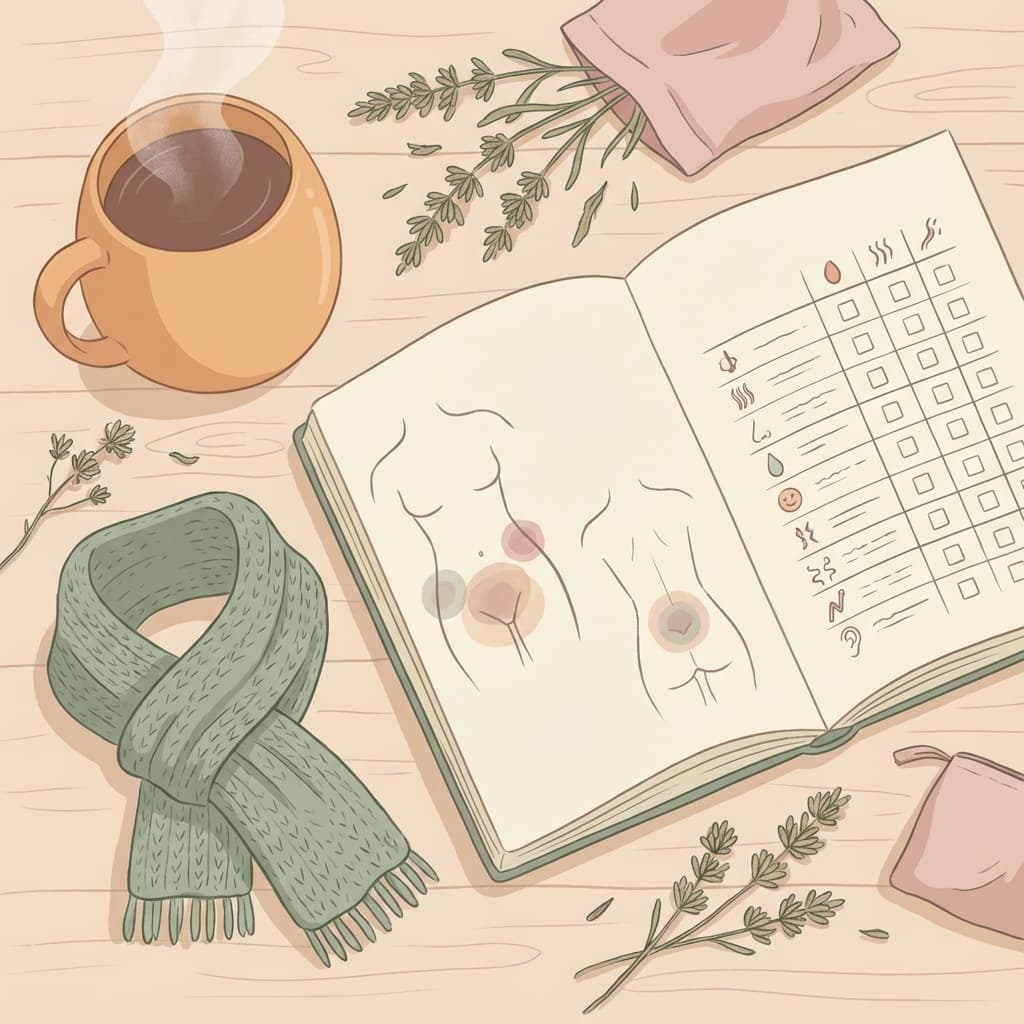

Quick answer: what causes sudden stabbing pelvic pain?
A short, sharp stab low in the tummy is common. Ovulation pain, period pain, trapped wind, and constipation can all cause it. Pain that keeps coming back, gets worse, or stops your usual activities needs a doctor's check. Causes to rule out include an ovarian cyst, endometriosis, and nerve pain.
Call emergency services now if the pain is sudden and severe, or comes with fainting, dizziness, vomiting, a high temperature, heavy bleeding, or pain in the tip of your shoulder. The same applies to one-sided pain when you could be pregnant.
Stabbing pain and cramping pain
Two of the ways pelvic pain can feel are "a sharp, stabbing or burning pain that happens suddenly" and "a cramping or throbbing pain, which may come and go". People often describe cramps as waves that build and fade. A stab is sudden and usually in one spot.
The kind of pain gives a clue, but it does not tell you the cause on its own. When it happens, how long it lasts, and what comes with it tell you more.
Sharp pain during your period that does not feel like cramps
Period pain is not always a cramp. It can be "a sharp pain or a dull ache" in the tummy, and it can spread to the back and thighs. So a sharp pain on the first days of a period can be ordinary period pain, especially if it eases with painkillers and is similar every cycle.
Period pain can also feel like a deep ache, pressure, or heaviness. That can be normal too. What matters is the pattern.
Signs that sharp period pain needs a check
Period pain caused by a condition in the reproductive organs tends to get worse over time and to last longer than normal cramps. It may start a few days before a period and continue after it ends. See a doctor if your sharp period pain:
- Is getting worse over several cycles
- Starts days before your period or keeps going after it ends
- Stops you from doing your usual activities, or painkillers do not help
- Comes with pain during sex, or pain when you poo or pee
- Comes with heavier periods, or bleeding between periods
- Is new for you, after years of periods that did not hurt this way
Conditions that can cause sharp period pain
- Endometriosis. Cells similar to the lining of the womb grow in other places, such as the ovaries and the lining of the pelvis. It can cause severe period pain, pain during or after sex, and pain when you poo or pee.
- Adenomyosis. Womb-lining tissue grows into the muscle wall of the womb. It can cause heavy, painful periods.
- Fibroids. Non-cancerous growths in or around the womb can cause heavy, painful periods.
- Pelvic inflammatory disease (PID). An infection of the womb, tubes, and ovaries. It can make periods more painful than usual and needs antibiotics.
- Ovarian cysts. Most cause no symptoms. A large cyst, or one that splits or twists, can cause pain from a dull ache to a sudden, severe, sharp pain.
- An intrauterine device (IUD). An IUD can cause period pain, especially in the first 3 to 6 months.
Common causes of stabbing pelvic pain
Ovulation pain
Ovulation pain can feel like a dull pain or sharp sudden twinges. It happens about 14 days before a period, affects one side at a time, and lasts from a few minutes to 1 or 2 days. It is usually nothing to worry about. Painkillers or a warm bath may be all you need.
Ovarian cysts
A cyst that splits (ruptures) or twists can cause sudden, severe, sharp pain. A twisted ovary (ovarian torsion) is an emergency, because the twist can cut off the blood supply to the ovary. The pain of torsion can come and go if the ovary twists and untwists. Pain that comes and goes still needs urgent care.
Bowel and bladder
Constipation, irritable bowel syndrome, and urinary tract infections are among the common causes of pelvic pain. Trapped wind can cause sharp pain that moves. Pain that eases after you poo or pass wind points to the bowel.
Nerve pain
Pudendal neuralgia is nerve pain in the genitals, bottom, or pelvis. The pain is sharp, shooting, burning, or tingling, and it may be worse when sitting down. It is rare and is diagnosed by ruling out other causes.
Muscles
Pelvic muscle spasms and trigger points, tender spots in the muscle, are among the causes of chronic pelvic pain. Muscle pain often comes with certain movements or positions. A pelvic floor physiotherapist can assess and treat it.
When stabbing pelvic pain is an emergency
Call emergency services or go to the emergency department if you have pelvic pain and:
- It is severe, getting worse, or hurts when you move or touch the area
- You feel faint, dizzy, or lightheaded, or you pass out
- You have pain in the tip of your shoulder
- You have heavy bleeding from the vagina
- You have a high temperature, or you are vomiting
- You could be pregnant. One-sided pain with bleeding can be a sign of an ectopic pregnancy.
Tracking stabbing pelvic pain
Stabbing pain is often short and easy to forget. A record over two or three cycles shows patterns a single appointment cannot. For each episode, note:
- The date, time, and cycle day, and whether you were bleeding
- Where it was, and whether it spread
- How it felt (stab, shooting, burning, ache) and how long it lasted
- What you were doing, such as sitting, exercise, sex, or going to the toilet
- What came with it, such as bloating, nausea, fever, or bleeding
- What helped
The Endolog symptom tracker app lets you log pain type, location, and severity with your cycle and export a report for your doctor.
Managing stabbing pelvic pain
If a doctor has ruled out other causes:
- Painkillers such as paracetamol or ibuprofen can help with period pain and ovulation pain. Anti-inflammatory painkillers target prostaglandins, the chemicals behind period cramps. Check with a pharmacist if you are not sure they are safe for you.
- Heat on your tummy or a warm bath
- Gentle exercise, such as walking, swimming, or yoga
- Contraception such as the pill, implant, or injection. These thin the womb lining, which makes periods lighter and eases the pain. Contraception that stops ovulation can also stop ovulation pain.
- Pelvic floor physiotherapy, if muscles are part of the problem
If the pain comes from endometriosis, adenomyosis, a cyst, or nerve pain, treatment depends on the cause.
FAQ: sudden stabbing pelvic pain
Why do I get sudden sharp pain in my pelvis during my period?
Period pain can be sharp, not only crampy. It can be a sharp pain or a dull ache. Sharp period pain that is getting worse, starts days before your period, or comes with pain during sex or when you poo or pee should be checked for conditions such as endometriosis or adenomyosis.
Is it normal to have pelvic pain during your period that is not cramps?
It can be. Period pain can feel sharp, achy, or heavy. See a doctor if the pain stops your usual activities, lasts longer than your period, or is different from what is normal for you.
Can ovulation cause stabbing pain?
Yes. Ovulation pain can feel like sharp sudden twinges on one side of the tummy, about 14 days before a period. It usually lasts from a few minutes to 1 or 2 days.
When is stabbing pelvic pain an emergency?
When it is sudden and severe, or it comes with fainting, dizziness, vomiting, a high temperature, heavy bleeding, or pain in the tip of your shoulder. One-sided pain when you could be pregnant also needs urgent care.
How can I tell if stabbing pain is from a cyst?
You cannot tell for sure without a scan. Cyst pain is often on one side and can range from a dull ache to sudden sharp pain. A doctor may refer you for an ultrasound, often with a probe placed inside the vagina.
Related articles
Sources
- Pelvic pain, NHS
- Period pain, NHS
- Dysmenorrhea: Painful Periods, American College of Obstetricians and Gynecologists (ACOG)
- Chronic Pelvic Pain, American College of Obstetricians and Gynecologists (ACOG)
- Ovulation pain, NHS
- Ovarian cyst, NHS
- Endometriosis, NHS
- Adenomyosis, NHS
- Fibroids, NHS
- Pelvic inflammatory disease, NHS
- Pudendal neuralgia, NHS
- Ectopic pregnancy, NHS
- Ovarian Torsion, Cleveland Clinic
This article is general information, not medical advice. Read how we write and check our articles in our editorial policy.
Explore this topic
Related articles
October 4, 2026
Cramps After Your Period: Causes and When to Worry
Cramps after period ends can be leftover womb cramps or ovulation, or a sign of endometriosis, a cyst or infection. Learn the causes and when to worry.

September 25, 2026
Cramps but No Period: Causes and When to See a Doctor
Cramps but no period? Take a pregnancy test if you could be pregnant. Learn the other causes, from ovulation to endometriosis, and when to see a doctor.

September 24, 2026
Ovary Pain or Appendicitis? How to Tell, and When to Go to the ER
Right-sided pain low in the belly can come from the appendix or the right ovary. Learn how each pain usually starts and moves, which signs mean you should go to the ER now, and why only a doctor can tell them apart.
January 9, 2026
Butt Pain During Period: Why It Happens and What Helps
Butt pain during period days often comes from cramps that spread from the womb. Learn the causes, including endometriosis, what helps and when to get help.
January 6, 2026
What Ovarian Cyst Pain Feels Like and When to Get Help
Ovarian cyst pain can feel like a dull ache, pressure or a sudden sharp pain on one side. Learn what a burst cyst feels like and when to get urgent help.
January 5, 2026
Vaginal Pain During Period: Causes and When to See a Doctor
Vaginal pain during your period is often cramp pain that spreads down. Endometriosis, vulvodynia or infection can also cause it. Know when to see a doctor.
