Vaginal Pain During Period: Causes and When to See a Doctor

Quick answer: why does my vagina hurt during my period?
Vaginal pain during your period is often period cramp pain that spreads down into the muscles around your vagina. It can also come from endometriosis, vulvodynia, an infection or a tampon or cup that irritates you, and some of these need a doctor.
Ask for an urgent GP appointment or call NHS 111 (in the US, urgent care or your doctor) if the pain is severe or worse than usual and painkillers have not helped. Call 111 too if you think you might have toxic shock syndrome, for example a high temperature, muscle aches or a rough rash while you use a tampon or cup. Remove the tampon or cup and tell 111 you were using one. Call 999 or go to A&E (in the US, call 911) if you are confused, have difficulty breathing or have a rash that does not fade. See when to get urgent help.
Mild pain that comes with your cramps can be a normal part of your period. Pain that stops your usual activities or hurts during sex, or burning or stinging at the opening of your vagina, is worth a check.
Common causes of vaginal pain during your period
The table helps you sort what you feel. It does not replace an exam.
| What you feel | Possible cause |
|---|---|
| Deep ache or pressure in the vagina that comes with your cramps | Period cramps and tight pelvic floor muscles |
| Severe period pain, pain during or after sex, pain when you poo or pee | Endometriosis or adenomyosis |
| Burning, stinging or soreness at the vaginal opening, worse with a tampon or touch | Vulvodynia or vaginismus |
| Itching, burning, sore when you pee, or a change in discharge | An infection such as thrush, BV or an STI |
| High temperature, muscle aches or a rough rash while using a tampon or cup | Toxic shock syndrome (urgent, see below) |
Period cramps and the pelvic floor
Period pain happens when your womb tightens during your period, and it often spreads to your back and thighs. The pelvic floor muscles sit around your vagina. They can spasm as a reflex to other types of pain, such as cramps. Tight spots in these muscles can send pain to the vagina, rectum, lower back, lower belly and thighs.
If the vaginal pain rises and falls with your cramps, this is the most likely cause. For more on where cramps can travel, see where period cramps are felt.
Endometriosis and adenomyosis
In endometriosis, cells similar to the lining of the womb grow in other parts of the body. Signs that point to it include:
- Severe period pain that stops you doing your normal activities
- Pain during or after sex
- Pain when you poo or pee
- Bowel and bladder symptoms, tiredness and nausea that tend to get worse during your period
If sex hurts deep inside, read endometriosis and painful sex.
Adenomyosis is tissue like the womb lining growing into the muscle wall of the womb. It causes painful, heavy periods and pain during sex. Fibroids can also cause heavy periods, back pain and pain during sex.
Vulvodynia and vaginismus
Vulvodynia is pain in the vulva (the area around the outside of the vagina) that lasts at least 3 months and has no specific cause. The pain can feel like burning, throbbing, stabbing or soreness. It can be constant or come and go. It can also start when the vulva is touched, for example when you insert a tampon or have sex. During your period, this can mean pain each time you use a tampon or cup.
Vaginismus is different. The muscles around the vagina tighten on their own when you try to insert a tampon, have sex or have a pelvic exam.
Infections
An infection can feel like period pain, but it usually brings other signs too:
- Thrush (yeast infection): swelling, itching and pain, especially during sex or when you pee.
- Bacterial vaginosis (BV): irritation, itching, discharge with a fishy smell, and burning when you pee.
- STIs: gonorrhoea, chlamydia and trichomoniasis can cause sharp pain in the vagina, itching and burning.
An infection of the womb, fallopian tubes and ovaries (pelvic inflammatory disease) can also cause period pain. Get tested if you notice a new discharge, smell, itching or burning, so you can get the right treatment.
Tampons, cups and IUDs
Pain at the opening of the vagina each time you insert a tampon or cup is a sign to ask about vulvodynia or vaginismus, as above.
Using tampons or menstrual cups also links to a rare but serious infection called toxic shock syndrome. Follow the product instructions and do not leave it in longer than needed or recommended.
An IUD can cause period pain, mostly in the first 3 to 6 months after it is put in.
Is vaginal pain during your period normal?
Period pain is often a normal part of the menstrual cycle. Some ache or pressure that rises and falls with your cramps can be part of that.
It is not normal, and you should see a GP or gynecologist, if:
- your periods become more painful, heavier or irregular
- your period pain stops you doing your usual daily activities
- you have pain during sex, or when peeing or pooing
- you are bleeding between periods
- you have pain in your vulva that does not go away or keeps coming back
- you have itching, burning, an unusual discharge or a fishy smell
If your doctor says the pain is "just your period" but it stops your day, keep a record and ask about endometriosis. For more on this, read endometriosis vs normal period cramps.
When to get urgent help
Get an urgent GP appointment or call NHS 111 (in the US, urgent care or your doctor's urgent line) if your pelvic pain or period pain is severe or worse than usual, and painkillers have not helped.
Call NHS 111 (in the US, urgent care or your doctor) if you think you might have toxic shock syndrome and you have any of these symptoms:
- a high temperature
- feeling hot, cold or shivery, with muscle aches
- vomiting and diarrhoea
- severe pain in your arms or legs, or all over your body
- a rash that feels rough like sandpaper
- bright red palms, soles, tongue or whites of the eyes
- swollen or peeling skin
- feeling sick, dizzy or confused
If you use a tampon or menstrual cup, remove it and tell 111 you were using one.
Call 999 or go to A&E (in the US, call 911) if you have any of these signs:
- confusion, slurred speech or not making sense
- blue, grey, pale or blotchy skin, lips or tongue
- a rash that does not fade when you roll a glass over it
- difficulty breathing, breathlessness or breathing very fast
- large areas of peeling skin
How to ease vaginal pain during your period
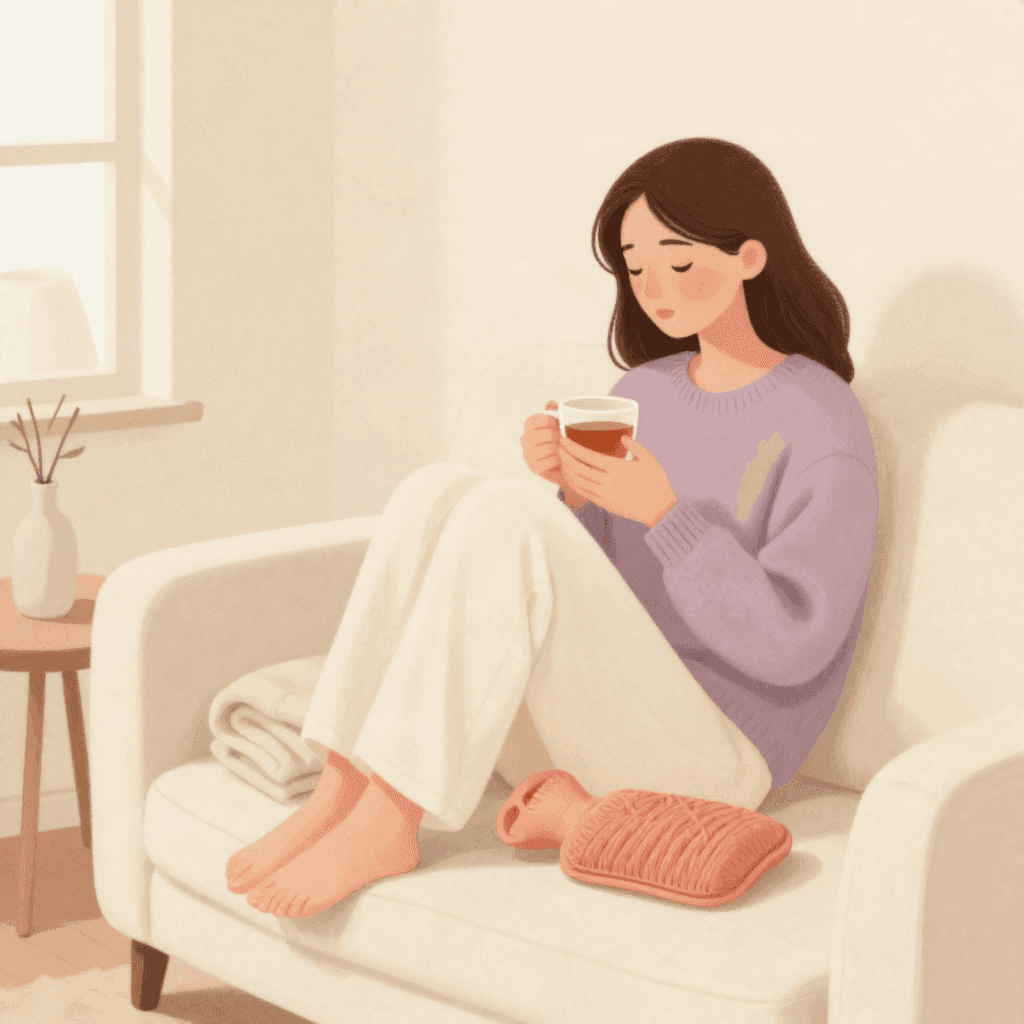
If the pain comes with your cramps, the same steps that help period pain can help:
- Take paracetamol or ibuprofen. Read the leaflet first.
- Put a heat pad or a hot water bottle wrapped in a tea towel on your tummy, or have a warm bath or shower.
- Try gentle exercise like yoga, swimming, walking or cycling, and massage your tummy and back.
- If inserting a tampon or cup hurts, use pads or period pants for a few cycles and note if the pain changes.
If the pain is in the pelvic floor muscles, a pelvic floor physiotherapist can help. In one retrospective study, physical therapy helped up to 63% of people with this type of pelvic muscle pain.
Vulvodynia has its own treatments. These include numbing creams, nerve pain medicines, pelvic floor exercises, vaginal trainers and cognitive behavioural therapy (CBT). No single treatment works for everyone, so you may need to try more than one.
Self-care does not treat an infection. If you have signs of one, see a doctor, a pharmacist or a sexual health clinic.
Tracking vaginal pain to show your doctor
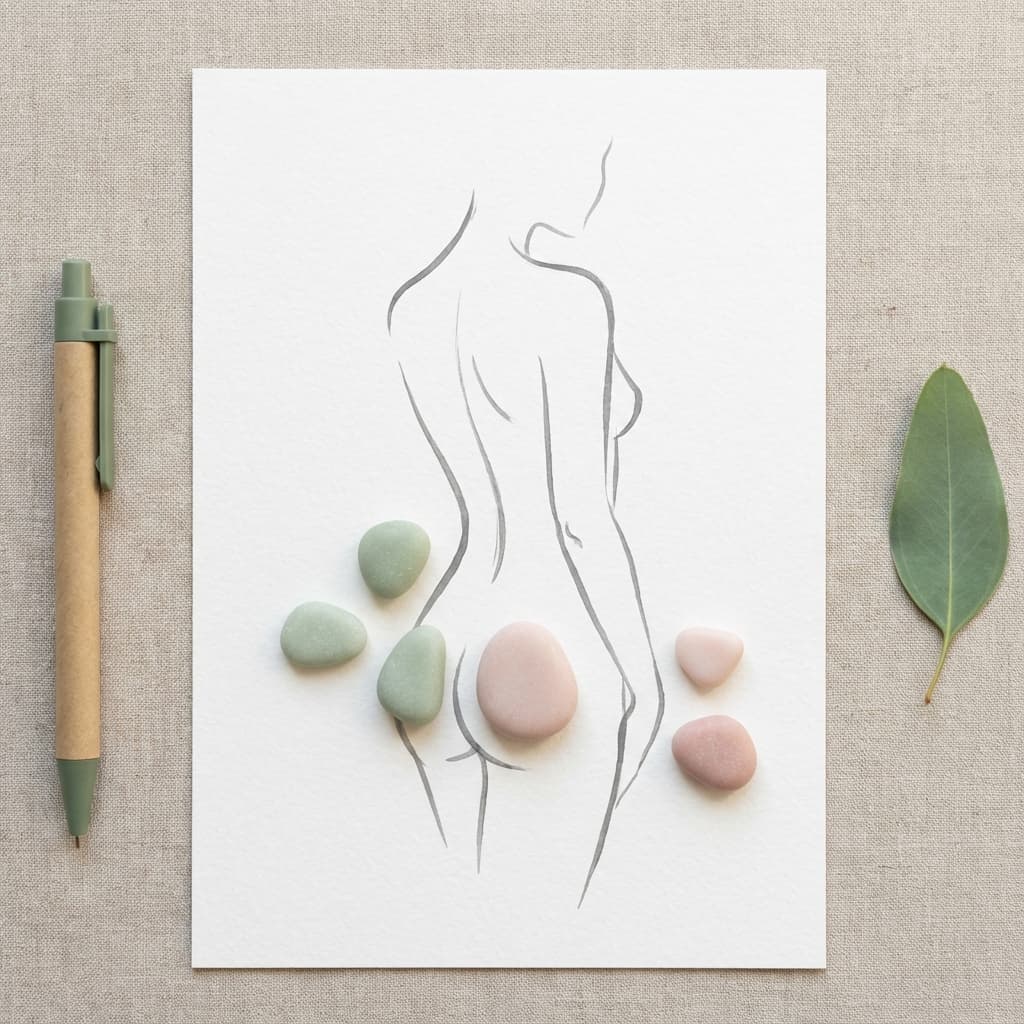
A short record helps your doctor find the cause faster. For each day of pain, note:
- Where it hurts: the opening of the vagina, inside, deep in the pelvis, or near where pee comes out.
- How it feels: burning, raw, aching, sharp, stabbing or pressure.
- When it happens: before bleeding starts, on the heaviest days, after your period, or at other times in your cycle.
- What sets it off: tampons or cups, sex, sitting, peeing or pooing.
- Other signs: discharge, smell, itching, fever, heavy bleeding.
- What helped: painkillers, heat, a change of product.
You can log all of this in Endolog and share a summary at your appointment. For a ready format, see how to keep a pain diary your doctor will read.
FAQ: vaginal pain during your period
Why does my vagina hurt during my period?
Most often it is cramp pain. Your womb tightens, and the pelvic floor muscles around your vagina can tighten with it and send pain to the vagina. Endometriosis, adenomyosis, vulvodynia and infections can also cause it.
Is sharp, stabbing pain in the vagina during my period normal?
Period pain can be a sharp pain or a dull ache. Sharp pain that repeats each period, hurts during sex, or stops your day is a reason to see a GP. Endometriosis and STIs can both cause sharp vaginal pain. See also sudden stabbing pelvic pain.
Can endometriosis cause vaginal pain during my period?
Yes. Endometriosis causes severe period pain and pain during or after sex, and its symptoms tend to get worse during your period. If you also have pain when you poo or pee, tell your doctor.
Why does it hurt to put in a tampon during my period?
If it hurts every time, ask about vulvodynia or vaginismus. Both can be treated.
When should I see a doctor about vaginal pain during my period?
See a GP or gynecologist if the pain stops your normal activities, gets worse over time, hurts during sex, or comes with bleeding between periods, discharge, itching or a smell. Get urgent help for severe pain that painkillers do not help, or signs of toxic shock syndrome.
Related articles
Sources
- Period pain, NHS
- Endometriosis, NHS
- Vulvodynia, NHS
- 9 Possible Causes for Your Vaginal Pain, Cleveland Clinic
- Relating Chronic Pelvic Pain and Endometriosis to Signs of Sensitization and Myofascial Pain and Dysfunction, Seminars in Reproductive Medicine (Aredo et al., 2017)
- Toxic shock syndrome, NHS
This article is general information, not medical advice. Read how we write and check our articles in our editorial policy.
Explore this topic
Related articles
October 6, 2026
Ibuprofen or Naproxen for Period Cramps: Which and When
Ibuprofen for period cramps works about as well as naproxen. See how often to take each, when to start, who should avoid them and when to see a doctor.
October 5, 2026
Heating Pads for Endometriosis and Period Pain: Safe Use
How to use a heating pad for endometriosis and period pain: how hot, how long, where to put it, why not to sleep on it, heat rash, and when to see a doctor.
October 4, 2026
Cramps After Your Period: Causes and When to Worry
Cramps after period ends can be leftover womb cramps or ovulation, or a sign of endometriosis, a cyst or infection. Learn the causes and when to worry.
October 3, 2026
What Helps With Period Cramps? Options With Evidence
What helps with period cramps: anti-inflammatory painkillers taken early, heat, exercise and hormonal birth control. See the evidence and when to get help.
September 24, 2026
Where Are Period Cramps Felt? A Map of Period Pain
Period cramps are usually felt low in the belly and can spread to the back and thighs. See where period pain is located and which places need a doctor.
December 26, 2025
Why Period Cramps Happen on One Side (Left or Right)
One-sided period cramps are often harmless. See which causes to check, and which signs need a doctor fast, such as fever, fainting, or sudden severe pain.
