Ovary Pain During Your Period: Left, Right, or Both Sides


Why do I have pain in my left ovary during my period?
Pain in your left ovary during your period is most often ordinary period pain that you feel more on one side. Period pain comes from the womb tightening, and it can be sharp or dull. Pain on the left every period, or pain that gets worse, can come from an ovarian cyst, endometriosis or the bowel.
Pain that stays on the same side every period, gets worse over time, or stops your usual activities needs a doctor's check. Common causes to rule out are an ovarian cyst and endometriosis. Get urgent help for sudden severe pain, pain with fever or vomiting, fainting, or one-sided pain when you could be pregnant.
What does ovary pain feel like?
Ovary pain can feel like a dull ache, pressure, a sharp twinge or a cramp low in your tummy, on one side. During your period it can spread to your back and thighs.
What the pain feels like, and when it comes, can point to a likely cause:
- A cramp or dull ache on period days is likely period pain. It comes at the start of your period, or just before it.
- A dull pain or sharp twinge on one side, about 14 days before your period, can be ovulation pain. It lasts from a few minutes to 1 or 2 days.
- A dull, heavy feeling or pressure that stays can come from an ovarian cyst. A cyst usually only causes pain when it is very large, splits or twists.
- Sudden, severe pain on one side needs urgent help. A cyst that splits or twists can cause sudden, severe and sharp pain. See when to get urgent help.
Where it is felt can also point to the cause, because other organs sit in the same area.
Where the ovaries are
You have two ovaries, one on each side of the womb. They are almond-shaped. Ovary pain is usually felt low in the tummy, below the belly button, on the left or right side. Other organs sit in the same area, including the bowel, the bladder, and the tubes that carry pee from the kidneys. So pain that feels like it comes from an ovary can come from somewhere else. Read more in Where Is Ovary Pain Felt?
Why the ovary area can hurt during your period
Period cramps felt to one side
The womb sits in the middle of the pelvis, but its cramps do not always feel central. Mild cramps that favor one side, ease with painkillers, and change sides from cycle to cycle are usually not a sign of disease. Read more in Period Cramps on One Side: Is It Normal?
Ovulation pain
Ovulation pain happens about 14 days before a period, affects one side at a time, and lasts from a few minutes to 1 or 2 days. If your cycle is short or irregular, ovulation pain can come close to your period and be confused with period pain.
Ovarian cysts
An ovarian cyst is a fluid-filled sac on an ovary. Cysts are very common and do not usually cause symptoms. A cyst that is large, splits, or twists can cause pelvic pain. That pain can range from a dull, heavy feeling to a sudden, severe, sharp pain. Cysts can also cause pain during sex, bloating, and changes to your periods.
Endometriosis
In endometriosis, cells similar to the lining of the womb grow in other places. The ovaries are among the places where it is often found. Endometriosis on an ovary can form a blood-filled cyst called an endometrioma. The main symptoms are severe period pain that stops your usual activities, pain in the lower tummy and back at other times, pain during or after sex, and pain when you poo or pee.
Adenomyosis and pelvic infection
Adenomyosis, where womb-lining tissue grows into the muscle wall of the womb, can cause heavy, painful periods. Pelvic inflammatory disease (PID), an infection of the womb, tubes, and ovaries, can cause pelvic pain, pain during sex, and periods that are more painful than usual for you. PID needs antibiotics, so see a doctor if you think you could have it.
Left ovary pain during your period
Left ovary pain can come from anything in the list above on the left side, such as a cyst or an endometrioma on the left ovary. The lower part of the large bowel also sits on the left. Constipation and irritable bowel syndrome (IBS) are common causes of pelvic pain, and diverticulitis usually causes pain in the lower left side of the tummy.
Questions that help you and your doctor tell these apart:
- Does the pain follow your cycle, or does it come with changes in your bowel habits?
- Does it get better after you poo or pass wind?
- Is it on the left every period, or does it switch sides?
- Is it getting worse from cycle to cycle?
Pain that is on the left every period and getting worse should be checked. A doctor may refer you for an ultrasound scan, often done with a probe placed inside the vagina, to look for a cyst.
Left ovary pain or left-side pelvic pain?
People search for "left ovary pain" and "left side pelvic pain" as if they were the same thing. They are not always. Left-side pelvic pain is any pain low on the left, and it can come from the bowel, the bladder, a kidney stone, or the muscles, as well as the ovary. Pain from a kidney stone often starts in the side or back and can spread to the groin. Pain that follows your cycle is more likely to be gynecological. Pain that follows meals or bowel movements is more likely to come from the gut.
Right ovary pain during your period
Right ovary pain has the same possible causes as left ovary pain. The difference is the appendix, which sits on the lower right. Appendicitis usually starts as pain in the middle of the tummy, around the belly button. After a few hours, it moves to the lower right side and gets worse. Appendicitis needs urgent hospital treatment. Do not assume new right-sided pain is your period, especially if it is getting worse or comes with fever or vomiting.
Why does my ovary throb?
Pelvic pain can feel like a cramping or throbbing pain, which may come and go. A throbbing ache during your period is often period pain. It can also come from a cyst, endometriosis, or adenomyosis. The feeling does not tell you the cause on its own. What helps is the pattern:
- When it happens. Only on period days, around ovulation, or all month?
- Where it is. One side, both sides, or the middle?
- What comes with it. Heavy bleeding, pain during sex, bowel or bladder symptoms, or fever?
- How it changes. The same every cycle, or getting worse?
Throbbing that comes with period days, eases with painkillers, and stays the same over time is usually not a concern. Throbbing that is new, severe, or getting worse should be checked.
Pain in both ovaries
Pain on both sides during a period is most often period pain: cramps in the tummy that can spread to the back and thighs. Endometriosis, adenomyosis, and PID can also cause pain on both sides. If the pain stops your usual activities, see a doctor.
When to see a doctor
See a doctor if:
- The pain is on the same side every period
- The pain is getting worse over several cycles
- It stops you from doing your usual activities
- Painkillers do not help
- You also have pain during sex, or when you poo or pee
- Your periods are heavier or more irregular than before, or you bleed between periods
- You have bloating that does not go away
When to get urgent help
Call emergency services or go to the emergency department if you have:
- Sudden, severe pain on one side, especially with nausea or vomiting. A twisted ovary (ovarian torsion) can cause this. It is a medical emergency, because the twist can cut off the blood supply to the ovary.
- Pain with fainting, dizziness, pain in the tip of your shoulder, or heavy bleeding. These are reasons to call 999 or go to A&E with pelvic pain.
- One-sided pain when you could be pregnant, even if you have not had a positive test. This can be a sign of an ectopic pregnancy.
- Pain with a high temperature, or pain that hurts more when you move or touch the area.
Tracking ovary pain across your cycle
A record over two or three cycles tells a doctor more than a description from memory. For each day with pain, note:
- The cycle day, and whether you are bleeding
- The side, and whether it spreads to your back, groin, or thigh
- How it feels: cramping, throbbing, sharp, or a dull ache
- How bad it is, and what it stopped you doing
- Anything that came with it, such as bowel changes, bloating, pain during sex, or fever
- What helped
The Endolog symptom tracker app lets you log pain by location alongside your cycle and export it as a PDF for your appointment.
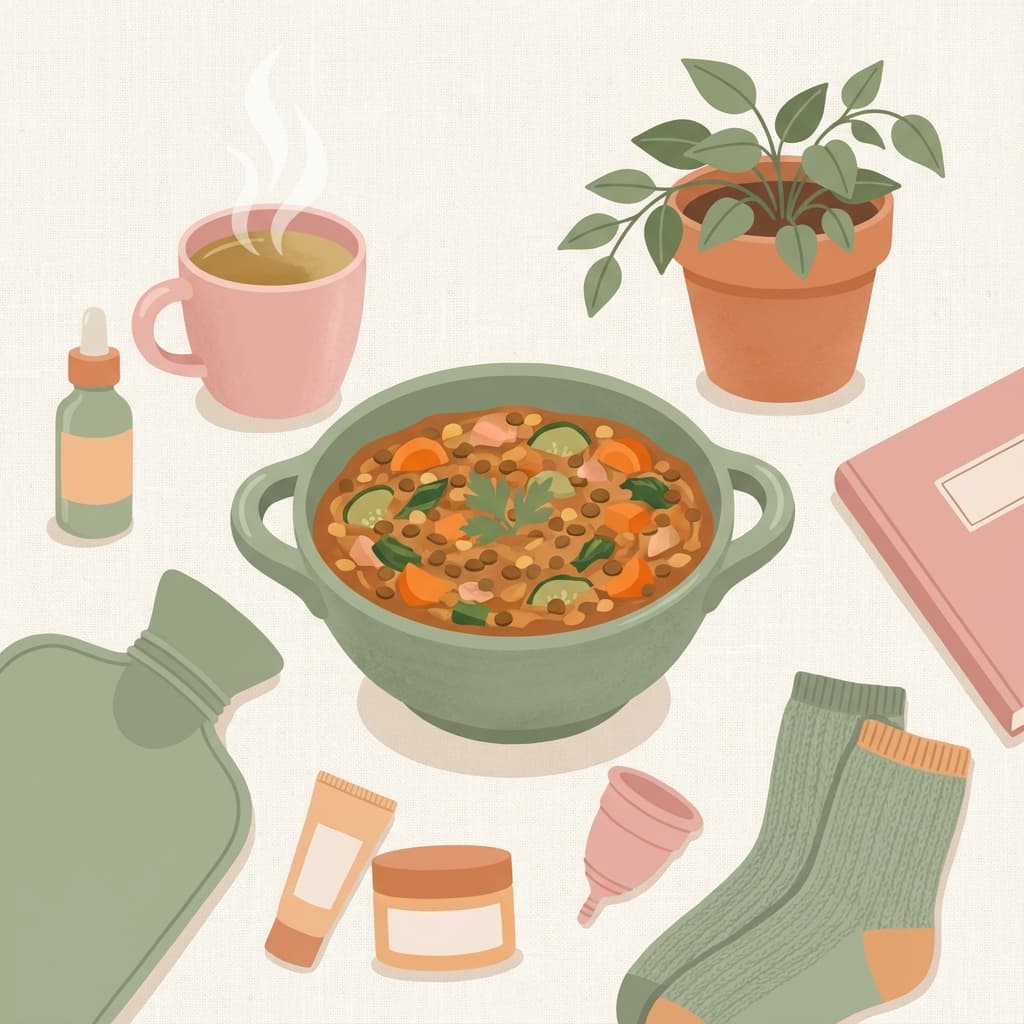
Easing ovary pain during your period
If a doctor has ruled out other causes, these measures can ease period pain:
- Painkillers such as paracetamol or ibuprofen. Check with a pharmacist if you are not sure they are safe for you.
- A heat pad or hot water bottle on your tummy, or a warm bath
- Gentle exercise such as walking, swimming, or yoga
- Massage of your tummy and back
A doctor may also suggest contraception such as the pill, implant, or injection. These thin the womb lining, which makes periods lighter and eases the pain. Contraception that stops ovulation can also stop ovulation pain. If the pain comes from endometriosis, adenomyosis, or a cyst, treatment depends on the cause.
FAQ: ovary pain during your period
Why does my ovary hurt during my period?
Most often it is period pain. Period pain comes from the womb tightening, and you can feel it low on one or both sides, where the ovaries sit. If the pain is on the same side every period or keeps getting worse, a doctor should check for causes such as an ovarian cyst or endometriosis. Sudden, severe pain needs urgent help.
Do ovaries hurt during your period?
The pain you feel in the ovary area during a period usually comes from the womb, which tightens on period days. The ovaries sit on each side of the womb, so the pain can feel like it comes from them. The ovaries themselves can hurt when there is a large cyst, or a cyst that splits or twists, or endometriosis on an ovary.
Why does only one ovary hurt during my period?
Period cramps can favor one side, and this is often harmless when the side changes from cycle to cycle. Pain on the same side each period can come from something on that side, such as a cyst or endometriosis on one ovary. On the left, the bowel is another cause. On the right, pain that moves from the belly button and gets worse can be appendicitis, which needs urgent help.
Is it normal for one ovary to hurt during your period?
Mild pain on one side that comes with your period, eases with painkillers and changes sides between cycles is usually not a sign of disease. It is less likely to be normal when it is on the same side every period, gets worse over several cycles or stops your usual activities. Then see a doctor, who may suggest an ultrasound scan to look for a cyst.
Is ovary pain normal during your period?
Mild pain in the ovary area on period days is common. Period pain can be a sharp pain or a dull ache, and painkillers, heat and gentle exercise often help. See a doctor if the pain stops your usual activities, painkillers do not help, or it comes with pain during sex or heavier periods. Get urgent help if it comes with a high temperature.
Related articles
Sources
- Period pain, NHS
- Pelvic pain, NHS
- Ovulation pain, NHS
- Ovarian cyst, NHS
- Endometriosis, NHS
- Adenomyosis, NHS
- Pelvic inflammatory disease, NHS
- Ovarian Cysts, Cleveland Clinic
- Diverticular disease and diverticulitis, NHS
- Appendicitis, NHS
- Ovarian Torsion, Cleveland Clinic
This article is general information, not medical advice. Read how we write and check our articles in our editorial policy.
Explore this topic
Related articles

September 24, 2026
Ovary Pain or Appendicitis? How to Tell, and When to Go to the ER
Right-sided pain low in the belly can come from the appendix or the right ovary. Learn how each pain usually starts and moves, which signs mean you should go to the ER now, and why only a doctor can tell them apart.
January 6, 2026
What Ovarian Cyst Pain Feels Like and When to Get Help
Ovarian cyst pain can feel like a dull ache, pressure or a sudden sharp pain on one side. Learn what a burst cyst feels like and when to get urgent help.
December 26, 2025
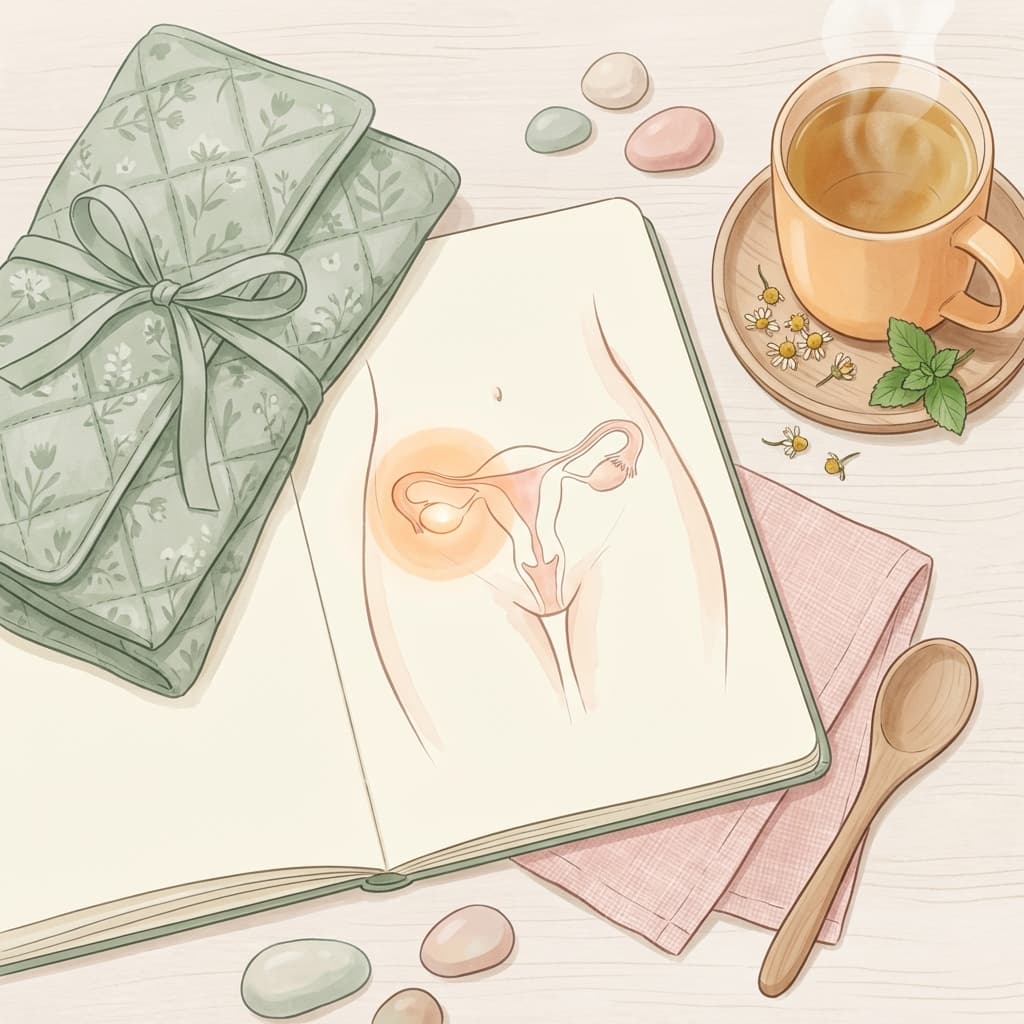
Why Period Cramps Happen on One Side (Left or Right)
One-sided period cramps are often harmless. See which causes to check, and which signs need a doctor fast, such as fever, fainting, or sudden severe pain.
October 12, 2026
Endometrioma (Chocolate Cyst): Symptoms, Scans and Treatment
An endometrioma is an ovarian cyst made of endometriosis tissue. Learn its symptoms, how it looks on ultrasound and MRI, fertility effects and treatment.
October 4, 2026
Cramps After Your Period: Causes and When to Worry
Cramps after period ends can be leftover womb cramps or ovulation, or a sign of endometriosis, a cyst or infection. Learn the causes and when to worry.

September 25, 2026
Cramps but No Period: Causes and When to See a Doctor
Cramps but no period? Take a pregnancy test if you could be pregnant. Learn the other causes, from ovulation to endometriosis, and when to see a doctor.
