Ovulation Pain vs Endometriosis: How to Tell the Difference

Quick answer: is it ovulation pain or endometriosis?
Ovulation pain is a dull ache or sharp twinge on one side of your lower tummy, about 14 days before your period, and it lasts from a few minutes to 1 or 2 days. Endometriosis pain is different: it is often severe, it can come at any time of the month, and it usually comes with other symptoms such as very painful periods, pain during sex, or pain when you poo or pee.
Endometriosis can also make ovulation itself painful. See a GP or doctor if your mid-cycle pain is severe, lasts longer than a day, keeps coming back, or does not get better with painkillers. The full list is in when to see a doctor below.
What is ovulation pain (mittelschmerz)?
Ovulation pain, also called mittelschmerz ("middle pain" in German), is pain that happens when an ovary releases an egg. Estimates of how common it is vary, from about one in five women to up to 40% of people who ovulate.
- Feels like a dull pain or sharp, sudden twinges
- Is on one side of your lower tummy at a time
- Can switch sides from month to month, depending on which ovary releases the egg
- Happens about 14 days before a period
- Lasts from a few minutes to 1 or 2 days
The pain can also stay on the same side for many months in a row. Other possible symptoms are light vaginal bleeding, clear and stretchy discharge, pain in the low back, and nausea if the pain is bad. If one-sided pain comes during your period instead, read why you only get cramps on one side during your period.
What causes ovulation pain?
There are two likely causes. Just before ovulation, the growing follicle (the small sac that holds the egg) may stretch the surface of the ovary. When the follicle breaks open, fluid or blood comes out and may irritate the lining of the abdomen.
Ovulation pain can hurt, but it is not harmful and not a sign of disease.
What is endometriosis?
Endometriosis is where cells similar to those in the lining of the womb grow in other parts of the body. This tissue is usually found inside the pelvis, for example on the ovaries, fallopian tubes and the outer surface of the uterus. About 1 in 10 women of reproductive age develop it.
The tissue responds to estrogen. It can bleed, become inflamed and cause scar tissue (adhesions), and this can cause pain, especially before and during a period. Endometriosis on an ovary can form a type of cyst called an endometrioma.
Our complete endometriosis symptoms guide covers the full list of symptoms.
Timing: the biggest clue
The timing of the pain is the clearest way to tell the two apart.
How long ovulation pain lasts
Ovulation pain usually lasts a few hours, and it can last up to 48 hours. It comes at the middle of your cycle only. In a 28-day cycle, that is around day 14.
Your cycle may be shorter or longer. Ovulation happens about 14 days before your next period, so count back from the day your period usually starts.
How long endometriosis pain lasts
Endometriosis pain does not keep to a short mid-cycle window. Endometriosis can cause severe period pain, and also symptoms at any time, such as pain in the lower tummy and back. Its most common symptom is chronic (long-lasting) pelvic pain, and period pain from endometriosis often gets worse over time.
Pain that lasts for days, pain that comes back through the month, or pain that gets worse from year to year does not fit ovulation pain.
Comparing how the pain feels
Typical ovulation pain
- On one side of the lower tummy
- A dull ache, a mild twinge, or a sudden sharp pain
- May switch sides from month to month
- Gone within a day or two
- May come with light spotting or clear, stretchy discharge
Typical endometriosis pain
- In the lower tummy, pelvis and back
- Severe period pain that stops you from doing your normal activities
- Pain during or after sex
- Pain when you poo or pee
- Often comes with heavy periods, extreme tiredness (fatigue), or problems getting pregnant
The amount of pain does not always match how much endometriosis there is. A person with a small amount of endometriosis can have severe pain, and a person with a lot of it can have mild pain or no pain.
When ovulation pain may be caused by endometriosis
Both conditions can happen together. Endometriosis and ovarian cysts can cause pain around ovulation, and endometriosis is a possible cause of severe pain in the middle of your cycle.
So pain that comes at ovulation is not always simple mittelschmerz. If mid-cycle pain is severe, lasts longer than usual, or you also have other endometriosis symptoms, tell your doctor.
Other conditions can cause mid-cycle pain too:
- Ovarian cysts
- Sexually transmitted infections (STIs), such as chlamydia
- Pelvic inflammatory disease
- Scar tissue (adhesions) from surgery
- Ectopic pregnancy
- Ovarian torsion (a twisted ovary)
- Appendicitis
To read about cysts in more detail, see what ovarian cyst pain can feel like.
Hip pain during ovulation
Some people feel pain in the hip, buttock or leg around ovulation. Ovulation pain is usually felt in the lower tummy, sometimes with low back pain. Hip pain is not among its usual symptoms.
Endometriosis can cause pain that spreads to the back. In rare cases, endometriosis grows on the nerves in the pelvis. This can cause buttock pain and sciatica: pain that goes from the back of the thigh down the leg, sometimes with numbness or weakness. These symptoms can follow the menstrual cycle or be constant. They are often blamed at first on a joint, muscle or nerve problem, which can delay the diagnosis.
Hip or leg pain that comes back at the same point in each cycle is worth telling your doctor about. Write down which side it is on, where it goes, and on which cycle days it happens. Our guide to leg pain during your period covers leg and nerve pain in more detail.
Summary of key differences
| Feature | Ovulation pain (mittelschmerz) | Endometriosis pain |
|---|---|---|
| Timing | Mid-cycle, about 14 days before a period | Often worst before and during a period, but can happen any time |
| Duration | A few minutes to 48 hours | Days, or ongoing pelvic pain |
| Location | One side of the lower tummy | Lower tummy, pelvis and back |
| Severity | Usually mild; not harmful | Can be severe enough to stop normal activities |
| Other symptoms | Light spotting, discharge | Heavy periods, pain during sex, pain when you poo or pee, fatigue |
When to see a doctor
In the UK, NHS advice is to ask for an urgent GP appointment, or get help from NHS 111, if you have tummy pain and:
- The pain is severe and painkillers have not helped
- The pain keeps coming back
- You think you may be pregnant
Contact your provider if you have missed your last period, or if you have any of these during ovulation:
- A fever above 100.4°F (38°C)
- Pain when you pee
- Red or burning skin where the pain is
- Severe nausea or vomiting
- Severe mid-cycle pain that lasts longer than a day or happens most months
- Pain that over-the-counter painkillers do not help
- Heavy vaginal bleeding between periods
Also contact your provider if your ovulation pain changes, lasts longer than usual, or comes with vaginal bleeding.
See a GP about endometriosis if you think you might have it, if your symptoms affect your everyday life, work and relationships, or if treatment from a GP has not helped.
Outside the UK, contact your usual doctor, gynecologist or urgent care service with these signs.
How doctors tell them apart
A doctor can often diagnose ovulation pain from its timing. They may also do an abdominal and pelvic exam, or an ultrasound, to rule out other causes such as endometriosis or an ovarian cyst. With ovulation pain, the pelvic exam is normal.
For endometriosis, your ob-gyn will usually start with a detailed health history, a list of your symptoms and a physical exam. Endometriosis can take a long time to diagnose, because its symptoms overlap with other conditions.
What helps ovulation pain
For mild ovulation pain, a warm bath or painkillers such as paracetamol (acetaminophen) or ibuprofen may be all you need. A heating pad can also help.
If the pain is bad, hormonal birth control that stops ovulation can prevent it. Ask your doctor whether it suits you.
Track your pain through the cycle
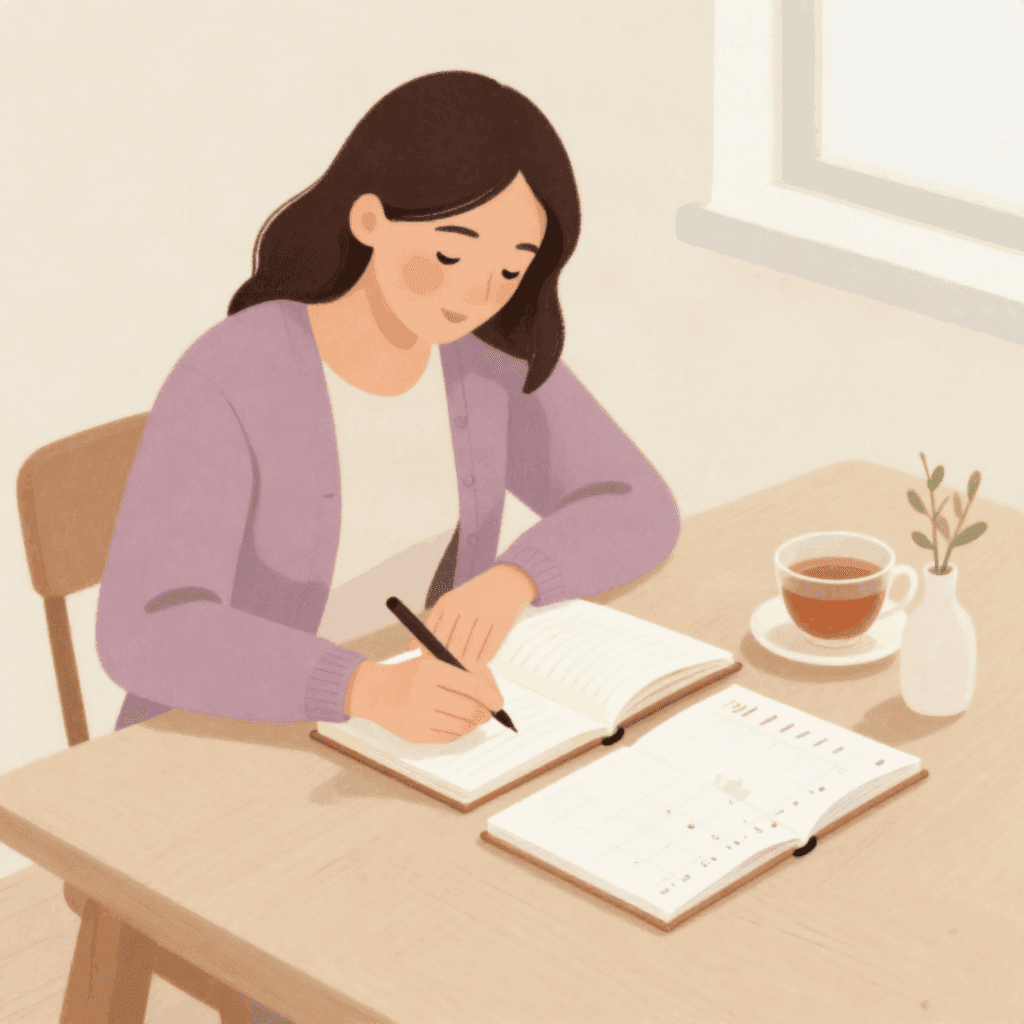
Your provider may ask you to keep a record of your cycles, and to note when you have pain and where you feel it. Over two or three cycles, note:
- The cycle day (day 1 is the first day of bleeding)
- Which side hurts, and whether the pain spreads to the back, hip or leg
- How long the pain lasts
- How bad it is on a 0 to 10 scale
- Any spotting, heavy bleeding, pain during sex, or pain when you poo or pee
- What you took for it and whether it helped
The Endolog symptom tracker app is one way to keep this record next to your cycle. Our guide to a pain diary for your doctor explains how to share it at an appointment.
Questions to ask your doctor
- Is it normal for my mid-cycle pain to last more than a day?
- Could this pain be from endometriosis or an ovarian cyst?
- Do I need a pelvic exam or an ultrasound?
- Would birth control that stops ovulation help my pain?
Related articles
Sources
- Ovulation pain, NHS
- Ovulation Pain (Mittelschmerz), Cleveland Clinic
- Mittelschmerz, MedlinePlus, U.S. National Library of Medicine
- Endometriosis, NHS
- Endometriosis, American College of Obstetricians and Gynecologists (ACOG)
- Pelvic nerve endometriosis: MRI features and key findings for surgical decision, Insights into Imaging (2025)
This article is general information, not medical advice. Read how we write and check our articles in our editorial policy.
Explore this topic
Related articles
October 4, 2026
Cramps After Your Period: Causes and When to Worry
Cramps after period ends can be leftover womb cramps or ovulation, or a sign of endometriosis, a cyst or infection. Learn the causes and when to worry.

September 25, 2026
Cramps but No Period: Causes and When to See a Doctor
Cramps but no period? Take a pregnancy test if you could be pregnant. Learn the other causes, from ovulation to endometriosis, and when to see a doctor.

March 4, 2026
Where Is Ovary Pain Felt? Location, Spread, and Causes
Ovary pain is felt low in the tummy on one side, and it can spread to the back, hip, or thigh. Learn what it can mean, including in early pregnancy.

March 3, 2026
What Triggers Endo Flare Up? 12 Common Triggers to Watch
Discover common endometriosis flare triggers from inflammatory foods to stress. Learn how to identify your personal patterns and manage chronic pelvic pain.

March 2, 2026
Painful Bowel Movement During Period: Causes and Relief
A painful bowel movement during your period often comes from prostaglandins. Learn when it can point to endometriosis, what helps and when to see a doctor.

February 23, 2026
Warning Signs an Endo Flare Is Coming: Early Detection Guide
Learn to recognize the early warning signs of an endometriosis flare. Discover how tracking fatigue and digestion helps you prepare with early detection.
