Painful Bowel Movement During Period: Causes and Relief

Quick answer: why it hurts to poop on your period
A painful bowel movement during your period usually comes from prostaglandins. Your body releases these chemicals before your period to help your uterus shed its lining, and they can act on your bowel too, so you poop more often, get diarrhea, and feel cramps.
This is common, and it is not in your head. When the pain is severe, comes with blood, or also happens outside your period, it can point to endometriosis on or near the bowel. Those signs need a doctor.
Why your period changes your bowel movements
Period pain happens when your uterus tightens. The prostaglandins released for your period can also act on your bowel, which leads to more poop, loose stools and belly cramps.
Other hormone changes play a part too. Cramps from the uterus can feel like they are in your stomach. Progesterone can cause constipation, often around ovulation or a few days after. If the ache spreads to your bottom, read about cramps in your buttocks during your period.
You are far from alone with this. In a survey of 156 healthy women with no bowel or gynecological condition, 73% had at least one gut symptom in the days before or during their period. During the period, 55% had belly pain and 28% had diarrhea.
When it can mean endometriosis
Endometriosis is tissue like the lining of the uterus growing in other places. It sometimes affects the bowel, and pain when you poop is one of its symptoms. That pain can come during your period and also at other times of the month.
Endometriosis on or in the bowel is called bowel endometriosis. Our guide to bowel endometriosis symptoms covers the signs in more detail.
Endometriosis symptoms can look like other conditions, such as irritable bowel syndrome (IBS). A clue is timing. If your bowel pain follows your cycle month after month, tell your doctor, even if you were told it is only IBS. Our list of endometriosis symptoms and the endometriosis symptom quiz can help you get ready for that talk.
Endometriosis has no cure yet, but treatment can help. Painkillers and hormone medicines are often tried first. When endometriosis affects the bowel, surgery can remove it, and sometimes part of the bowel is removed too.
What helps painful bowel movements on your period
These steps can ease the pain while you wait to see a doctor, or alongside treatment.
- Take a painkiller. Acetaminophen or ibuprofen can ease period pain. Ibuprofen taken just before your period starts may ease both the cramps and the period poops. Read the label, and ask a pharmacist if you are not sure a painkiller is safe for you.
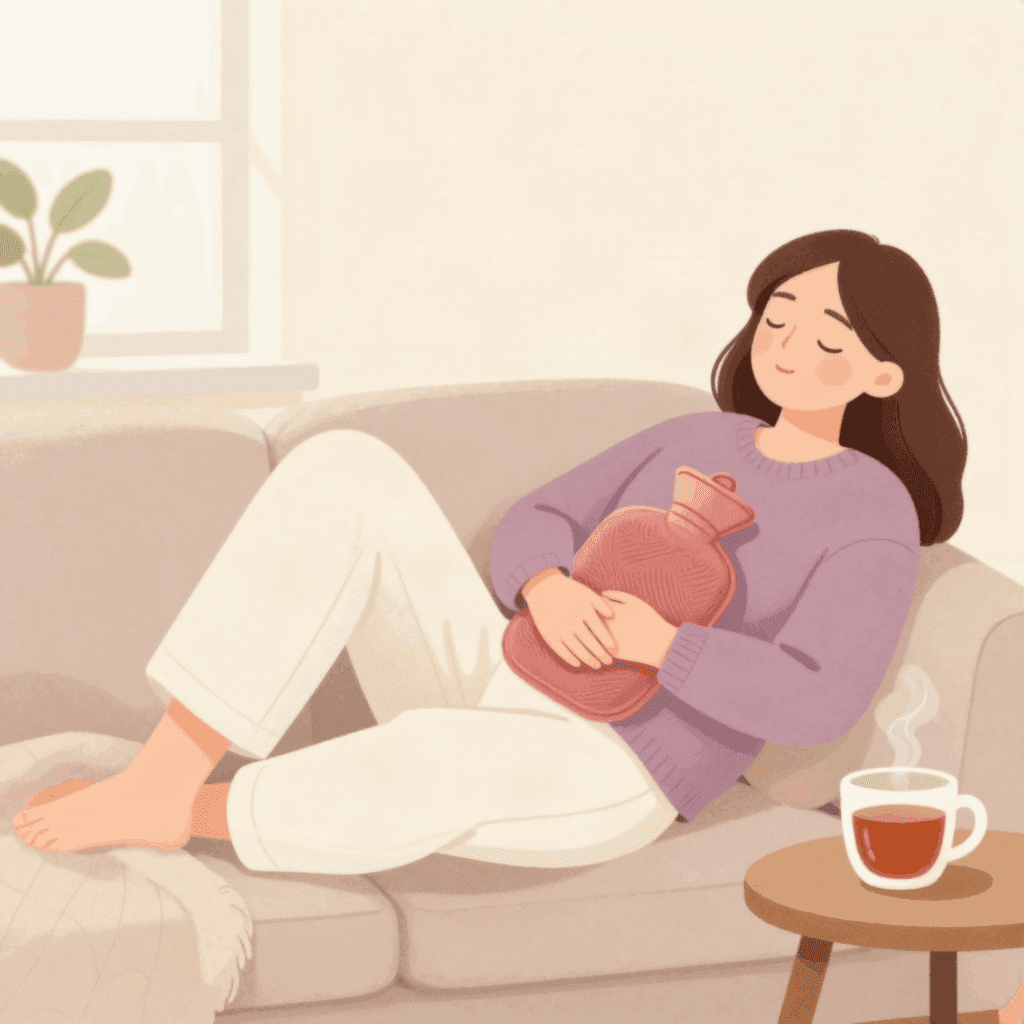
- Use heat. A heating pad, a hot water bottle wrapped in a towel, or a warm bath can calm the cramps.
- Move gently. Walking, swimming, yoga or cycling can help with period pain.
- Drink water and eat fiber. Eat plenty of natural fiber. If you have diarrhea, drink a lot of water, and skip coffee for a few days, because coffee has a laxative effect.
- Ease constipation early. A gentle laxative or stool softener can help with constipation.
When to see a doctor
See your doctor or OB-GYN if:
- it hurts when you poop, during your period or at other times
- your period pain stops you from doing your usual daily activities
- your periods get more painful, heavier or irregular
- you notice a change in how much you poop
- you have blood in your poop for 3 weeks, or you lose weight without trying
If you have pain together with blood in your stool, see your doctor as soon as you can, even if it only happens on your period.
Get help the same day if your period pain is severe or worse than usual and painkillers have not helped. Also get urgent help if your poop is black or dark red, or you have bloody diarrhea.
Go to the emergency department or call your local emergency number if you are bleeding from your rectum non-stop, or there is a lot of blood, such as red toilet water or large clots.
Track the pattern to show your doctor
Bowel pain that follows your cycle is easy to dismiss in a short appointment. A few months of notes make the pattern clear. Write down the day of your cycle, how bad the pain was, what your stool was like, and any blood. The free printable food and symptom diary has columns for bowel movements, symptoms and cycle day.
The Endolog endometriosis tracker app lets you log pain, bowel symptoms and your cycle in one place. You can then share a clear report with your doctor.
Related guides
Sources
- Here's the Deal with Period Poops, Cleveland Clinic
- Gastrointestinal symptoms before and during menses in healthy women, BMC Women's Health (via PubMed Central)
- Period pain, NHS
- Endometriosis, NHS
- Bleeding from the bottom (rectal bleeding), NHS
This article is general information, not medical advice. Read how we write and check our articles in our editorial policy.
Explore this topic
Related articles

February 13, 2026
Endometriosis Pain vs. Normal Period Pain: Key Differences
Learn to distinguish endometriosis symptoms from regular cramps. Compare pain intensity, timing, and locations to better understand your pelvic health journey.
October 17, 2026
Endometriosis in Teens: Signs Not to Dismiss and What to Do
Endometriosis in teens is real and often missed. Learn the signs that need a doctor, how it is diagnosed, first treatments and what to track for a visit.
October 5, 2026
Heating Pads for Endometriosis and Period Pain: Safe Use
How to use a heating pad for endometriosis and period pain: how hot, how long, where to put it, why not to sleep on it, heat rash, and when to see a doctor.
October 4, 2026
Cramps After Your Period: Causes and When to Worry
Cramps after period ends can be leftover womb cramps or ovulation, or a sign of endometriosis, a cyst or infection. Learn the causes and when to worry.
October 3, 2026
What Helps With Period Cramps? Options With Evidence
What helps with period cramps: anti-inflammatory painkillers taken early, heat, exercise and hormonal birth control. See the evidence and when to get help.

September 24, 2026
How to Describe Period Pain (to a Doctor, a Partner or a Boss)
Describe period pain with three things: what it feels like, where it is, and what it stops you doing. Get a word bank, a 0 to 10 scale based on your day, a one-line script for your doctor, and an honest look at the heart attack comparison.
