Myfembree Side Effects in Endometriosis and What to Track


The most common Myfembree side effects in endometriosis are headache, hot flashes and night sweats, mood changes, irregular bleeding and nausea. The serious risks are blood clots, bone loss and low mood, which is why there is a 24-month limit and a list of people who must not take it.
Myfembree is one tablet a day that contains relugolix 40 mg, estradiol 1 mg and norethindrone acetate 0.5 mg. The FDA approved it for moderate to severe pain from endometriosis in people who have not reached menopause. It is also approved for heavy periods caused by fibroids, but this page is only about endometriosis.
If your doctor has offered it, this guide covers how it works, how well it worked in the trials, the side effects and warnings, contraception, and what to write down each month. It is general information and not medical advice. Your own doctor decides what is right for you. For a comparison of all the main treatments, see our guide to endometriosis treatment options.
How Myfembree works
Each tablet has three medicines in it, and each one has a job:
| Part | Type | What it does |
|---|---|---|
| Relugolix 40 mg | GnRH antagonist | Lowers oestrogen and progesterone |
| Estradiol 1 mg | Oestrogen | Gives back a small amount to protect bone |
| Norethindrone acetate 0.5 mg | Progestin | Protects the womb lining |
Relugolix blocks the signal from your brain that tells your ovaries to make hormones. Oestrogen (estrogen in the US) and progesterone levels fall, and endometriosis pain goes down. Low oestrogen also thins bone, so the tablet adds back a small dose of estradiol to reduce bone loss. The progestin protects the lining of the womb from the added oestrogen.
This is the main difference from Orilissa (elagolix), which is a GnRH antagonist on its own. With Myfembree, the add-back hormones are already in the same tablet.
Because of their side effects, GnRH antagonists are a second-line choice. Doctors may offer them when hormonal contraceptives or progestogens, such as dienogest (Visanne), have not helped.
How to take it
- Take one tablet once a day, at about the same time, with or without food.
- Start as early as possible after your period starts, and no later than 7 days after. If you start later in your cycle, your bleeding may be heavy or irregular in the first month.
- Stop hormonal contraceptives before you start. Your doctor will also check that you are not pregnant.
- If you miss a dose, take it the same day as soon as you remember. Then take the next one at your usual time the next day.
- The total time on treatment is 24 months, because the bone loss may not reverse.
How well does it work
Two 6-month trials compared Myfembree with a dummy tablet (placebo) in more than 800 people with endometriosis confirmed at surgery or from a tissue sample. A responder was a person whose daily pain score fell by a set amount over the last 5 weeks of treatment, with no more pain medicine than before. These were the results at 24 weeks:
| Pain type | Trial | Myfembree | Placebo |
|---|---|---|---|
| Period pain | First | 74.5% | 26.9% |
| Period pain | Second | 75.1% | 30.5% |
| Pelvic pain between periods | First | 58.5% | 39.6% |
| Pelvic pain between periods | Second | 65.9% | 42.5% |
Pain during sex also went down a little more than on placebo, and fewer people needed opioid pain medicine.
The numbers show two things. Most people had a clear drop in period pain. For pain between periods, the gap with placebo was smaller, and a third or more of people on Myfembree did not reach a response.
People who kept taking it in a 2-year follow-on study kept their pain relief. At 2 years, 84.8% were responders for period pain and 75.8% for pain between periods, and 91% used no opioids. That study had no placebo group, and about a third of people left it early, so these numbers come only from the people who stayed on it.
How long before it helps
The trials judged the result after 24 weeks, so give it a few months before you decide. Ask your doctor when you will review it together, and bring your pain scores from before you started.
Your bleeding also changes. In the follow-on study, 51.6% had no periods by week 12 and nearly 80% by week 52. Most of the others had only spotting. Irregular bleeding usually started in the first 1 to 2 months.
Common Myfembree side effects
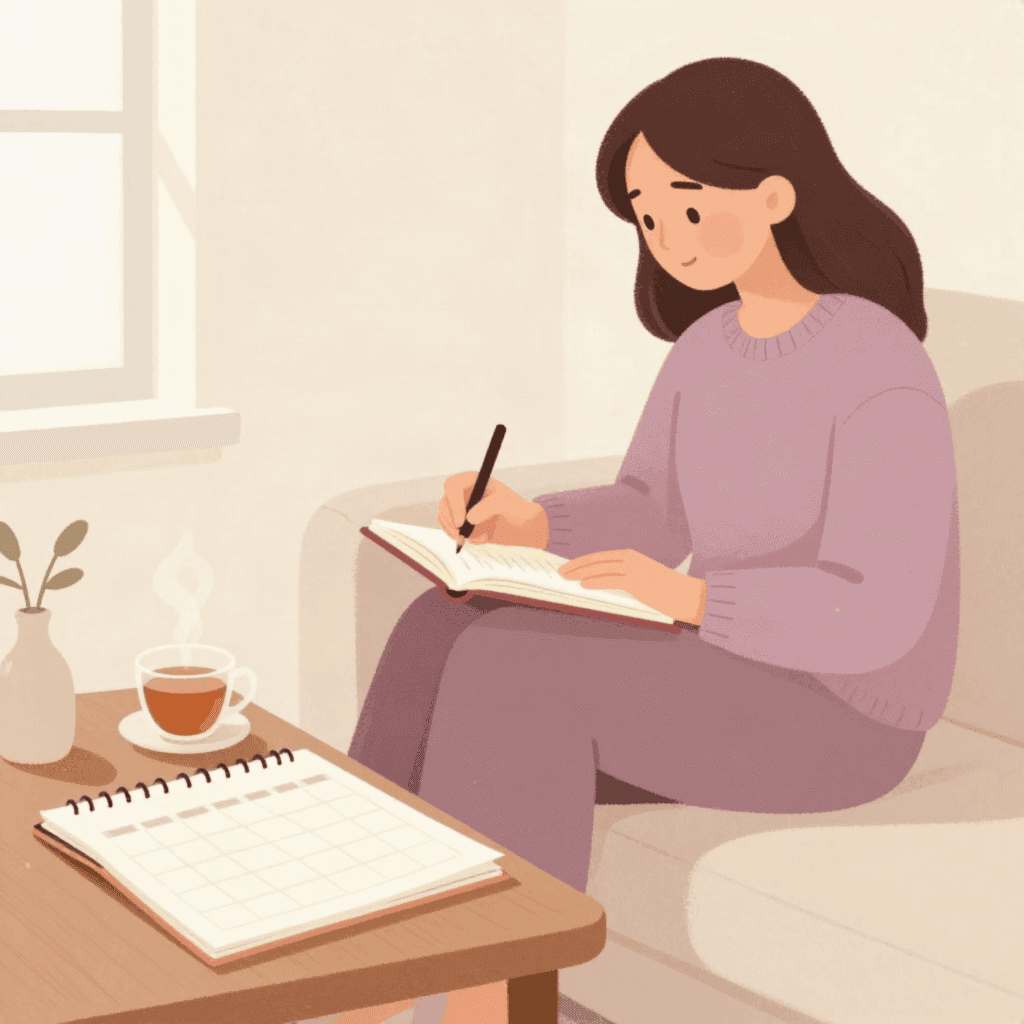
A short note each day shows your doctor whether the relief is worth the side effects.
These were the side effects that happened in at least 3% of people on Myfembree, and more often than on placebo, in the two endometriosis trials:
| Side effect | Myfembree | Placebo |
|---|---|---|
| Headache | 33.0% | 26.4% |
| Hot flashes or night sweats | 13.2% | 7.2% |
| Mood changes, low mood or anxiety | 9.1% | 7.2% |
| Irregular or heavy bleeding | 6.7% | 4.6% |
| Nausea | 6.0% | 4.1% |
| Toothache | 5.5% | 2.4% |
| Back pain | 4.8% | 2.9% |
| Lower sex drive | 4.3% | 1.2% |
| Joint pain | 3.6% | 2.2% |
| Tiredness | 3.1% | 2.4% |
| Dizziness | 3.1% | 1.2% |
Diarrhoea, swollen ankles or feet and vaginal dryness each happened in just over 2% of people. Overall, 4.5% of people on Myfembree stopped because of side effects, against 2.9% on placebo. The most common reason was mood problems.
Other changes your doctor may check:
- Cholesterol. Of people with normal cholesterol at the start, 13.6% moved into the borderline-high range, against 9.3% on placebo. Good (HDL) cholesterol went down in more people too.
- Blood pressure. If your blood pressure is controlled, your doctor will keep checking it and may stop Myfembree if it rises a lot.
- Blood sugar. It may raise blood sugar, so people with diabetes or prediabetes may need more checks.
- Hair loss. Hair loss or thinning can happen, and nobody knows if it reverses. Talk to your doctor if it worries you.
- Liver and gallbladder. Liver test changes and gallbladder problems are rare. Yellow skin or eyes, or pain in the upper right belly, need a call to your doctor.
The blood clot warning and who should not take it
Myfembree has a boxed warning about blood clots at the top of its label. Like other medicines with oestrogen and a progestin, it increases the risk of blood clots in the legs or lungs, stroke and heart attack. The risk is highest if you are over 35 and smoke, or have high blood pressure that is not controlled.
You must not take Myfembree if you:
- Have or have had a blood clot in a leg or lung
- Have heart or blood vessel disease, including past stroke or heart attack
- Have a heart valve or heart rhythm problem that causes clots, such as atrial fibrillation
- Have a condition that makes your blood clot too easily
- Have high blood pressure that is not controlled
- Are over 35 and smoke
- Are over 35 and have migraine with aura, or headaches with signs like numbness or weakness
- Are pregnant
- Have known osteoporosis
- Have or have had breast cancer or another hormone-sensitive cancer
- Have liver disease
- Have vaginal bleeding that has not been explained
- Have had an allergic reaction to Myfembree
If you plan surgery or long bed rest, your doctor may ask you to stop it 4 to 6 weeks before. Tell your doctor about every medicine you take, because some medicines change how much relugolix gets into your blood.
Bone density and the 24-month limit
Low oestrogen thins bone, even with the add-back hormones. After 6 months, bone density in the lower spine fell by 0.72% on average, against a small gain on placebo. After 24 months, 20.2% of people had lost more than 3% and 2.5% had lost more than 7%. The loss may not fully reverse after you stop, and nobody yet knows how it changes the chance of a broken bone later in life.
That is why you can take it for 24 months in total. A bone scan (DXA) is recommended before you start, and once a year while you take it for endometriosis. Tell your doctor if you have broken a bone in a small fall, or take medicines that can thin bone, such as steroids or long-term acid-reflux tablets. If your diet is low in calcium and vitamin D, supplements may help, though this was not tested.
Mood and depression warnings
GnRH antagonists, including Myfembree, have been linked with depression, mood changes and thoughts of suicide. In the trials, mood problems were the most common reason people stopped. Some people had thoughts of suicide, and all of them had a past history of depression or anxiety.
If you have had depression or anxiety before, tell your doctor before you start. Watch your mood closely in the first weeks. Get help right away if you have thoughts of harming yourself. In the US, call or text 988. Call your doctor soon if you have new or worse low mood, anxiety or mood swings. Our article on endometriosis, depression and anxiety has more on how pain and mood link.
Contraception while you take it
Myfembree is not a contraceptive, and it can cause early pregnancy loss. Use effective non-hormonal contraception, such as condoms or a copper coil, during treatment and for at least 1 week after your last tablet. Do not take hormonal birth control at the same time. Pills with oestrogen can raise the risk of side effects and make Myfembree work less well.
Lighter or missing periods can hide an early pregnancy. Take a pregnancy test if you think you could be pregnant, and stop Myfembree if you are.
After you stop, your periods usually come back. After 12 months of treatment, 97.9% had a period again, on average about 5 weeks after the last tablet.
What to track month by month
A simple record answers one question for you and your doctor: is the pain relief worth the side effects? The trials used a daily pain score from 0 to 10, and you can do the same at home. If you can, write down one or two weeks of your usual symptoms before you start. For help with scores, see how to describe period pain.
| When | What to note |
|---|---|
| Before you start | Usual pain scores, pain medicine, bleeding pattern |
| Month 1 | Bleeding, headaches, hot flashes, mood |
| Months 2 to 3 | Pain scores against your starting point |
| Month 6 | Overall change, side effects, bone scan date |
| Each year | Bone scan, months used out of 24 |
Each day, or at least each week, write down:
- Pain score. Your worst pain from 0 to 10, on bleeding days and on other days. Add what the pain stopped you doing.
- Pain medicine. What you took and how often. Less use is a sign that the treatment helps.
- Bleeding. Spotting, heavy days or no bleeding, with dates.
- Headaches and hot flashes. How often and how bad.
- Mood. Low, anxious or irritable days. Tell someone at once about any thoughts of harming yourself.
- Blood pressure. If you have a home monitor, note your readings.
- Other side effects. Nausea, back or joint pain, toothache or anything new.
- Missed tablets. Any day you missed a dose.
Endolog is a pain and symptom diary for endometriosis. You log pain severity, where it hurts, bleeding, digestive and bowel symptoms, fatigue and flare notes on the days they happen, and you have a record to show at your review. Keep mood and blood pressure notes in a paper notebook next to it. For the medicine itself, print the free medication log.
Cost and savings programs
Insurance cover for Myfembree varies from plan to plan. Ask your insurer or pharmacist what your plan pays and whether your doctor needs to send extra forms first.
The manufacturer runs a Myfembree copay savings program for people with commercial insurance. It is not open to people with government cover such as Medicare or Medicaid. Check the program terms, which can change.
When to call your doctor
Get emergency help now (call 911) if you have signs of a blood clot, stroke or heart attack, such as:
- Chest pain or heaviness, sudden shortness of breath or coughing up blood
- Pain, tenderness or redness in one leg
- A sudden, severe headache, weakness or numbness in an arm or leg, or trouble speaking
- Sudden loss of vision or double vision
Also get help now if you have thoughts of harming yourself. In the US, call or text 988.
Call your doctor soon if:
- Your low mood, anxiety or mood swings get worse
- Your skin or eyes turn yellow, or you have pain in the upper right belly
- You could be pregnant
- You have swelling of your face, lips or throat, or hives
- You break a bone after a small fall
Talk to your doctor at your review if:
- Your pain has not gone down after a few months
- The side effects outweigh the relief
- You are near the 24-month limit and want to plan what comes next
Talk to your doctor before you stop taking it.
Frequently asked questions
What are the most common Myfembree side effects?
In the endometriosis trials, the most common were headache, hot flashes or night sweats, and mood changes. Irregular bleeding, nausea, toothache, back pain and lower sex drive were less common.
Does Myfembree cause weight gain?
Weight gain is not on the list of common side effects in the endometriosis trials. If your weight changes, note it and tell your doctor.
How long can I take Myfembree?
Up to 24 months in total, because of bone loss that may not reverse.
Will Myfembree stop my periods?
It often does. About half of people had no periods by week 12. Do not count on missing periods as a sign that you are not pregnant.
Is Myfembree birth control?
No. Use non-hormonal contraception during treatment and for at least 1 week after.
How is Myfembree different from Orilissa?
Both are GnRH antagonist tablets. Myfembree also contains add-back estradiol and a progestin, comes in one dose and can be used for up to 24 months. Read our Orilissa guide to compare.
This article is for general information. It is not medical advice and does not replace advice from your own doctor, who decides what treatment is right for you. If you think you have an emergency, call 911.
Sources
- MYFEMBREE (relugolix, estradiol, and norethindrone acetate) tablets: prescribing information and Medication Guide, U.S. Food and Drug Administration (FDA) label, via DailyMed, National Library of Medicine
- Relugolix, Estradiol, and Norethindrone, MedlinePlus, National Library of Medicine
- Once daily oral relugolix combination therapy versus placebo in patients with endometriosis-associated pain: two replicate phase 3, randomised, double-blind, studies (SPIRIT 1 and 2) (Giudice LC et al. The Lancet, 2022), The Lancet
- Two-year efficacy and safety of relugolix combination therapy in women with endometriosis-associated pain: SPIRIT open-label extension study (Becker CM et al. Human Reproduction, 2024), Human Reproduction
- ESHRE guideline: endometriosis (Becker CM et al. Human Reproduction Open, 2022), European Society of Human Reproduction and Embryology (ESHRE)
- Myfembree cost and savings, Sumitomo Pharma America (manufacturer)
This article is general information, not medical advice. Read how we write and check our articles in our editorial policy.
Explore this topic
Related articles

October 10, 2026
Mirena for Endometriosis and Adenomyosis: What to Expect
Mirena is a hormonal IUD that can ease endometriosis pain and adenomyosis bleeding. See the evidence, the first 6 months, side effects and what to track.

October 9, 2026
Lupron for Endometriosis: Side Effects and Add-Back Therapy
Lupron for endometriosis is a shot that lowers estrogen. Learn about the first-weeks flare, side effects, add-back therapy, bone loss and what to track.
October 8, 2026
Norethindrone (Aygestin) for Endometriosis: What to Expect
Aygestin (norethindrone acetate 5 mg) is a progestin tablet for endometriosis. How it works, side effects, spotting, mood, period delay and what to track.

September 29, 2026
Orilissa (Elagolix) for Endometriosis: What to Expect and What to Track
Orilissa (elagolix) is a daily tablet for moderate to severe endometriosis pain. Learn how the two doses work, the time limits, side effects, bone and mood warnings, contraception and what to track for your doctor.

September 24, 2026
Dienogest vs Visanne: Same Drug? How Long It Takes to Work
Visanne is a brand name for dienogest 2 mg, a daily tablet for endometriosis pain. See how long relief can take, the side effects and what to track.

October 7, 2026
Tranexamic Acid for Heavy Periods: Uses and Side Effects
Tranexamic acid for heavy periods: how this non-hormonal tablet cuts blood loss, when to take it, side effects, who should avoid it and what to track.
