
Bleeding
How long and how heavy, in your own words
A doctor will want to know how many days you bleed and how heavy the worst days are. A note on each day answers that better than a guess weeks later.
Write down each bleeding day, how much it hurts and where, and the bladder, bowel and pressure symptoms in between. Your doctor then sees several cycles, not just the last bad week.
Fibroids are non-cancerous growths in or around the womb, and many people who have them get no symptoms at all. When they do cause symptoms, these can include heavy or painful periods, lower back pain, peeing more often and pain during sex, as well as a feeling of pressure or fullness in the belly and constipation.
At the GP, you are asked about your periods and symptoms first, and you may then be referred for an ultrasound scan. A diary kept over several cycles lets you say how many days you bleed, how often the heavy days come and which symptoms keep coming back. The same record is useful later, when you talk with a gynaecologist about scan results or a follow-up visit. If you also live with endometriosis, the endometriosis tracker is the same app, so one diary covers both.
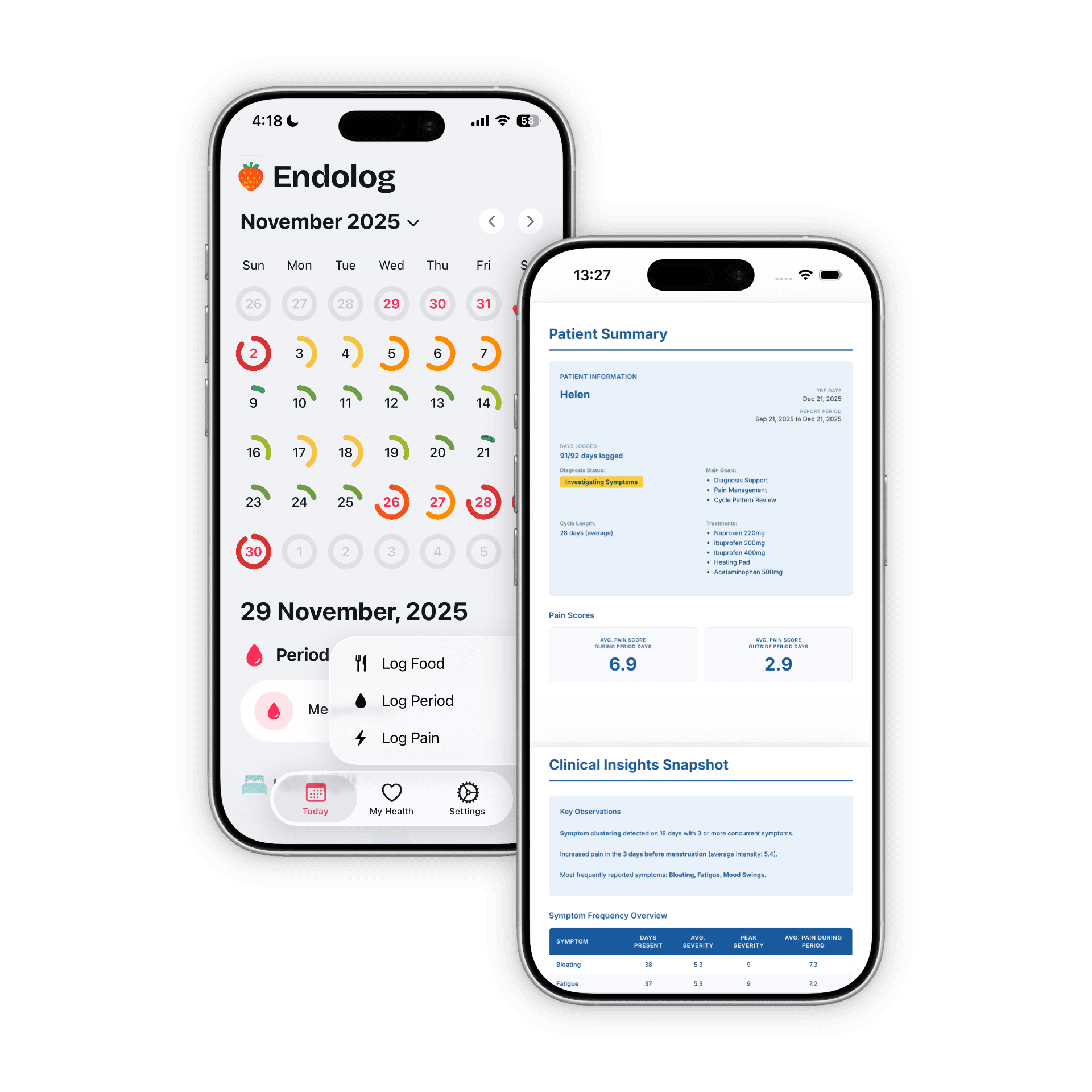
Short entries on the day add up to a clear record by the time of your appointment.
Bleeding
A doctor will want to know how many days you bleed and how heavy the worst days are. A note on each day answers that better than a guess weeks later.
Pressure and bladder
A full feeling low in your tummy, trips to the toilet at night or constipation can seem too small to mention. Seen across a month, they tell a clearer story.
Scans and follow-up
If you are waiting for a scan or going back for a check-up, entries from several cycles show whether your periods and pain are the same, better or worse than before.
Bleeding, pain and the everyday symptoms that come with them, in one calendar.
Tap each day you bleed. Add a note when you pass clots, bleed through to your clothes or stay home because of it.
Rate the pain each day on a number scale, so your record shows the difference between a sore day and a day you could not work.
Use the pelvic body map to show if the pain is low in the middle, on one side or in your lower back.
Log needing to pee often, needing to go at night or constipation, on the day it happens.
Add pelvic pressure, bloating, back pain or pain during sex. Use a note for anything else, such as pain down your legs.
Keep meals in the food diary with how you felt after them, and mark stressful days in the same calendar.
A period app mostly counts the days to your next period. With fibroids, the length of each period and the symptoms around it matter as much.
| Comparison point | Generic period tracker | Endolog |
|---|---|---|
| Period length | A start date and a guess at the end | Each bleeding day marked, so a long period is easy to see |
| Heavy days | Light, medium or heavy | Your own note on what a heavy day meant for you |
| Pelvic pain | A cramps tick box | A pain score and the place on a pelvic body map |
| Bladder and bowel | Not part of the app | Needing to pee often or constipation, logged by day |
| For your doctor | Dates on your phone screen | A PDF report of what you logged |
Guides to heavy bleeding and pelvic pressure, and the tracker for endometriosis.
Signs that a period is heavier than it should be, and when to see a doctor.
Read the guide
Common causes of pelvic pressure, and the signs that need a doctor soon.
Read the guide
The same diary, set out for endometriosis pain and flares.
See the page
Before you download
What you log about your periods and body is health data. The privacy policy explains how Endolog handles it, and the example report shows what your doctor receives. To start on paper, print the free period and symptom tracker.
Answers about using Endolog to track fibroid symptoms.
Yes. You mark each day you bleed and add notes, for example that you passed clots or changed protection more often than usual. Endolog does not measure blood loss, so your notes show what a heavy day was like.
No. Endolog does not diagnose anything. It keeps a record of what you log, and you can take that record to your GP or gynaecologist.
Yes. Bladder and bowel symptoms go in the same diary as your bleeding and pain, on the day they happen.
Yes. One diary holds your bleeding, pain and symptoms, whichever condition they come from.
It is a summary of your own entries: bleeding days, pain scores, where the pain was, and the symptoms and notes you added. You can print it or send it before your appointment.
Endolog is a free download from the Apple App Store for iPhone and iPad, with an optional in-app subscription.
Track pelvic pain, bleeding, digestive symptoms, fatigue, and flare patterns in one place. Endolog turns those daily logs into clean PDF reports you can bring to your next appointment.