Signs You're Losing Too Much Blood During Your Period

You may be losing too much blood during your period if you soak a pad or tampon every 1 to 2 hours, your period lasts more than 7 days, you pass clots bigger than a quarter, or you bleed through to your clothes or bedding at night. Heavy bleeding is common and treatable, so it is worth a visit to a doctor, and some signs need urgent help.
This guide explains how much bleeding is too much in everyday terms, what can cause it, how to spot low iron, and when to act. It is general information and not medical advice.
How much period bleeding is too much?
Most people lose about 2 to 3 tablespoons of blood in a period. Doctors call it heavy menstrual bleeding (menorrhagia) when you lose more than 5 tablespoons. You cannot measure that at home, so use what you can see. You may have heavy periods if you:
- Change often. You need a new pad or tampon every 1 to 2 hours, or you empty your menstrual cup more often than that.
- Soak through for hours. You bleed through one or more pads or tampons each hour for more than two hours in a row.
- Double up. You wear two products at once, such as a pad and a tampon.
- Bleed for a long time. Your period lasts more than 7 days.
- Pass large clots. Your clots are the size of a quarter or larger. Our guide to blood clots during your period explains which clots are common and which are not.
- Flood at night. You have to get up in the night to change, or you bleed through to your clothes or bedding.
- Change your plans. You avoid work, exercise or going out on your heaviest days.
- Feel drained. You are tired or short of breath a lot.
One sign is enough to see a doctor. Heavy periods are very common. Periods can also be heavier when they first start, after pregnancy, or near the menopause. What counts is a change from your own normal, or bleeding that gets in the way of your life.
What causes heavy periods
Sometimes no cause is found. Common causes of heavy bleeding include:
- Growths in the uterus. Fibroids and polyps in or on the uterus can make periods heavy.
- Adenomyosis. In adenomyosis, tissue like the lining of the uterus grows into its muscle wall. Read about adenomyosis symptoms.
- Endometriosis. It can cause heavy periods as well as pain. See the common symptoms of endometriosis.
- Hormone imbalances. Thyroid disease, PCOS, and cycles where you do not ovulate can all make periods heavier.
- Bleeding disorders. Conditions such as von Willebrand disease stop the blood from clotting well. If an exam finds no clear cause, ask to be checked for a bleeding disorder.
- Medicines. Blood thinners can make periods heavier.
- Pregnancy problems. Heavy bleeding can come from a pregnancy complication, such as a miscarriage. If you could be pregnant, read the urgent help section below.
Rarely, heavy bleeding is a sign of womb cancer. This is one more reason to get new or changing bleeding checked.
Signs heavy bleeding has lowered your iron
When you lose a lot of blood every month, your body can run short of iron. Heavy periods are a very common cause of iron deficiency anaemia. Common signs are:
- tiredness and lack of energy
- shortness of breath
- a heartbeat you can feel (palpitations)
- skin that is paler than usual
- headaches
A simple blood test, a full blood count, shows if your iron is low. The usual treatment is iron tablets for about 6 months, plus treatment for the heavy periods. Ask for the test before you start iron on your own.
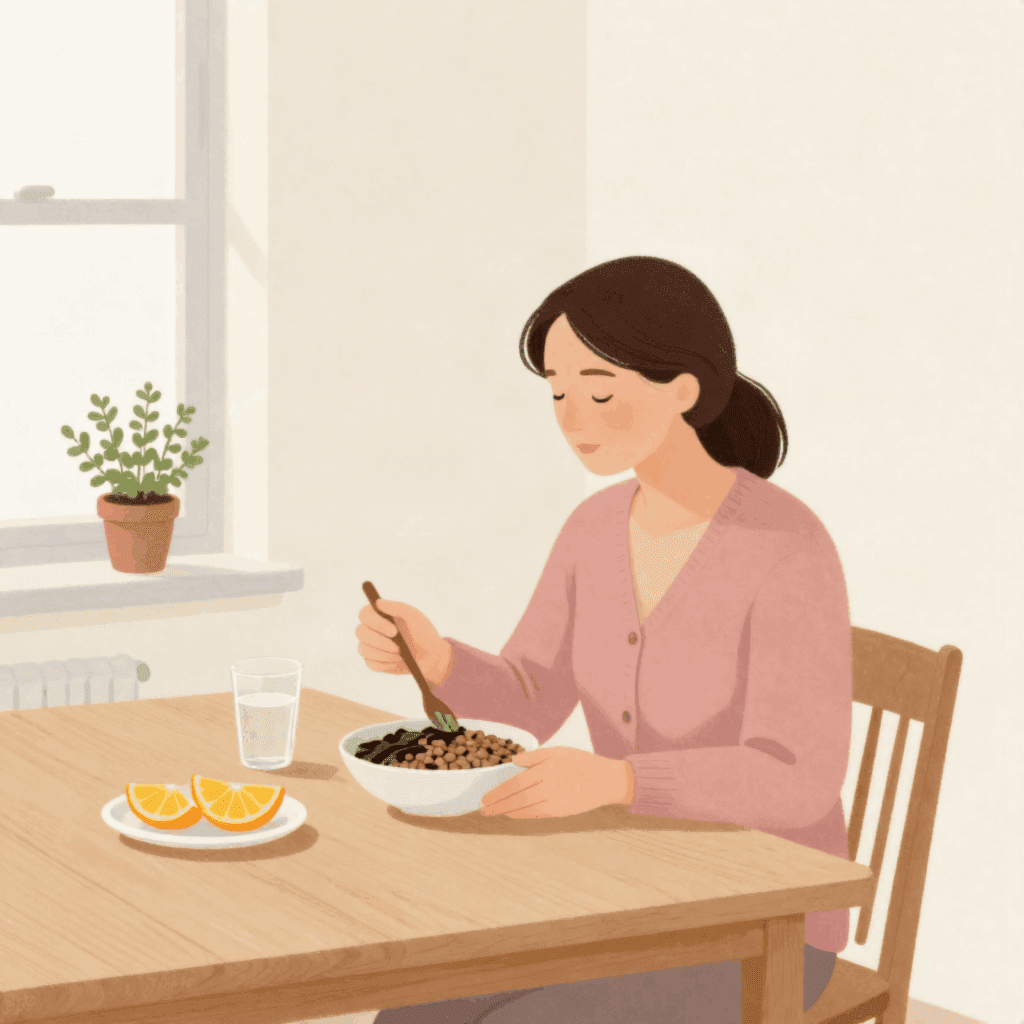
Foods such as dark leafy greens, meat and fortified cereals add iron to your diet. Food alone may not fix a low level. If you feel tired every month, our guide to period fatigue covers the other causes. If you feel lightheaded on heavy days, read our guide to dizziness during your period.
What to track before you see a doctor
A record of two or three periods helps your doctor see how heavy your bleeding is. For each day of bleeding, write down:
- Products. How many pads, tampons or cup changes you needed, and how fast each one filled.
- Doubling up. Days you wore two products at once.
- Nights. How often you woke to change, and any leaks onto sheets or clothes.
- Clots. How many, and their size compared with a coin.
- Length. The first and last day of bleeding.
- How you felt. Tiredness, shortness of breath, a racing heart or feeling faint.
- Missed plans. Work, school or exercise you skipped because of bleeding.
Also note any bleeding between periods or after sex, any medicines you take, and if you could be pregnant. Our guide to a pain diary for your doctor shows how to bring a record like this to an appointment.
Endolog is a pain and symptom diary app. You can log flow, clots, pain and tiredness each day, so the pattern is clear when you see your doctor.
When to see a doctor
Book an appointment if:
- your periods are heavy and they affect your daily life
- you have had heavy periods for some time
- you bleed longer than 7 days, or so much that you change your pad or tampon nearly every hour
- you have severe pain with your periods
- you bleed between periods or after sex
- you have signs of low iron, such as tiredness or shortness of breath
- you have fainted, even once
Treatment can help. Options include some types of hormonal contraception, anti-inflammatory painkillers and tranexamic acid, a medicine that reduces bleeding. A doctor may also do an exam, blood tests or a scan to find the cause.
When to get urgent help
Some signs mean you need care the same day. Call 911 in the US or 999 in the UK when the table says so.
| What happens | What to do |
|---|---|
| You soak two or more pads or tampons each hour for 2 to 3 hours in a row | Get emergency care |
| You faint and have chest pain or a pounding, fluttering or irregular heartbeat | Call 911 or 999 |
| You faint and cannot be woken within 1 minute, or do not fully recover | Call 911 or 999 |
| You are pregnant and the bleeding is heavy, or you feel faint or dizzy, or you have severe tummy or shoulder pain | Call 911 or 999 |
| You are pregnant and have light bleeding or spotting | Call your maternity team or doctor |
If you do not know if you could be pregnant, treat heavy bleeding with pain or faintness as urgent.
Frequently asked questions
How many pads a day is too many on your period?
There is no fixed number for a whole day. What matters is how fast you soak them. Changing a pad or tampon every 1 to 2 hours, or needing to change during the night, is a sign of heavy bleeding.
How do I know if I am losing too much blood on my period?
Look at how often you change, how long you bleed and how you feel. Bleeding for more than 7 days, passing large clots, and feeling tired or short of breath are all signs to see a doctor.
Can heavy periods make you anaemic?
Yes. Heavy periods are a very common cause of iron deficiency anaemia. A blood test can check your iron.
Is it normal to bleed through a pad overnight?
If you bleed through to your bedding often, or you must get up to change, your periods may be heavy. Talk to a doctor.
This article is for general information. It is not medical advice and does not replace advice from your own doctor. If you think you have an emergency, call 911 in the US or 999 in the UK.
Sources
- Heavy periods, NHS
- Heavy Menstrual Bleeding, Centers for Disease Control and Prevention (CDC)
- Menorrhagia (Heavy Menstrual Bleeding), Cleveland Clinic
- Iron deficiency anaemia, NHS
- Fainting, NHS
- Vaginal bleeding in pregnancy, NHS
This article is general information, not medical advice. Read how we write and check our articles in our editorial policy.
Explore this topic
Related articles

October 1, 2026
Blood Clots During Period: What Is Normal and When to Worry
Blood clots during your period are usually normal. Learn what size is common, when large clots mean heavy bleeding, the causes, and when to get help.
September 30, 2026
Dizziness During Your Period: Causes and Red Flags
Dizziness during your period often comes from pain, heavy bleeding, low iron or too little food and water. Learn what helps and which signs are urgent.

September 25, 2026
Cramps but No Period: Causes and When to See a Doctor
Cramps but no period? Take a pregnancy test if you could be pregnant. Learn the other causes, from ovulation to endometriosis, and when to see a doctor.

March 11, 2026
Adenomyosis Symptoms: Heavy Periods, Pain and What to Track
Adenomyosis symptoms include heavy periods, bad cramps, pelvic pain and pain during sex. Learn what each feels like, when to see a doctor and what to log.

February 5, 2026
Period Fatigue: Why You Feel So Tired on Your Period
Period fatigue often comes from PMS, poor sleep from cramps, or low iron from heavy bleeding. Learn what helps and when tiredness needs a doctor.
December 22, 2025
Heavy Feeling in the Pelvis: Causes and When to Worry
A heavy feeling in the pelvis can come from normal cycle changes or from adenomyosis, endometriosis, or fibroids. Learn the causes and when to get help.
