Best Tea for Period Cramps: Ginger, Chamomile and More

Ginger has the best evidence of the common teas for period cramps. In small trials, ginger lowered period pain more than a placebo. Chamomile, cinnamon and fennel have smaller or weaker studies, and peppermint and raspberry leaf have almost no research on cramps.
There is one more catch. Most of these trials gave the herb as capsules or extract, not as tea. So a cup of tea is a gentle thing to try next to your usual painkiller, but it is not a replacement for medicine when cramps stop your day. This guide shows what each study found, how strong the evidence is, and who should be careful.
Quick answer: how strong is the evidence for each tea?
| Tea | Evidence for cramps | What the studies used |
|---|---|---|
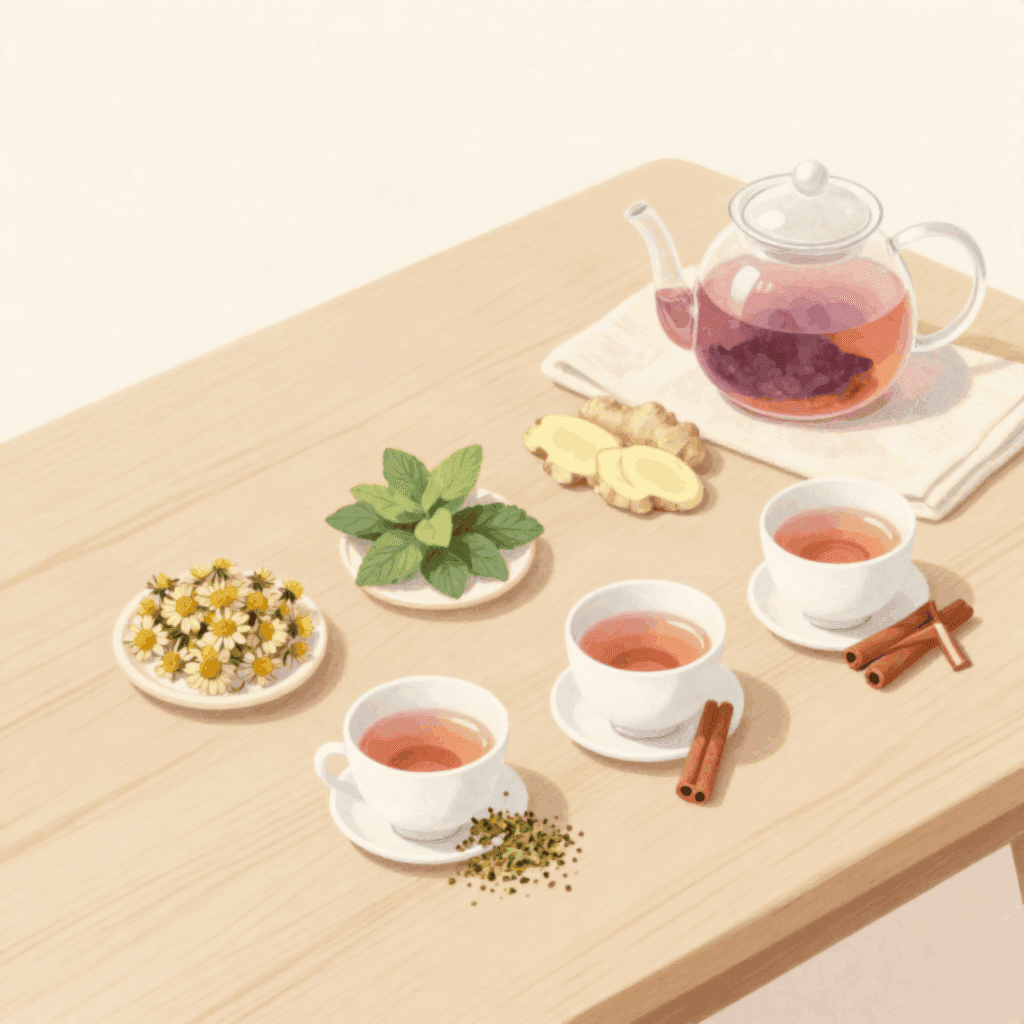
| Ginger | Best of the teas, still small | Capsules of ginger powder |
| Chamomile | Some, small and mixed | Mostly capsules |
| Cinnamon | Small | Capsules |
| Fennel | Small | Capsules or drops |
| Peppermint | Almost none | No cramp trials |
| Raspberry leaf | Almost none | No cramp trials |
All of the trials on ginger, cinnamon and fennel and on chamomile in these reviews took place in Iran, with women who had period pain with no other cause. That is called primary dysmenorrhea. The results may not be the same for everyone, and they may not apply to pain from a condition such as endometriosis.
Ginger tea
Ginger is the tea with the most support. In a review of four trials, women who took ginger had less period pain than women who took a placebo. Ginger did not shorten how long the pain lasted.
The limits are important:
- The trials gave 250 to 500 mg of ginger powder in capsules, most often three times a day for three to five days. They did not test tea, so we do not know how much a cup of ginger tea helps.
- The trials were small, and their results were very different from each other. The authors say larger studies must confirm the findings.
If you want to try it, ginger tea from fresh or dried ginger is a simple place to start. Ask a doctor or pharmacist before you take ginger capsules, more so if you take other medicines.
Chamomile tea
Chamomile has some evidence, but it is weaker than it looks. A review of seven chamomile trials with 1,033 women found that chamomile reduced period pain in some trials and reduced menstrual bleeding in others.
The limits:
- Most trials used chamomile capsules. The trials that used tea mixed chamomile with other herbs, such as fennel and ginger, so the effect of chamomile alone is not clear.
- The trials were too different to combine, and some had unclear randomization or blinding.
- The only side effect the trials reported was drowsiness.
Peppermint tea
There is almost no evidence that peppermint tea helps period cramps. Very little research has been done on peppermint leaf, and the reviews in this guide include no trial of peppermint for cramps. Peppermint tea appears to be safe for most people, so it is fine as a drink you like. Do not expect it to ease cramps.
Raspberry leaf tea
Raspberry leaf tea is a traditional remedy for cramps, not a tested one. In the UK, raspberry leaf products are registered as traditional herbal medicines for the relief of menstrual cramps in women who are not pregnant. This registration is based on a long history of use. Little research has been done on how well raspberry leaf works or how safe it is.
Cinnamon tea
Cinnamon has small studies. In two trials, cinnamon capsules lowered period pain more than a placebo, and one trial found that the pain was shorter. The trials did not test cinnamon tea, and each finding comes from one or two studies.
Fennel tea
Fennel has small studies too. In three trials, fennel capsules or drops lowered period pain compared with the control group. In one of these trials, fennel was given together with a painkiller, not in place of it. No trial in the review tested fennel tea.
Safety: who should be careful with herbal tea
Herbal teas are plants, and some can interact with medicines or cause allergies. If you take any medicine, talk with your health care provider before you use herbal products.
- Pregnancy: Raspberry leaf is not recommended for people who are pregnant or breastfeeding, because the evidence on its safety is lacking. Little is known about chamomile in pregnancy. Peppermint in the amounts found in food is likely safe in pregnancy. If you could be pregnant, ask your midwife or doctor before you drink herbal teas often.
- Blood thinners: Chamomile can interact with warfarin, a blood thinner, and with some medicines that the liver breaks down.
- Birth control pills: Chamomile might make birth control pills work less well.
- Reflux and heartburn: Peppermint oil taken by mouth can cause heartburn. If you get reflux, peppermint tea may not suit you.
- Allergies: You are more likely to react to chamomile if you are allergic to related plants such as ragweed. Reactions can be severe. Allergy to peppermint is rare.
Tea next to medicine, not in place of it
Painkillers such as paracetamol or ibuprofen can ease period pain, and gentle exercise and massage can also help. Our guide to what helps period cramps compares the options with the best evidence, and ibuprofen vs naproxen for period cramps explains how to choose and time an anti-inflammatory painkiller.
A cup of tea can still be a calm part of your routine. Just keep taking the medicine that works for you.
Track what you try
If you try a tea, write down which one, on which day of your period, and how bad the pain was before and after. After two or three periods, you can see if it makes a difference. Endolog lets you log your pain severity and where it hurts, your bleeding and other symptoms, and add flare notes about what you tried. You can then share a PDF report with your doctor.
When to see a doctor
See a doctor if:
- Your period pain stops you from doing your usual daily activities
- Your periods become more painful, heavier or irregular
- You bleed between periods
Get an urgent appointment or call NHS 111 (or your local urgent care line) if your period pain is severe or worse than usual, and painkillers have not helped. Go to the emergency department if you have sudden, severe pain in your belly or pelvis, and more so if you could be pregnant.
Period pain that gets worse over the years can be a sign of a condition such as endometriosis. Read how endometriosis pain differs from normal period cramps. Severe period pain is a real medical problem, and you deserve care for it.
FAQ: tea for period cramps
What is the best tea for period cramps?
Ginger tea has the best evidence of the common teas. In small trials, ginger lowered period pain more than a placebo. But the trials used ginger capsules, not tea, so the effect of a cup of tea is not known.
Does chamomile tea help period cramps?
It may help a little. A review found that chamomile reduced period pain in some small trials, but most trials used capsules and some had weak methods. If you are allergic to ragweed or take warfarin, ask a doctor first.
Does peppermint tea help period cramps?
There is no good evidence that it does. Very little research has been done on peppermint leaf. It is a safe drink for most people. Peppermint oil can cause heartburn, so take care if you get reflux.
Does raspberry leaf tea help period cramps?
Raspberry leaf is a traditional remedy for cramps, but little research has been done on whether it works. Do not use it if you are pregnant or breastfeeding unless your doctor or midwife says it is safe.
Can tea replace painkillers for cramps?
No. Tea is a gentle extra, not a treatment that replaces painkillers like ibuprofen. If painkillers do not help your cramps, see a doctor.
Sources
- Efficacy of herbal medicine (cinnamon/fennel/ginger) for primary dysmenorrhea: a systematic review and meta-analysis of randomized controlled trials (Xu Y et al. Journal of International Medical Research, 2020), Journal of International Medical Research (PMC)
- The Effect of Chamomile on Pain and Menstrual Bleeding in Primary Dysmenorrhea: A Systematic Review (Niazi A, Moradi M. International Journal of Community Based Nursing and Midwifery, 2021), International Journal of Community Based Nursing and Midwifery (PMC)
- Chamomile, National Center for Complementary and Integrative Health (NCCIH)
- Peppermint Oil, National Center for Complementary and Integrative Health (NCCIH)
- Statement on the potential health effects of raspberry leaf tea in the maternal diet, Committee on Toxicity of Chemicals in Food, Consumer Products and the Environment (COT), GOV.UK
- Period pain, NHS
This article is general information, not medical advice. Read how we write and check our articles in our editorial policy.
Explore this topic
Related articles

October 5, 2026
Heating Pads for Endometriosis and Period Pain: Safe Use
How to use a heating pad for endometriosis and period pain: how hot, how long, where to put it, why not to sleep on it, heat rash, and when to see a doctor.
October 3, 2026
What Helps With Period Cramps? Options With Evidence
What helps with period cramps: anti-inflammatory painkillers taken early, heat, exercise and hormonal birth control. See the evidence and when to get help.

October 6, 2026
Ibuprofen or Naproxen for Period Cramps: Which and When
Ibuprofen for period cramps works about as well as naproxen. See how often to take each, when to start, who should avoid them and when to see a doctor.

October 21, 2026
Pamprin vs Midol vs Tylenol for Period Cramps: What's Inside
Pamprin vs Midol vs Tylenol: see what is in each box, which ingredient eases period cramps, how NSAIDs compare and how not to double up on acetaminophen.

October 20, 2026
Chest Pain During Period: Causes and Thoracic Endometriosis
Chest pain during your period has many causes. Learn when to get urgent help, the signs of thoracic endometriosis, how doctors check and what to track.
October 17, 2026
Endometriosis in Teens: Signs Not to Dismiss and What to Do
Endometriosis in teens is real and often missed. Learn the signs that need a doctor, how it is diagnosed, first treatments and what to track for a visit.
