Heating Pads for Endometriosis and Period Pain: Safe Use
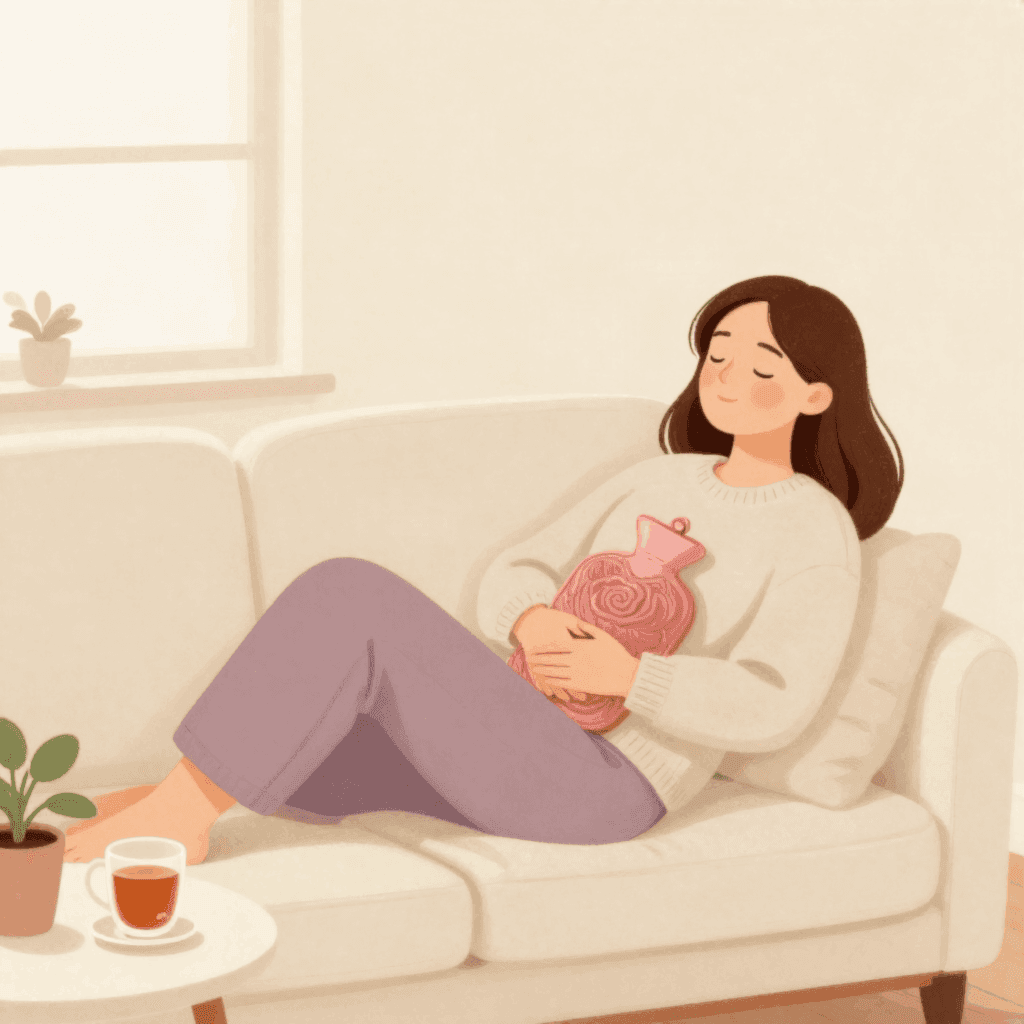

A heating pad helps endometriosis and period pain because warmth relaxes the tight, cramping muscles and brings more blood to the pelvis. Use it on a low or medium setting over a layer of cloth, on your lower belly or lower back, check your skin often, and never fall asleep with it switched on.
Heat is cheap, and you can use it next to painkillers. Used every day for months, it can also leave a lasting rash on your skin. This guide shows how to get the relief without the damage, who needs to take extra care, and when heat on its own is not enough. It is general information and not medical advice.
Quick answer: how to use a heating pad for period pain
- Put a thin layer of cloth, such as a T-shirt or a tea towel, between the pad and your skin.
- Start on the lowest setting. Warm and soothing is enough. It should never feel hot or sting.
- Place it on your lower belly, below your belly button, or on your lower back if that is where it hurts.
- Lift it off every so often and look at your skin. Stop if the skin turns red and stays red.
- Switch it off before you get sleepy.
- You can use heat and an anti-inflammatory painkiller, such as ibuprofen, at the same time.
Why heat helps period cramps
Period cramps come from the muscle of the womb (uterus) squeezing hard. Local heat reduces muscle tension and relaxes the belly muscles, so spasms hurt less. It also increases blood flow in the pelvis, which can ease congestion and swelling.
The trials are small, but they point the same way. In a review of six trials, heat eased period pain better than an unheated pad and better than no treatment, and in three trials better than painkillers. The review authors said bigger, better trials are still needed.
One trial compared a low-heat patch on the belly with ibuprofen. The heat patch worked as well as ibuprofen. People who used both together noticed relief sooner, after a median of about 1.5 hours against about 2.8 hours with ibuprofen alone.
Does heat help endometriosis pain?
These trials looked at ordinary period pain, not endometriosis. There are no trials of heat for endometriosis pain alone. Even so, heat is one of the self-care methods people with endometriosis use most often, for period pain and for pelvic pain on other days of the month. Heat eases the pain for a while. It does not treat the endometriosis itself. Our guide to endometriosis flare-ups covers other things to try on a bad day.
How hot and how long
The heat in the trials was gentle. The patches stayed at a steady 38.9 °C (about 102 °F) or 40 °C (104 °F), and people wore them for 8 to 12 hours a day. That is only a little warmer than your body.
A home heating pad on a high setting, or a hot water bottle straight from the kettle, can be much hotter than that. Skin damage from heat starts around 43 to 47 °C (about 109 to 117 °F), and a hot water bottle on bare skin can reach 43 to 50 °C (about 109 to 122 °F). A cover or a towel brings that down.
So the safe rule is low and gentle:
- Use the lowest setting that eases the pain.
- Keep a layer of cloth between the heat and your skin, as with a hot water bottle wrapped in a tea towel.
- Use a hotter setting only for a short time, and check your skin often.
- Take breaks, and do not keep heat on the same patch of skin all day, every day.
In the trials, a few people got mild burns or itching. These went away within a few days. If your skin stings, blisters or stays red after you take the heat off, stop and let it heal.
Where to put a heating pad for cramps
For cramps, put the pad on your lower belly, below your belly button. That is over the womb, where most period pain starts.
Period pain often spreads to the lower back too. If your back aches, put the pad across your lower back, or lie on your side with one pad in front and one behind. Our guide to back pain during your period has more ways to ease it. If the pain also runs down your thighs, see where period cramps are felt.
Heating pad, hot water bottle or heat patch?
Each of these can ease cramps. Choose the one that fits your day.
| Type | Best for | Take care |
|---|---|---|
| Electric heating pad | Resting at home, with heat you can set | Can get too hot. Switch off before sleep |
| Hot water bottle | Short sessions, no plug needed | Use a cover. Check for leaks |
| Stick-on heat patch | Low heat for hours at work or school | Stick on clothing unless the pack says skin |
| Warm bath or shower | Relaxing your whole body | Get out if you feel faint |
Stick-on patches are the closest match to the low, steady heat used in the trials. A warm bath or shower also counts as heat and can relax your whole body. Always follow the instructions that come with the product.
Can you sleep with a heating pad?
No. Never fall asleep with a heating pad switched on. When you sleep, you do not feel the skin getting too hot, and you do not move away. Hours of heat on one spot can cause burns or a lasting rash. In one case report, a woman with endometriosis who used heating pads for 4 to 5 hours a day, and sometimes during sleep, got a brown, net-like rash on her skin.
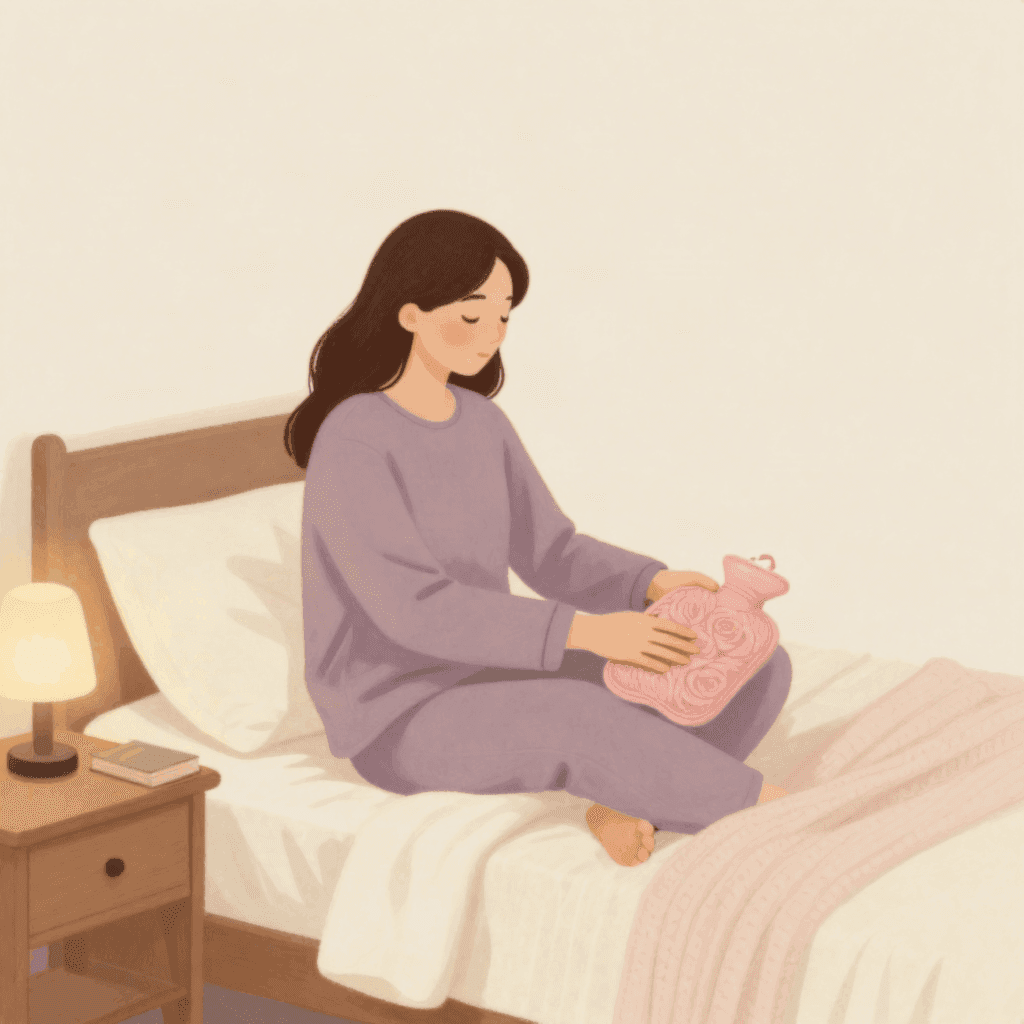
If cramps keep you awake, try this instead:
- Use the pad while you read or rest in bed, then switch it off and put it away before you feel sleepy.
- Warm your bed with a covered hot water bottle, then take it out before you settle down.
- A pad with an automatic shut-off is safer if you drift off by mistake. Do not rely on it as a way to sleep with heat.
For more help with pain at night, see why endometriosis flares feel worse at night.
Heating pad rash (erythema ab igne) and burns
Erythema ab igne is also called "toasted skin syndrome" or "hot water bottle rash". It comes from heat that is too low to burn you, used again and again over a long time. It shows up where the heat sits, so with a heating pad it is often on the lower belly or lower back.
It starts as redness that comes and goes, then turns into a brown, lacy or net-like pattern in the shape of the heat source. It is usually harmless. But the pattern can fade slowly or stay for good, and in rare cases the skin can change in a more serious way.
What to do if you see it:
- Stop using heat on that area, or use it much less.
- Show the rash to a doctor, and tell them you use a heating pad. They may want to check the skin.
- Ask about your pain too. A rash like this means you have needed heat every day for a long time. That is a sign your pain needs a proper look.
A burn is different. It happens faster, from heat that is too high. The skin turns red, sore or blistered soon after the heat was on. Get medical advice if a burn blisters or does not heal.
Who should take extra care with heat
Some people should use heat with extra care, or ask a doctor first:
- People with reduced feeling in the skin. If the skin is numb, you cannot tell when it is getting too hot. Numbness can come from nerve damage or other health problems.
- People with diabetes. Diabetes can damage nerves, so the skin does not respond normally to heat, and heat can cause severe burns. Never use a heating pad or hot water bottle on your feet.
- People who could be pregnant. Ask a midwife or doctor before you use heat on your belly. Sudden or severe pain when your period is more than a week late needs a check the same day. Do not treat it with heat at home.
- People who are very drowsy. Strong painkillers, sleep aids and alcohol make it easier to fall asleep with the heat on.
Do not put heat on broken, blistered or irritated skin.
What to look for in a heating pad
You do not need an expensive pad. These features make one safer and easier to use:
- Automatic shut-off. The pad turns itself off after a set time.
- Several temperature settings. A low setting lets you use gentle heat for longer.
- A washable cover. A cloth layer between the pad and your skin.
- A size and shape that fits the area. A long pad can cover the lower belly or wrap around to the back.
- A long enough cord. You can rest in comfort, and the cord does not pull or bend sharply.
Stop using a pad if the cord or cover is damaged, or if it heats unevenly.
When heat is not enough
Heat helps many people, but it should not be the only thing standing between you and severe pain. Pain that needs heat every day, or that only heat can make bearable, can delay a visit to the doctor. That delay can hide an illness that is getting worse.
Cramps may be a sign of endometriosis or adenomyosis if:
- Heat and painkillers used together do not help much
- The pain stops you from going to work, school or your normal activities
- Your periods have become more painful, heavier or irregular
- You have pain during sex, or when you pee or poo
- The pain starts more than 5 days before your period or goes on after it ends
If this sounds like you, read how endometriosis pain differs from normal period cramps and the signs of adenomyosis. Our guide to getting diagnosed with endometriosis explains the steps.
What to track
A short record over two or three periods shows how much you rely on heat, and it gives your doctor facts. Note:
- The days you used heat, and for how long
- Your pain from 0 to 10 before and after (our period pain scale can help you pick a number)
- What else you took or tried, and whether it helped
- Days you missed work, school or plans
- Any redness or rash where you put the heat
Endolog lets you log pain, relief and symptoms next to your cycle, and share a report with your doctor. See our guide to a pain diary for your doctor for what to bring.
When to see a doctor
See a doctor if:
- Your period pain stops you doing your usual daily activities
- Heat and painkillers used the right way do not ease the pain
- Treatments have not helped after 3 months
- You have pain at other times of the month
- You get a brown, net-like rash where you use heat
- You bleed between periods, or have pain during sex
Severe period pain is not something you have to live with. If a doctor tells you it is normal, and heat and painkillers do not help, ask what else could cause it.
Get urgent help
Get urgent medical help, the same day, if your pelvic or period pain is severe or worse than usual and painkillers have not helped. Also get help the same day if you have fever with pelvic pain, or sudden, severe pain and your period is late.
Call 911 in the US, or 999 in the UK, or go to the emergency department if you have sudden, very severe pain in your belly or pelvis, and more so if you could be pregnant. Do not try to manage this pain with heat at home.
FAQ: heating pads for period and endometriosis pain
Is heat or ibuprofen better for period cramps?
In one trial, a low-heat patch on the belly worked as well as ibuprofen, and the two together brought relief sooner than ibuprofen alone. Many people use both.
How long can I leave a heating pad on for cramps?
It depends on the heat. Trials used low, steady heat of about 39 to 40 °C for 8 to 12 hours. A home pad on a higher setting should stay on for a much shorter time. Check your skin often and take breaks.
Can I use a heating pad on my back during my period?
Yes. Put it across your lower back over a layer of cloth. Period pain often spreads there. See back pain during your period.
Is it safe to sleep with a heating pad?
No. Never fall asleep with a heating pad switched on. Switch it off and put it away before you feel sleepy.
Why do I have a brown, lacy rash where I use my heating pad?
This is probably erythema ab igne, a rash from repeated low heat over a long time. Stop using heat there and show it to a doctor. Also ask them about the pain that makes you need heat every day.
Does a heating pad help endometriosis?
Heat can ease endometriosis pain for a while, and it is one of the most common ways people with endometriosis manage pain at home. It does not treat the condition. If you need heat most days, talk to a doctor about treatment.
This article is for general information. It is not medical advice and does not replace advice from your own doctor. If you think you have an emergency, call 911.
Sources
- Period pain, NHS
- Painful menstrual periods, MedlinePlus, U.S. National Library of Medicine
- Heat therapy for primary dysmenorrhea: a systematic review and meta-analysis of its effects on pain relief and quality of life (Jo J, Lee SH. Scientific Reports, 2018), Scientific Reports
- Continuous low-level topical heat in the treatment of dysmenorrhea (Akin MD et al. Obstetrics & Gynecology, 2001), Obstetrics & Gynecology
- Erythema ab igne: a potential cutaneous marker of chronic heat use in patients with endometriosis. A narrative literature review and a case report (Scurtu F et al. Life, 2025), Life (Basel)
- Diabetes: taking care of your feet, MedlinePlus, U.S. National Library of Medicine
This article is general information, not medical advice. Read how we write and check our articles in our editorial policy.
Explore this topic
Related articles
October 3, 2026
What Helps With Period Cramps? Options With Evidence
What helps with period cramps: anti-inflammatory painkillers taken early, heat, exercise and hormonal birth control. See the evidence and when to get help.
October 4, 2026
Cramps After Your Period: Causes and When to Worry
Cramps after period ends can be leftover womb cramps or ovulation, or a sign of endometriosis, a cyst or infection. Learn the causes and when to worry.
October 2, 2026
Signs You're Losing Too Much Blood During Your Period
Signs you're losing too much blood during your period: soaking a pad every 1 to 2 hours, periods over 7 days, big clots and night leaks. When to get help.
October 1, 2026
Blood Clots During Period: What Is Normal and When to Worry
Blood clots during your period are usually normal. Learn what size is common, when large clots mean heavy bleeding, the causes, and when to get help.
September 30, 2026
Dizziness During Your Period: Causes and Red Flags
Dizziness during your period often comes from pain, heavy bleeding, low iron or too little food and water. Learn what helps and which signs are urgent.
September 30, 2026
Period Flu: Symptoms, Fever and When It Is Something Else
Period flu is the name for achy, tired, flu-like symptoms around your period. Learn why it happens, what helps, and why a real fever needs a doctor.
