Foods That Help Period Cramps: What to Eat and Skip
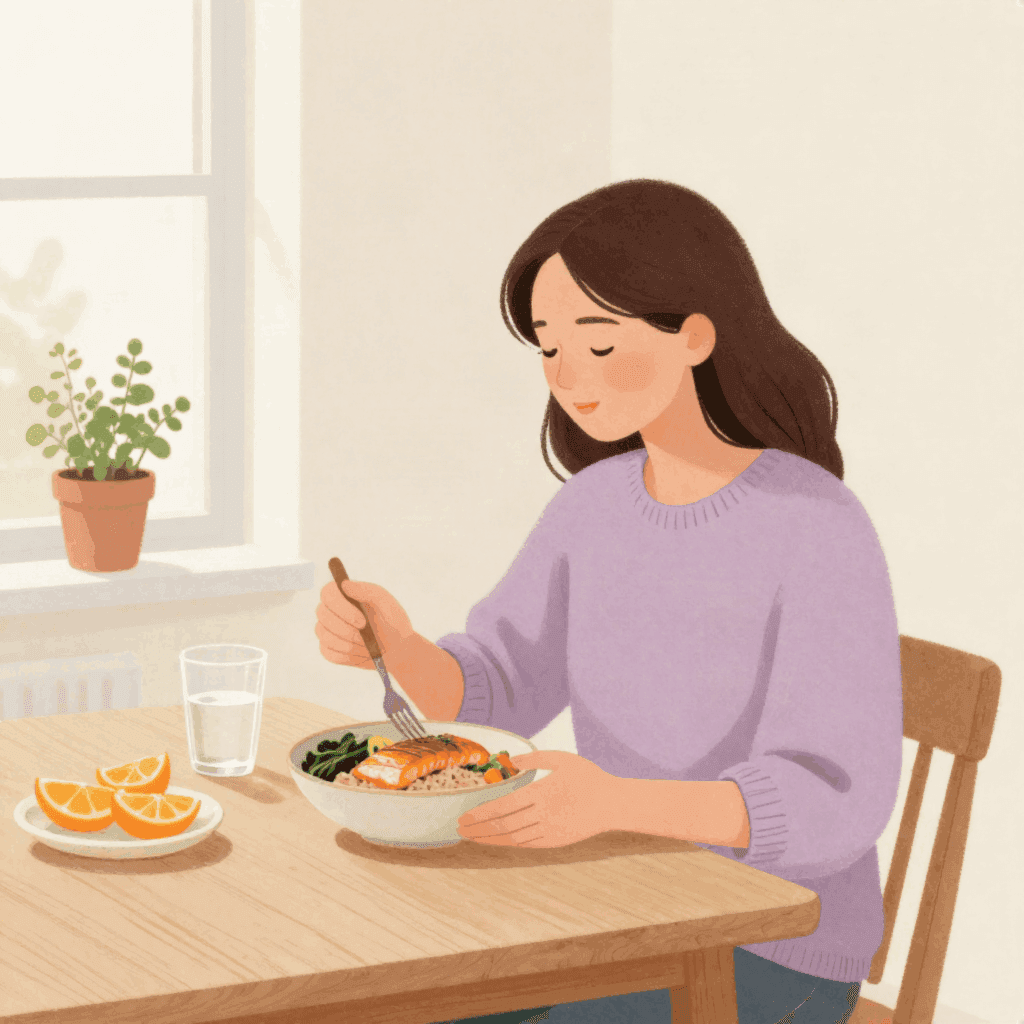
Foods that help period cramps include oily fish, fruit, vegetables, whole grains and dairy foods. People who eat more of these foods tend to report less period pain, and drinking less alcohol may also help.
The evidence is small, and most of it comes from surveys, not trials. So food can support your usual pain relief, but it does not replace it. This guide shows what the studies found, how strong the evidence is, what to eat less of, and simple meals to try.
Quick answer: foods for period cramps and how strong the evidence is
| Food or habit | Evidence for less cramp pain |
|---|---|
| Oily fish | Some, from surveys and capsule trials |
| Fruit and vegetables | Some, but mixed |
| Whole grains | Small and mixed |
| Milk and dairy foods | Small, from surveys |
| Regular meals | Small, from surveys |
| Less alcohol | Small |
| Less caffeine | Part of one trial diet only |
"Some" means several studies point the same way. "Small" means only a few studies, or results that do not agree. No food has strong evidence for period cramps.
How strong is the evidence?
Most of what we know comes from studies that ask people what they eat and how bad their period pain is. A review of 38 of these studies linked fruit, vegetables, fish, milk and dairy foods with less period pain. Results for other foods did not agree. A study like this shows a link. It does not prove that the food caused the lower pain.
A newer review looked at foods that calm inflammation. Whole grains and fish may be linked to less period pain, but the findings were not consistent, and one analysis found no link for fruit and vegetables. The authors called the studies few and generally of low quality.
There is one small trial of a whole diet. Sixty-seven university students with painful periods were put in a diet group or a control group. After three months, the average pain score in the diet group fell from about 7 to about 5 out of 10, while the control group stayed near 7.
These studies mostly included young women with period pain that has no other cause. The results may not be the same for pain from endometriosis or adenomyosis.
Foods that may help period cramps
Oily fish
Oily fish such as salmon, sardines, mackerel, trout and herring contain long-chain omega-3 fats. Fish is one of the foods linked to less period pain in surveys.
Trials of omega-3 for period pain gave it as capsules, not as fish. In those trials, 300 to 1,800 mg of omega-3 a day for 2 to 3 months reduced period pain and painkiller use, but the quality of the studies was only neutral. We do not know how much a fish meal does on its own. This guide is about food. For pills, read magnesium and ginger for period cramps, which covers the supplements with the most research.
A balanced diet has at least 2 portions of fish a week, including 1 of oily fish. If you could get pregnant one day, or you are pregnant or breastfeeding, eat no more than 2 portions of oily fish a week, because pollutants in it can build up in the body.
Fruit and vegetables
People who eat more fruit and vegetables report less period pain in many surveys, but not every analysis agrees. They are part of a healthy diet anyway, so more of them is a safe change to try.
Whole grains, beans and nuts
Whole grains may be linked to less period pain, but the findings are mixed, and the evidence on beans and lentils is unclear. The diet that lowered pain in the trial was rich in fibre and complex carbohydrates and had a few nuts each day, such as one or two walnuts or almonds.
Milk and dairy foods
Milk and dairy foods were linked to less period pain in surveys. The trial diet also gave more than 1,000 mg of calcium a day.
Regular meals
Skipping meals and dieting to lose weight were both linked to how bad period pain was. When cramps take away your appetite, small, plain meals at regular times are easier than one big meal. If you have lost your appetite or are losing weight without trying, see the when to see a doctor list below.
Foods to avoid during your period, or eat less of
No food is banned during your period. But a few things may be worth cutting back on when cramps are bad.
- Alcohol: Cutting down on alcohol and not smoking may help ease period pain.
- Caffeine: The trial diet kept caffeine under 300 mg a day. Because the diet changed many things at once, we do not know if the caffeine limit helped on its own.
- Spicy, acidic and fizzy foods: The same trial diet limited spicy, acidic and fizzy foods. This may suit you if these foods upset your stomach on period days.
If your period also brings bloating, the trigger foods can be different for each person. Our guide to the endo belly diet explains how to find yours.
Simple meal ideas for period days
These meals put the foods above together. They are ideas, not a set diet, and there is no need to count anything.
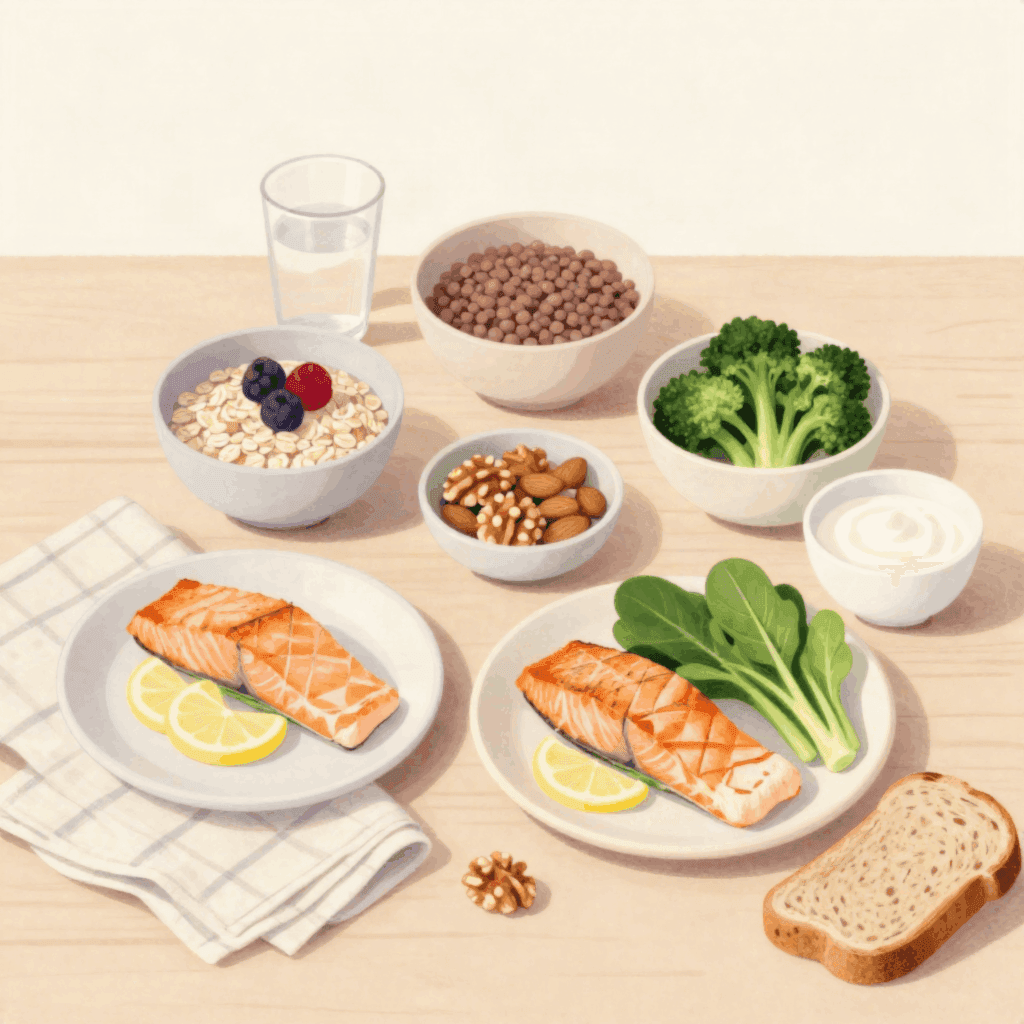
- Breakfast: Porridge oats with berries and a spoon of yogurt, or wholegrain toast with eggs and tomatoes.
- Lunch: A bowl of brown rice or another whole grain with salmon or sardines, leafy greens and roasted vegetables.
- Dinner: Lentil and vegetable soup with wholegrain bread, or a tray of baked trout with potatoes and broccoli.
- Snacks: Fruit, a few walnuts or almonds, or a pot of yogurt.
- Drinks: Water through the day. For warm drinks with some research behind them, see tea for period cramps.
If you have endometriosis and want a longer eating plan, read our anti-inflammatory diet for endometriosis guide.
Food next to pain relief, not in place of it
Painkillers such as paracetamol or ibuprofen can ease period pain, and gentle exercise such as yoga, swimming, walking or cycling can help too. Our guide to what helps period cramps compares the options with the best evidence.
Any effect from a change in diet is slow. The trial measured pain after three months. Keep taking the pain relief that works for you while you try it.
Track what you eat next to your pain
Food affects each person in a different way, so your own record is the best test. Write down what you ate on each day of your period and how bad your cramps were from 0 to 10. After two or three periods, you can see if a change made a difference.
The free food and symptom diary is a paper way to do this. The Endolog app has a food diary that records what you ate and how you felt after. You can log your pain severity, bleeding and digestive symptoms on the same days, and export a PDF report for your doctor.
When to see a doctor
See a GP if:
- Your period pain stops you from doing your usual daily activities
- Your periods become more painful, heavier or irregular
- You bleed between periods
- You have pain during sex, or when you pee or poo
- You have a swollen tummy, loss of appetite, or you lose weight without trying
Get an urgent appointment or call NHS 111 (or your local urgent care line) if your period pain is severe or worse than usual, and painkillers have not helped. Go to the emergency department if you have sudden, severe pain in your belly or pelvis, and more so if you could be pregnant.
Period pain that gets worse over the years can be a sign of a condition such as endometriosis. Read how endometriosis pain differs from normal period cramps. Severe period pain is a real medical problem, and you deserve care for it, whatever you eat.
FAQ: foods for period cramps
What foods help period cramps the most?
Oily fish, fruit, vegetables, whole grains and dairy foods have the most support. People who eat more of them tend to report less period pain. The evidence comes mostly from surveys, so no single food is proven to stop cramps.
What foods should I avoid during my period?
No food is banned. Cutting down on alcohol may help ease period pain. A trial diet that lowered pain also kept caffeine low and limited spicy, acidic and fizzy foods, but it is not clear which part helped.
How fast can food help period cramps?
Food is not a quick fix. In the one diet trial, pain was lower after three months. For pain today, painkillers such as ibuprofen work faster.
Can diet help endometriosis pain?
The studies in this guide were mostly in people with period pain that has no other cause, so they may not apply to endometriosis. Some people with endometriosis find a change in diet helps. Our anti-inflammatory diet for endometriosis guide covers this in more detail.
Sources
- Nutrition as a Potential Factor of Primary Dysmenorrhea: A Systematic Review of Observational Studies (Bajalan Z et al. Gynecologic and Obstetric Investigation, 2019), Gynecologic and Obstetric Investigation (PubMed)
- Anti-inflammatory food products and the severity of menstrual pain: a narrative review (Szmidt MK, Granda D. Roczniki Panstwowego Zakladu Higieny, 2025), Roczniki Panstwowego Zakladu Higieny (PubMed)
- The effect of diet on primary dysmenorrhea in university students: A randomized controlled clinical trial (Kartal YA, Akyuz EY. Pakistan Journal of Medical Sciences, 2018), Pakistan Journal of Medical Sciences (PMC)
- Omega-3 long chain polyunsaturated fatty acids as a potential treatment for reducing dysmenorrhoea pain: Systematic literature review and meta-analysis (Snipe RMJ et al. Nutrition & Dietetics, 2024), Nutrition & Dietetics (PubMed)
- Fish and shellfish, NHS
- Period pain, NHS
This article is general information, not medical advice. Read how we write and check our articles in our editorial policy.
Explore this topic
Related articles
October 26, 2026
Magnesium and Ginger for Period Cramps: The Evidence
Do magnesium and ginger help period cramps? See what trials show, how strong the evidence is, the doses studied, side effects and who should be careful.
October 23, 2026
Best Tea for Period Cramps: Ginger, Chamomile and More
Which tea helps period cramps? Ginger has the best evidence. See what studies show for chamomile, peppermint, raspberry leaf, cinnamon and fennel tea.
October 6, 2026
Ibuprofen or Naproxen for Period Cramps: Which and When
Ibuprofen for period cramps works about as well as naproxen. See how often to take each, when to start, who should avoid them and when to see a doctor.
October 5, 2026
Heating Pads for Endometriosis and Period Pain: Safe Use
How to use a heating pad for endometriosis and period pain: how hot, how long, where to put it, why not to sleep on it, heat rash, and when to see a doctor.
October 3, 2026
What Helps With Period Cramps? Options With Evidence
What helps with period cramps: anti-inflammatory painkillers taken early, heat, exercise and hormonal birth control. See the evidence and when to get help.

October 21, 2026
Pamprin vs Midol vs Tylenol for Period Cramps: What's Inside
Pamprin vs Midol vs Tylenol: see what is in each box, which ingredient eases period cramps, how NSAIDs compare and how not to double up on acetaminophen.
