What Helps With Period Cramps? Options With Evidence
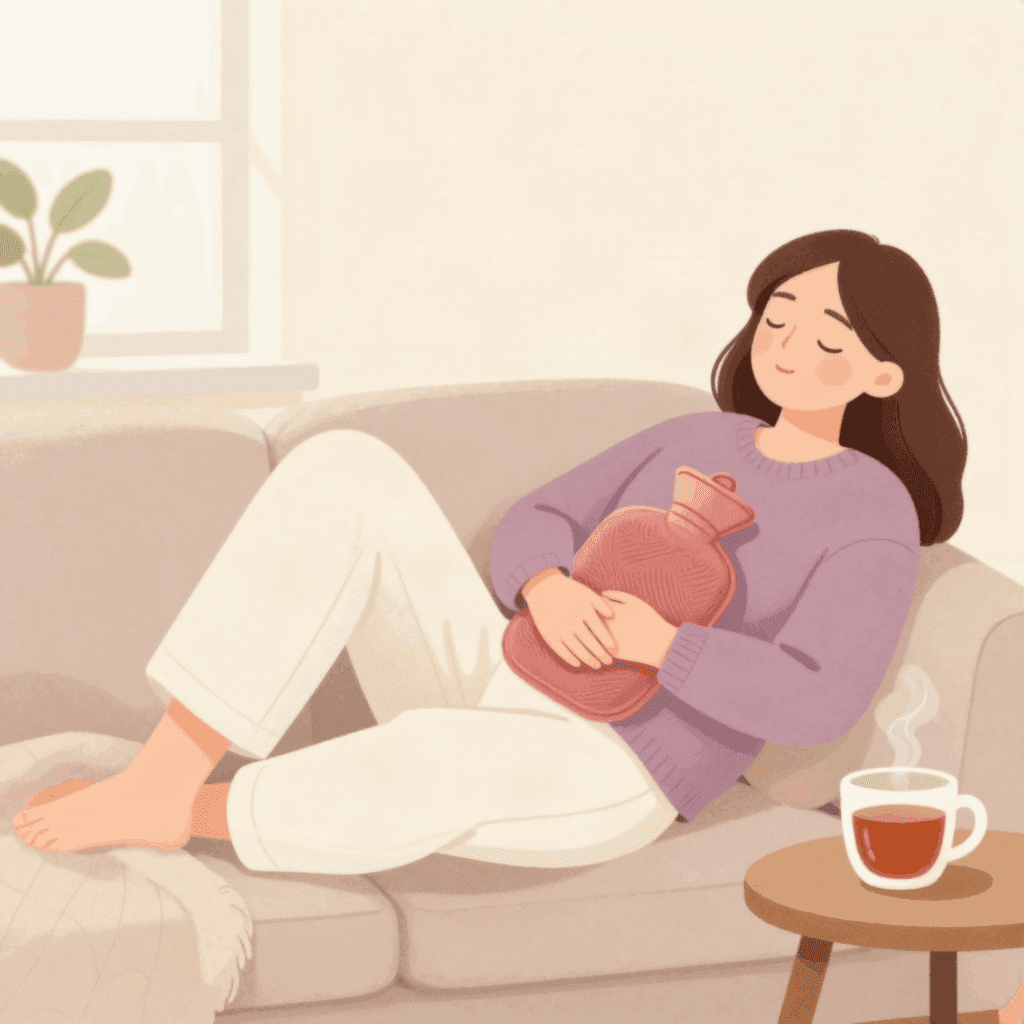

The things that help most with period cramps are anti-inflammatory painkillers such as ibuprofen or naproxen, taken at the first sign of your period or pain, and heat on your lower belly. Regular exercise and hormonal birth control can make the pain smaller month after month.
Other options, such as a TENS machine, massage, magnesium and ginger, have less proof behind them. They can still be worth a try next to the main options. This guide puts each option next to its evidence, explains how to take painkillers safely, and shows when cramps may be a sign of endometriosis or adenomyosis. It is general information and not medical advice.
Quick answer: what works best for period cramps
| Option | Evidence | Best use |
|---|---|---|
| Anti-inflammatory painkillers (NSAIDs) | Strong | Start at the first sign of pain |
| Heat pad or hot water bottle | Moderate | During pain, alone or with painkillers |
| Regular exercise | Moderate | Most days, all through the month |
| Hormonal birth control | Strong | Ongoing, with a doctor |
| TENS machine | Some | During pain |
| Massage | Some | During pain |
| Magnesium or vitamin B1 | Weak | Ask a doctor first |
| Ginger | Weak | Ask a doctor first |
| Rest and sleep | Weak | Before and during your period |
"Strong" means many trials or a clear medical guideline. "Moderate" and "Some" mean a few trials or a guideline that lists the option. "Weak" means a few small studies or advice based on experience. You can use two or three options together, such as an NSAID with heat.
Why period cramps hurt
Before and during a period, the lining of your womb (uterus) makes chemicals called prostaglandins. They make the muscles and blood vessels of the womb squeeze. Prostaglandin levels are highest on the first day of your period and drop as bleeding goes on, which is why the pain often eases after the first few days.
This matters for relief. The best options lower prostaglandins, relax the muscle, or calm the pain signal. If you want to know where the pain can spread, such as your back and thighs, see where period cramps are felt.
The options with the best evidence
Anti-inflammatory painkillers (NSAIDs)
NSAIDs such as ibuprofen and naproxen lower the prostaglandins your body makes, so the cramps get less severe. They are the usual first choice.
In trials, about 18% of people on a dummy pill got moderate or excellent pain relief, compared with 45% to 53% on an NSAID. NSAIDs also worked better than paracetamol (acetaminophen). No single NSAID was clearly better than the others, so the one that suits you is a good choice.
Timing makes a big difference. NSAIDs work best if you take them at the first sign of your period or pain, and you usually need them for only 1 or 2 days. If you wait until the pain is at its worst, the prostaglandins are already high.
How to take NSAIDs safely
- Follow the dose and time gaps on the label. Do not take more to get faster relief.
- Take only one NSAID at a time. Check the ingredients of other medicines, such as cold and flu remedies, for a second NSAID.
- Expect some side effects. Stomach upset, headache and drowsiness were more common on NSAIDs than on a dummy pill. If they make you feel sick, our guide to nausea during your period covers pain relief on an empty stomach.
- Do not take NSAIDs if you have a bleeding disorder, asthma, an aspirin allergy, liver damage, stomach problems or ulcers, unless a doctor tells you it is safe.
- Ask a pharmacist before you start if you take other medicines, have kidney or heart problems, or could be pregnant.
If the label dose does not help, a doctor can prescribe a stronger anti-inflammatory such as naproxen, flurbiprofen or mefenamic acid. Pain that does not ease with NSAIDs is also a reason to look for a cause, which we cover below.
Heat
A heat pad or hot water bottle wrapped in a tea towel on your tummy, or a warm bath or shower, can ease cramps. Heat is cheap, fast and safe for most people.
The research on heat is small, but the results are promising. In a review of six trials, heat eased period pain better than an unheated pad, better than no treatment, and in some trials better than painkillers. The authors said bigger, better trials are still needed.
To stay safe, never put a heat pad or hot water bottle straight on your skin, and do not fall asleep on a heat pad that is switched on. You can use heat and an NSAID at the same time.
Exercise
Regular exercise can make periods less painful over time. In trials, exercise for about 45 to 60 minutes, three times a week or more, cut period pain by about 25 points on a 0 to 100 pain scale. Gentle exercise such as stretching and yoga helped, and so did harder exercise such as aerobics.
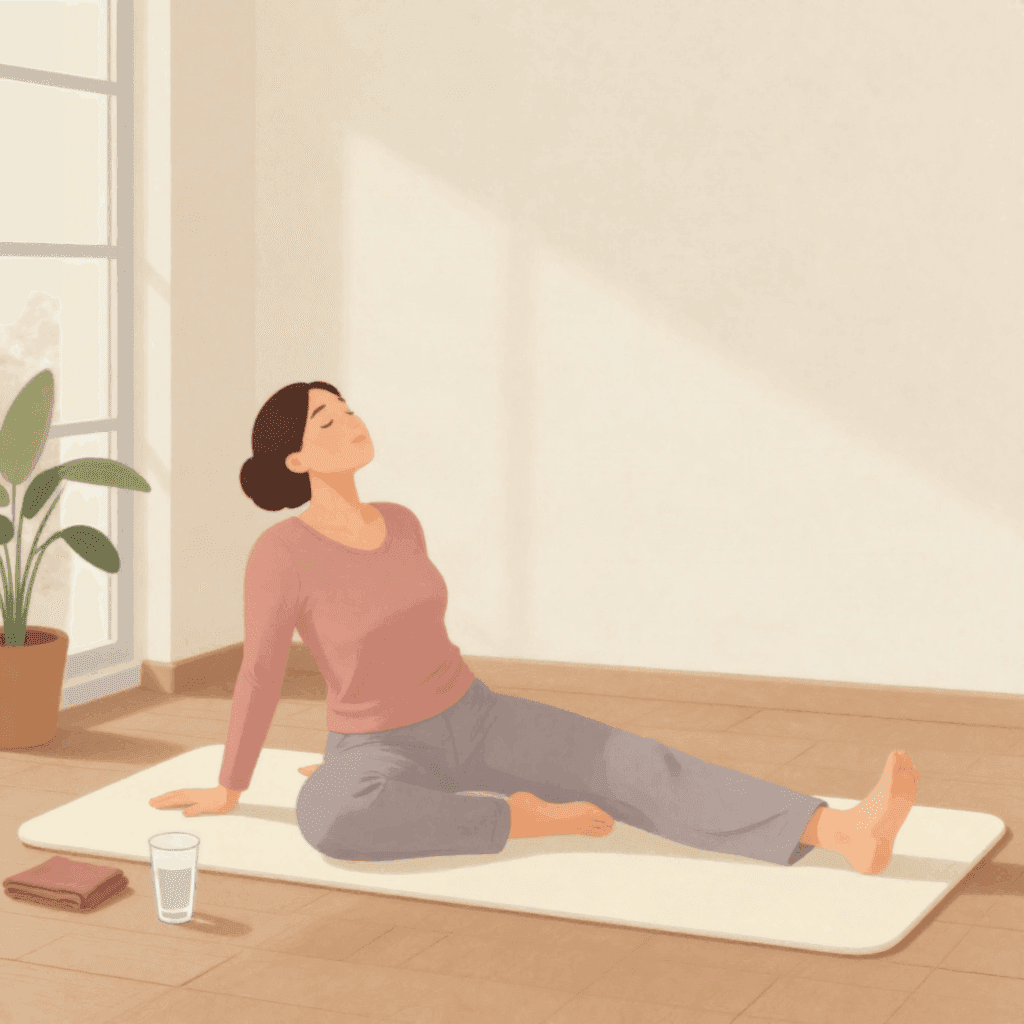
The evidence was low quality, and the trials asked people to exercise all month, not only on period days. On a bad day, gentle movement such as yoga, swimming, walking or cycling is enough. You do not need to push through severe pain. If you have endometriosis, see our guide to exercise with endometriosis.
Hormonal birth control
If cramps come back every month, hormonal birth control is a common next step. The combined pill, the patch and the vaginal ring can be used to treat painful periods. Progestin-only options, such as the implant, the injection and the hormonal IUD, can also reduce period pain.
These methods thin the womb lining, so your period gets lighter and less painful. Some stop periods altogether. A doctor or nurse can help you choose, because each method has its own side effects and not all of them suit everyone. You do not need to want contraception to use one for pain.
Other options and how good the evidence is
TENS machine
A TENS machine is a small device that sends mild electrical pulses through pads on your skin to reduce pain. Nerve stimulation may be useful for painful periods, and so may acupuncture and acupressure. The evidence is weaker than for NSAIDs and heat. A TENS machine is drug-free, so some people use it when they cannot take NSAIDs.
Massage
Massaging your tummy and back can help. There is little research on it for period pain. It costs nothing and has few risks, so it is a reasonable thing to try next to other options. For cramps that spread to the lower back, see back pain during your period.
Magnesium and vitamin B1
Vitamin B1 or magnesium supplements may help, but there is not enough research to recommend them as a treatment for period pain. Talk to a doctor or pharmacist before you start any supplement.
Ginger
Ginger reduced period pain in three small trials. But all the evidence on dietary supplements for period pain was low or very low quality, with small groups and few reports on side effects. Ginger tea is a gentle thing to try. Ask a doctor or pharmacist before you take ginger capsules.
Rest, sleep and relaxation
Getting enough sleep before and during your period can help you cope with the pain. Meditation and yoga can also help you cope. We found no trials on sleep positions for cramps. If lying on your side with your knees pulled up, or on your back with a pillow under your knees, feels better, use it as a comfort choice.
Cutting down on alcohol and not smoking may also ease period pain.
When cramps may be endometriosis or adenomyosis
Most period cramps come from prostaglandins alone. Sometimes a condition in the pelvis causes the pain. Doctors call this secondary dysmenorrhea. Endometriosis, adenomyosis and fibroids are common causes.
Pain from these conditions often gets worse over time and lasts longer than normal cramps. It may start a few days before your period, get worse as the period goes on, and not go away when it ends. Look out for these signs:
- The options above do not help, even when you use them early and together
- Pain stops you from going to school, work or your normal activities
- Your periods get more painful or heavier over the years
- You have pain during sex, or when you pee or poo
- The pain goes on after your period ends
If this sounds like you, read how endometriosis pain differs from normal period cramps and the signs of adenomyosis. If medicines do not help, treatment should focus on finding the cause of your pain, for example with an ultrasound or a laparoscopy. Our guide to getting diagnosed with endometriosis explains the steps.
What to track
A short record over two or three periods shows you what works, and it gives a doctor facts instead of "my periods hurt". Note:
- The cycle day the cramps start and stop
- Your pain level from 0 to 10 at its worst (our period pain scale can help you pick a number)
- What you took, the time you took it, and how much it helped
- What else you tried, such as heat or a walk, and whether it helped
- Days you missed school, work or plans
- Other symptoms such as heavy bleeding, nausea, back pain or pain with sex
Endolog lets you log pain, relief and symptoms next to your cycle and share a report with your doctor. Our guide to a pain diary for your doctor shows what to bring to an appointment.
When to see a doctor
See a doctor if:
- Pain stops you from doing your normal activities
- NSAIDs and heat at the right time do not ease your cramps
- Your periods have become more painful, heavier or irregular
- You have pain during sex, or when you pee or poo
- You bleed between periods
- You also have swelling in your belly, loss of appetite or weight loss you cannot explain
Severe period pain is a medical problem, and you deserve treatment for it. If a doctor tells you it is normal and the options above do not help, ask what else could cause it. Your pain record can support that talk. For help to describe the pain in words, see how to describe period pain.
Get urgent help
Get urgent medical help, the same day, if your pelvic or period pain is severe or worse than usual and painkillers have not helped.
Call 911 in the US, or 999 in the UK, or go to the emergency department if you have sudden, severe pain in your belly or pelvis, and more so if you could be pregnant. Do not wait for your next period to see if it passes.
FAQ: what helps with period cramps
What is the fastest way to stop period cramps?
Take an NSAID such as ibuprofen or naproxen at the first sign of pain, and put a wrapped hot water bottle or heat pad on your lower belly. The two work well together.
Is ibuprofen or paracetamol better for period cramps?
NSAIDs such as ibuprofen gave more pain relief than paracetamol in trials. Paracetamol is an option if you cannot take NSAIDs.
Should I take ibuprofen before my period starts?
NSAIDs work best at the first sign of your period or pain. If your period comes at a predictable time and your doctor agrees, starting at the first twinge can stop the pain from building.
Does exercise really help period cramps?
Yes. Regular exercise, about three times a week, reduced period pain in trials. The people in those trials exercised all through the month, so treat it as a habit and not only as a bad-day fix.
Do magnesium or ginger help period cramps?
Ginger may help a little, but the studies are small and of low quality. Magnesium may help, but there is not enough research to recommend it. Use them next to the main options, not in place of them, and ask a doctor first.
When are period cramps not normal?
Cramps that stop your normal day, do not ease with NSAIDs and heat, get worse over the years, or come with pain during sex or between periods are not normal. See a doctor, because endometriosis or adenomyosis can cause this pain.
This article is for general information. It is not medical advice and does not replace advice from your own doctor, who decides what treatment is right for you. If you think you have an emergency, call 911.
Sources
- Period pain, NHS
- Dysmenorrhea: Painful Periods, frequently asked questions, American College of Obstetricians and Gynecologists (ACOG)
- Nonsteroidal anti-inflammatory drugs for dysmenorrhoea (Marjoribanks J et al. Cochrane Database of Systematic Reviews, 2015), Cochrane Database of Systematic Reviews
- Heat therapy for primary dysmenorrhea: a systematic review and meta-analysis of its effects on pain relief and quality of life (Jo J, Lee SH. Scientific Reports, 2018), Scientific Reports
- Exercise for dysmenorrhoea (Armour M et al. Cochrane Database of Systematic Reviews, 2019), Cochrane Database of Systematic Reviews
- Dietary supplements for dysmenorrhoea (Pattanittum P et al. Cochrane Database of Systematic Reviews, 2016), Cochrane Database of Systematic Reviews
This article is general information, not medical advice. Read how we write and check our articles in our editorial policy.
Explore this topic
Related articles
October 2, 2026
Signs You're Losing Too Much Blood During Your Period
Signs you're losing too much blood during your period: soaking a pad every 1 to 2 hours, periods over 7 days, big clots and night leaks. When to get help.

October 1, 2026
Blood Clots During Period: What Is Normal and When to Worry
Blood clots during your period are usually normal. Learn what size is common, when large clots mean heavy bleeding, the causes, and when to get help.
September 30, 2026
Dizziness During Your Period: Causes and Red Flags
Dizziness during your period often comes from pain, heavy bleeding, low iron or too little food and water. Learn what helps and which signs are urgent.
September 30, 2026
Period Flu: Symptoms, Fever and When It Is Something Else
Period flu is the name for achy, tired, flu-like symptoms around your period. Learn why it happens, what helps, and why a real fever needs a doctor.

September 24, 2026
How to Describe Period Pain (to a Doctor, a Partner or a Boss)
Describe period pain with three things: what it feels like, where it is, and what it stops you doing. Get a word bank, a 0 to 10 scale based on your day, a one-line script for your doctor, and an honest look at the heart attack comparison.
March 2, 2026
Painful Bowel Movement During Period: Causes and Relief
A painful bowel movement during your period often comes from prostaglandins. Learn when it can point to endometriosis, what helps and when to see a doctor.
