Yoga for Period Cramps: 7 Gentle Poses and Stretches
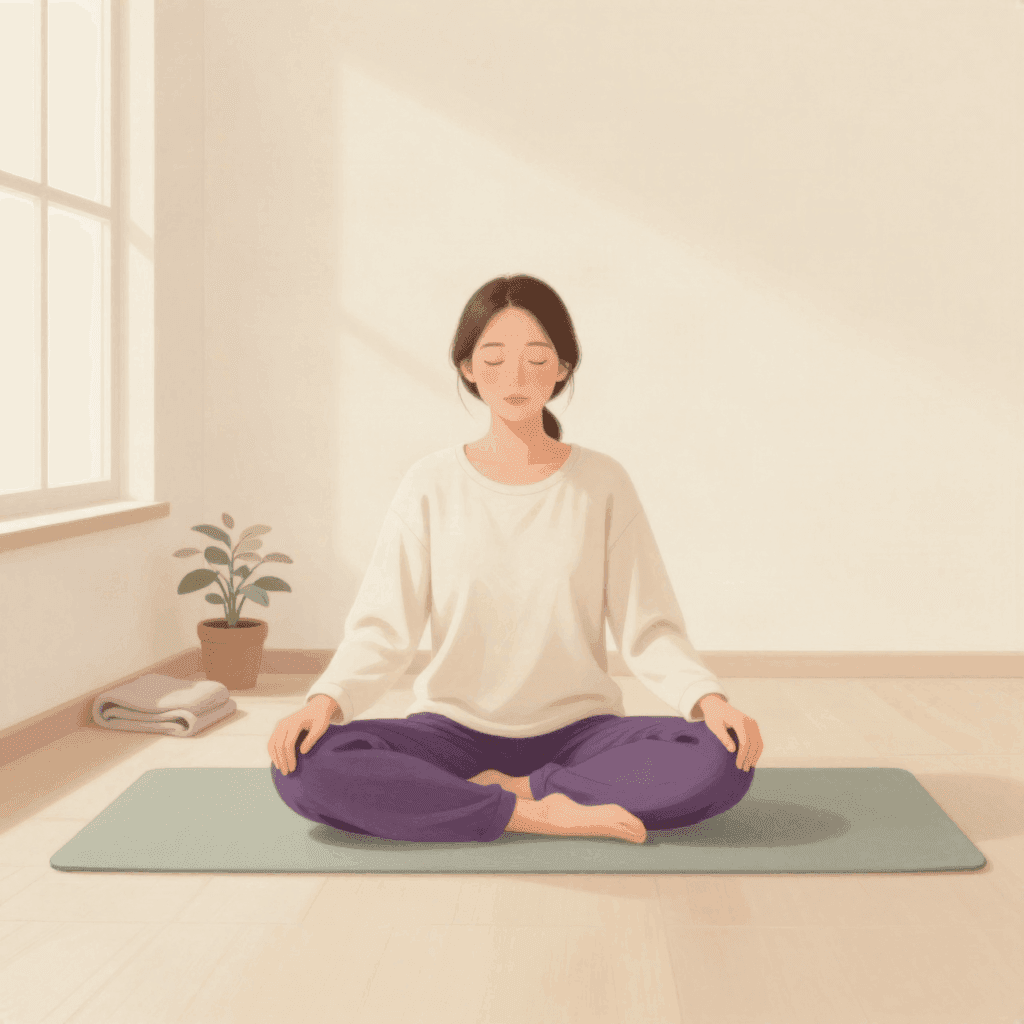

Yoga and gentle stretches can ease period cramps for some people, and they are safe to try at home. In small trials, people who did yoga had less period pain than people who did not, but the evidence is still weak and works best as a regular habit, not a one-day fix.
This guide shows what the studies found and how strong they are. Then it gives 7 gentle poses and stretches with plain steps, how long to hold each one, and how to make it easier.
Does yoga help period cramps?
Probably, a little to a moderate amount, but the evidence is weak. Here is what the research shows:
- Yoga: In a pooled analysis of 4 small trials with 230 people, yoga reduced period pain more than no yoga. The effect looked large, but the range of results was wide.
- Exercise in general: In a large Cochrane review, regular exercise, including stretching, core work or yoga, cut period pain by about 25 points on a 0 to 100 pain scale. The evidence was low quality, and it is not clear if side effects differ between people who exercise and people who do not.
- Stretching: In one trial with 122 students, 15 minutes of belly and pelvic stretches, three times a week, eased period pain about as much as the painkiller mefenamic acid after two cycles. The trial had no blinding and no group that did nothing.
Two limits are important for adults:
- In the trials, people exercised regularly through the month, often for 45 to 60 minutes three times a week. Some trials asked people not to exercise during their period. So the benefit comes from a habit, and one session on a bad day may not do much.
- It is not clear if the results are the same for women over 25.
Yoga is not a replacement for medicine when cramps stop your day. Painkillers such as ibuprofen and gentle exercise can be used together.
7 gentle yoga poses and stretches for period cramps
These poses come from a hospital guide to yoga for period pain. Use a mat or a rug, wear loose clothes, and move slowly.
| Pose | Hold | Easier option |
|---|---|---|
| Cat-cow | 5 to 10 rounds | Smaller movements |
| Child's pose | 5 breaths | Cushion under your head |
| Cobra | 5 breaths | Stay on your forearms |
| Seated forward fold | 5 breaths | Bend your knees |
| Lying spinal twist | 5 breaths each side | Cushion under your knee |
| Bridge | 5 breaths | Lift your hips only a little |
| Legs up the wall | Up to 5 minutes | Move farther from the wall |
1. Cat-cow
- Start on your hands and knees, with your hands under your shoulders and your knees under your hips.
- As you breathe in, let your belly drop and lift your chin.
- As you breathe out, round your back and tuck your chin.
- Repeat 5 to 10 times.
Easier: Make the movements small. If your wrists hurt, rest on your forearms or put a folded towel under your hands.
2. Wide-legged child's pose
- From your hands and knees, bring your big toes together and open your knees wide.
- Lower your hips back toward your heels.
- Rest your forehead on the floor, with your arms forward or by your sides.
- Hold for 5 slow breaths.
Easier: Put a pillow or folded blanket under your head or your chest, so you do not have to reach the floor.
3. Cobra
- Lie face down with your legs straight and your hands under your shoulders.
- As you breathe in, press into your hands and lift your head and chest.
- Hold for 5 slow breaths.
- Lower down slowly. Cobra is a big stretch on your lower back, so rest in child's pose after it.
Easier: Keep your elbows bent and your forearms on the floor, and lift only a little.
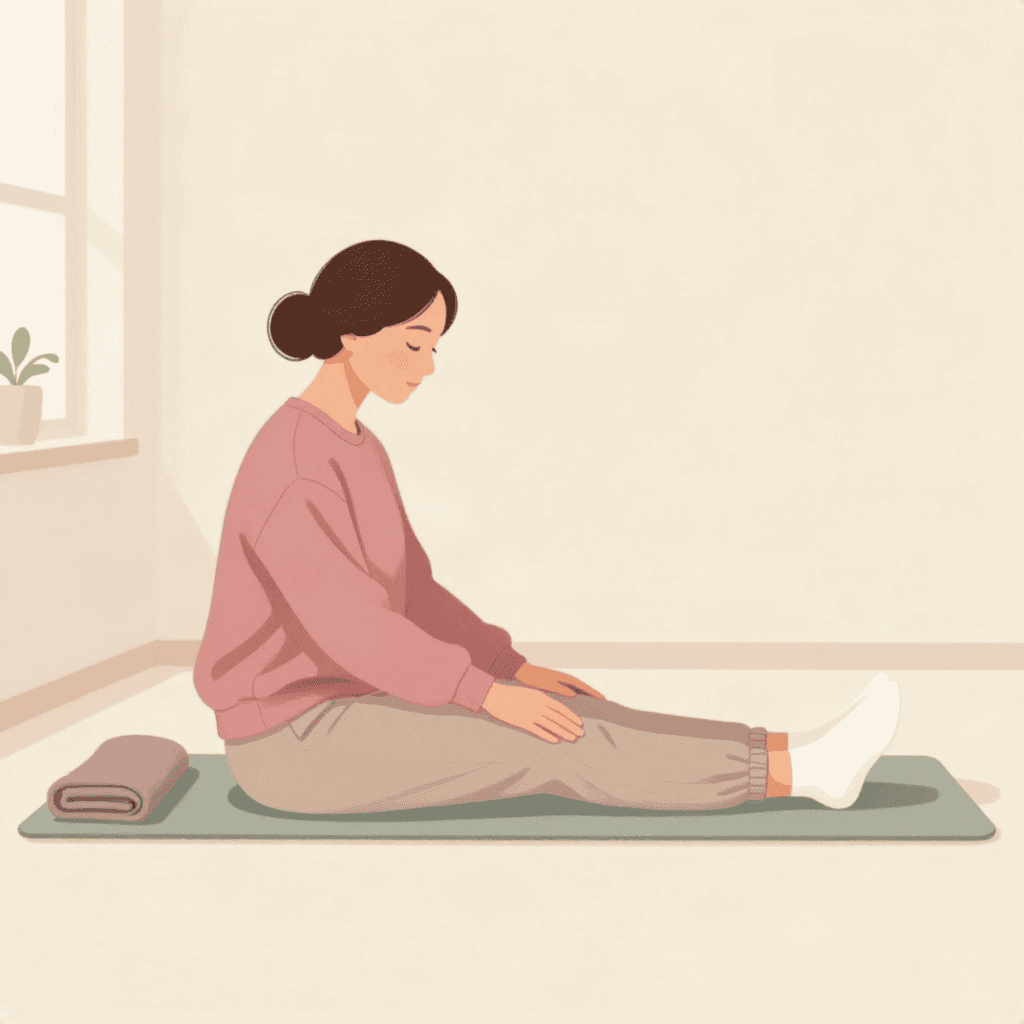
4. Seated forward fold
- Sit with your legs straight out in front of you.
- Breathe in and reach your arms up.
- Breathe out and fold forward from your hips, with a long back.
- Let your hands rest where they land, on your legs, shins or feet. Hold for 5 slow breaths, then sit up.
Easier: Bend your knees, or sit on a folded blanket. You do not need to touch your toes.
5. Lying spinal twist
- Lie on your back with your legs straight.
- Pull your right knee toward your chest.
- Breathe out and guide your right knee across your body to the left. Keep your right shoulder on the floor.
- Hold for 5 slow breaths, then change sides.
Easier: Put a cushion under your bent knee, so it does not have to reach the floor.
6. Bridge
- Lie on your back with your knees bent and your feet flat, hip-width apart, with your heels near your bottom.
- Press into your feet and shoulders to lift your hips.
- Hold for 5 slow breaths, then lower down slowly.
Easier: Lift your hips only a few centimetres, or skip this pose if it pulls on your belly.
7. Legs up the wall
- Sit with one side of your body next to a wall.
- Lie back and swing your legs up the wall.
- Stay for up to 5 minutes.
- To come out, lower your legs to one side, lie flat for a minute, then sit up slowly.
Easier: Move your hips farther from the wall, so your legs lean on it at an angle.
When to stop
Yoga for cramps should feel gentle. Stop a pose and rest if:
- You feel sharp or stabbing pain.
- You feel dizzy, faint or sick.
- Your pain gets worse while you stretch.
Call your doctor if your pain gets much worse after stretching, or if it does not get better with painkillers or stretching.
Yoga and endometriosis pain: what is not known
Most yoga trials studied period pain with no other cause, called primary dysmenorrhea. Much less is known about endometriosis. In one small trial of 40 women with endometriosis, those who did hatha yoga twice a week for 8 weeks had less daily pelvic pain than those who did not. It was one trial with small groups, so it does not prove that yoga treats endometriosis pain.
If you have endometriosis, yoga may still be a gentle way to move. Our guide to exercise with endometriosis covers how to move safely on good days and during flares.
Other ways to ease period cramps
Yoga is one tool among several. See what helps period cramps for the options with the best evidence, ibuprofen vs naproxen for period cramps to choose and time a painkiller, and TENS for period pain and endometriosis if you want to try a TENS machine.
Track what you try
Write down which poses you did, on which day of your period, and how bad the pain was before and after. After two or three periods, you can see if a regular yoga habit makes a difference. Endolog lets you log your pain severity, where it hurts, your bleeding and other symptoms, and add flare notes about what you tried. You can then share a report with your doctor.
When to see a doctor
See a doctor if:
- Your period pain stops you from doing your usual daily activities
- Your periods become more painful, heavier or irregular
- You have pain during sex, or when you pee or poo
- You bleed between periods
Get an urgent appointment or call NHS 111 (or your local urgent care line) if your period pain is severe or worse than usual, and painkillers have not helped. Go to the emergency department if you have sudden, severe pain in your belly or pelvis, and more so if you could be pregnant.
Period pain that gets worse over the years can be a sign of a condition such as endometriosis. Read how endometriosis pain differs from normal period cramps. Severe period pain is a real medical problem, and you deserve care for it.
FAQ: yoga and stretches for period cramps
What is the best yoga pose for period cramps?
No trial has compared single poses, so there is no proven best pose. Gentle poses such as cat-cow, child's pose and a lying twist are a good place to start. Choose the ones that feel good for you.
Can I do yoga during my period?
Yes, if it feels good. Gentle exercise such as yoga, swimming or walking can help period pain. Choose slow poses, and stop if a pose hurts.
How long does it take for yoga to help period pain?
In the trials, people did yoga or exercise regularly for weeks, not only on period days. In the stretching trial, the benefit grew in the second cycle. Give a regular habit two or three cycles before you judge it.
Do stretches work as well as painkillers for cramps?
One small trial found that stretching three times a week eased pain about as much as mefenamic acid after two cycles, but the evidence is very weak. Keep taking the painkiller that works for you, and add stretches next to it.
Does yoga help endometriosis pain?
It may help some people. One small trial found less daily pelvic pain in women with endometriosis who did yoga, but more research is needed. Yoga does not treat the endometriosis itself.
Sources
- Exercise for dysmenorrhoea (Armour M et al. Cochrane Database of Systematic Reviews, 2019), PubMed Central, U.S. National Library of Medicine
- Yoga for menstrual pain in primary dysmenorrhea: A meta-analysis of randomized controlled trials (Kim SD. Complementary Therapies in Clinical Practice, 2019), PubMed, U.S. National Library of Medicine
- Comparison of the Effect of Stretching Exercises and Mefenamic Acid on the Reduction of Pain and Menstruation Characteristics in Primary Dysmenorrhea: A Randomized Clinical Trial (Motahari-Tabari N et al. Oman Medical Journal, 2017), PubMed Central, U.S. National Library of Medicine
- The Practice of Hatha Yoga for the Treatment of Pain Associated with Endometriosis (Gonçalves AV et al. Journal of Alternative and Complementary Medicine, 2017), PubMed, U.S. National Library of Medicine
- Yoga for Period Pain, Nationwide Children's Hospital
- Period pain, NHS
This article is general information, not medical advice. Read how we write and check our articles in our editorial policy.
Explore this topic
Related articles
October 27, 2026
Foods That Help Period Cramps: What to Eat and Skip
Foods that help period cramps: oily fish, fruit, vegetables and whole grains have some evidence. See how strong it is, what to cut back on, and meal ideas.
October 26, 2026
Magnesium and Ginger for Period Cramps: The Evidence
Do magnesium and ginger help period cramps? See what trials show, how strong the evidence is, the doses studied, side effects and who should be careful.
October 23, 2026
Best Tea for Period Cramps: Ginger, Chamomile and More
Which tea helps period cramps? Ginger has the best evidence. See what studies show for chamomile, peppermint, raspberry leaf, cinnamon and fennel tea.
October 6, 2026
Ibuprofen or Naproxen for Period Cramps: Which and When
Ibuprofen for period cramps works about as well as naproxen. See how often to take each, when to start, who should avoid them and when to see a doctor.
October 5, 2026
Heating Pads for Endometriosis and Period Pain: Safe Use
How to use a heating pad for endometriosis and period pain: how hot, how long, where to put it, why not to sleep on it, heat rash, and when to see a doctor.
October 3, 2026
What Helps With Period Cramps? Options With Evidence
What helps with period cramps: anti-inflammatory painkillers taken early, heat, exercise and hormonal birth control. See the evidence and when to get help.
