Where Are Period Cramps Felt? A Map of Period Pain
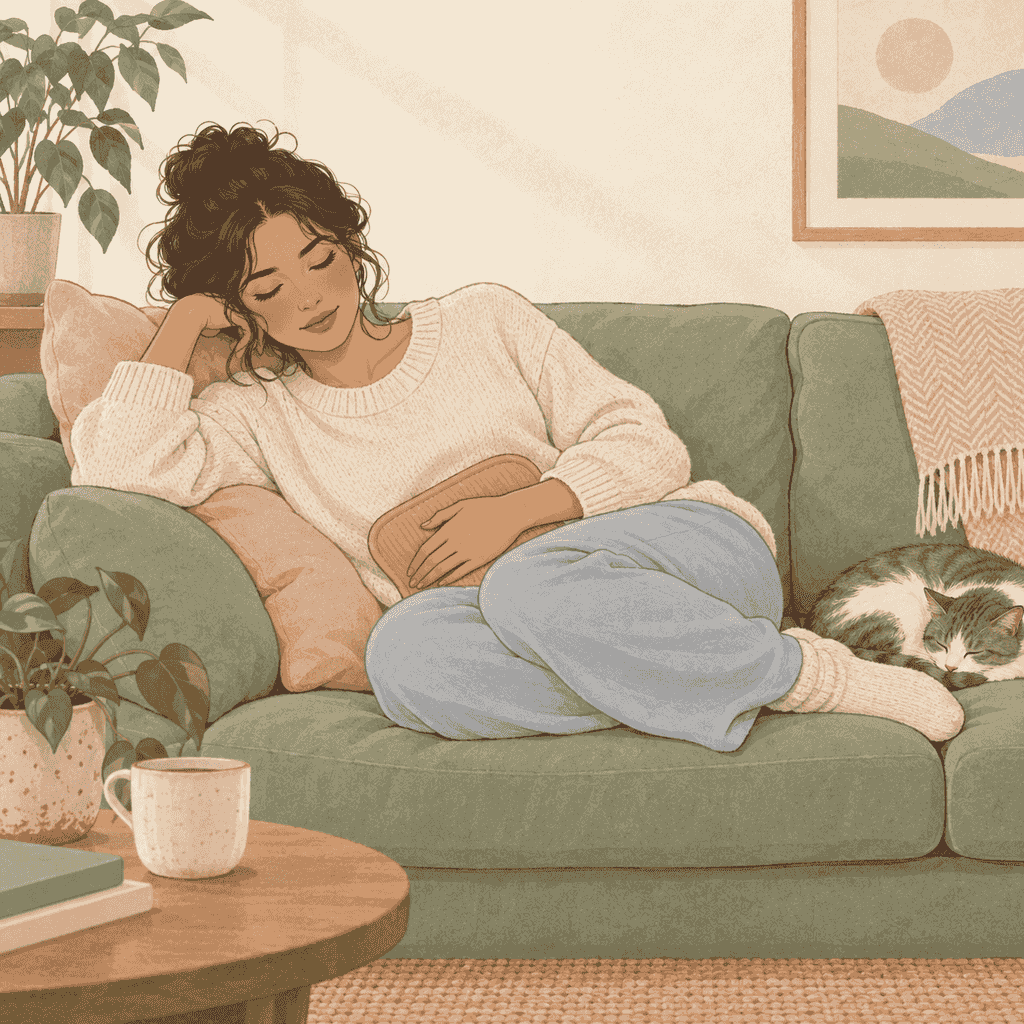

Period cramps are usually felt low in the belly, in the middle, just above the pubic bone. From there they often spread to the lower back and the thighs, and some people also feel them in the buttocks, the rectum or the vagina.
Pain in the lower belly, the back and the thighs is typical period pain. Pain in the buttocks, the rectum or the vagina can come with periods too, but some patterns there need a check. The upper belly, the chest and the shoulder are not usual places for cramps. The map and the sections below show each area, why pain travels there, and when a place or a pattern needs a doctor.
A map of period pain
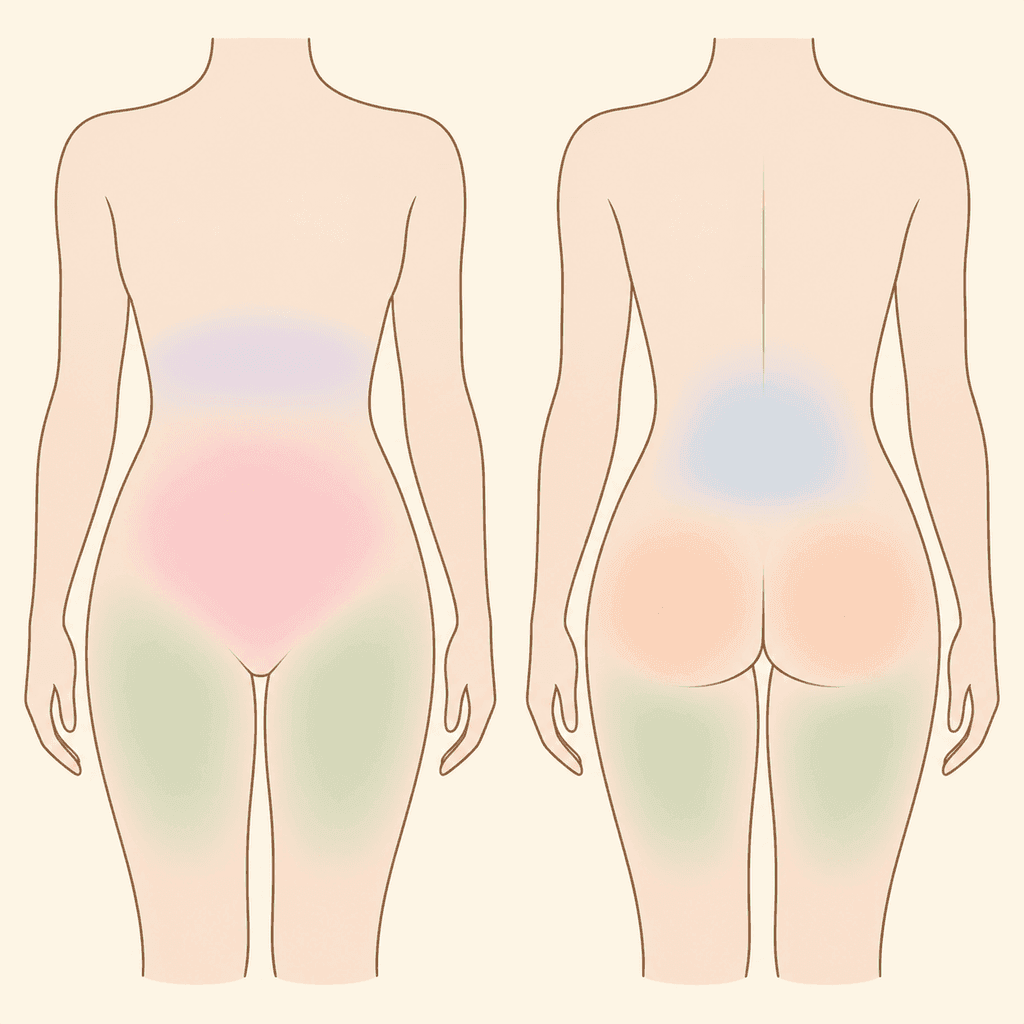
Front view on the left, back view on the right. Pink: the lower belly and pelvis, the most common place for cramps. Blue: the lower back. Green: the upper thighs, front and back. Peach: the buttocks. Lavender (faint): the upper belly just below the ribs, which is not a usual place for cramps. Pain inside the rectum and the vagina can also be part of period pain, but a surface map cannot show it.
Period pain is common. The American College of Obstetricians and Gynecologists (ACOG) says more than half of people who have periods have some pain for 1 to 2 days each month (ACOG). A review of studies puts the figure between 45% and 93% of women of reproductive age (Bernardi et al.).
Where period cramps are felt, area by area
Lower belly (the most common place)
This is where the womb sits, so this is where most cramps are. A medical review describes typical period pain as sharp pain that comes and goes, felt above the pubic bone. It starts within hours of the start of bleeding and is worst when the flow is heaviest (Bernardi et al.). The NHS says period pain can be a sharp pain or a dull ache in the tummy. It can start just before your period, and it usually lasts for up to 3 days (NHS).
The pain can feel central, or it can spread across the whole lower belly.
Lower back
The NHS describes period cramps that spread from the tummy to the back (NHS). Endometriosis can also cause pain in the lower tummy and back, and that pain can happen at any time of the month (NHS: endometriosis). Our guide to lower back pain during your period covers what helps and when back pain points to something else.
Thighs and legs
The NHS also lists cramps that spread to the thighs (NHS). Tight pelvic floor muscles can send pain to the back of the thighs as well (Aredo et al.). Read more in why your legs ache during your period and why period pain goes down to the thighs. If the pain shoots down one leg, the guide to endometriosis and sciatica explains when a nerve may be involved.
Buttocks and tailbone
Tense muscles in the pelvic floor can refer pain to the tailbone, the base of the spine and the back of the thighs (Aredo et al.). See butt pain during your period for causes and relief.
Rectum and bowel
Period pain can come with loose stools. ACOG lists diarrhea, nausea, vomiting, headache and dizziness among the symptoms that can come with severe period pain (ACOG). Pelvic floor muscles can also refer pain to the rectum (Aredo et al.).
Pain when you poo is different. The NHS lists it as a reason to see a GP, and it is a known symptom of endometriosis (NHS, NHS: endometriosis). Read painful bowel movements during your period and bowel endometriosis symptoms for more.
Vagina
Period pain can also be felt in the vagina. Pelvic floor muscles can refer pain there (Aredo et al.). Pain during or after sex is a reason to see a GP, and the NHS lists it as a symptom of endometriosis (NHS, NHS: endometriosis). See vaginal pain during your period.
Upper belly
The womb is low in the pelvis, so cramps are not usually felt high in the belly. What many people notice higher up is an upset stomach. Nausea, vomiting and diarrhea can come with severe period pain (ACOG). A review notes that anti-inflammatory painkillers, which lower prostaglandins, can prevent nausea and diarrhea as well as the cramps (Bernardi et al.).
Sharp or lasting pain under the ribs does not fit period pain. See a doctor about it, mainly if it does not stop when your period ends. Loss of appetite, weight loss without trying and a swollen tummy are also on the NHS list of reasons to see a GP (NHS).
One side (left or right)
The NHS says period pain can be sharp as well as dull, so a stab of pain does not always mean something is wrong (NHS). Pain that is always on the same side needs more thought. Endometriosis is often found on the ovaries and fallopian tubes, which sit on each side of the womb (NHS: endometriosis). If a stabbing pain on the left or the right comes back every cycle, read period cramps on one side and stabbing pelvic pain.
Pain low on one side can also be a sign of an ectopic pregnancy. The bleeding from an ectopic pregnancy can look like a period (NHS: ectopic pregnancy). If you could be pregnant, take this seriously even without a positive test. For pain low on the right, see ovary pain or appendicitis.
Chest and shoulder (not a place for normal cramps)
Period cramps do not reach the chest or the shoulder. The NHS notes that endometriosis sometimes grows outside the pelvis, such as in the chest. It can then cause pain, shortness of breath or coughing up blood (NHS: endometriosis). Pain at the tip of the shoulder can be a sign of internal bleeding from an ectopic pregnancy, and it needs medical advice right away (NHS: ectopic pregnancy).
Why period pain spreads beyond the womb
Prostaglandins make the womb cramp
The lining of the womb makes chemicals called prostaglandins. They make the muscle and blood vessels of the womb tighten. The level is highest on the first day of a period. It falls as the lining sheds, which is why cramps usually ease after the first few days (ACOG). People with painful periods have higher prostaglandin levels, highest in the first 2 days of bleeding (Bernardi et al.).
Nerves from the womb share a path with nerves from your back and legs
Nerves from organs such as the womb make up only 2% to 7% of the nerve fibers that enter the spinal cord at each level. So almost every spinal nerve cell that gets signals from an organ also gets signals from skin and muscle (Aredo et al.). Doctors call this viscerosomatic convergence.
Because the signals mix, the brain cannot tell exactly where they came from. It often reports the pain in muscles served by the same part of the spinal cord. This is called referred pain. Nerves from an organ also spread over several levels of the spinal cord, so referred pain can be felt quite far from the organ (Aredo et al.). This is why a cramp in the womb can feel like an ache in your back or thighs.
Pelvic floor muscles can add their own pain
Organ pain can also make nearby muscles tighten. Over time, tight spots called trigger points can form in the pelvic floor. These can refer pain to the urethra, the vagina, the rectum, the tailbone, the lower back, the lower belly and the back of the thighs (Aredo et al.). They can keep hurting after the period ends.
Long-term pain can make the nervous system more sensitive
Pain that comes back every month is linked to changes in the central nervous system (Bernardi et al.). A sensitized system can make pain feel stronger and spread wider (Aredo et al.). For this reason, the review advises that period pain should be treated (Bernardi et al.).
Types of period pain
Doctors split period pain into 2 types (ACOG):
- Primary dysmenorrhea is cramping pain caused by prostaglandins, with no disease behind it. It usually starts soon after periods begin, and it often gets milder with age.
- Secondary dysmenorrhea is caused by a problem in the reproductive organs, such as endometriosis, adenomyosis or fibroids. The pain tends to get worse over the years. It may start a few days before a period, get worse as the period goes on, and not go away when it ends.
Other conditions can flare during a period and cause pain, such as Crohn's disease and bladder problems (ACOG). The NHS adds pelvic inflammatory disease to the list. An IUD can also cause period pain, mainly in the first 3 to 6 months after it is put in (NHS).
The place of the pain alone cannot tell the 2 types apart. Timing, severity and other symptoms tell doctors more. For a closer look, see endometriosis vs normal period cramps.
Which places are common, and which need a doctor
| Where it hurts | Common with periods? | See a doctor if |
|---|---|---|
| Lower belly | Yes, the usual place | It stops your normal day, or painkillers do not help |
| Lower back | Yes | It lasts after your period, or it comes with pain when you pee |
| Thighs | Yes | It shoots down one leg, or you have numbness or weakness |
| Buttocks and tailbone | Sometimes | It is there most days, not only during your period |
| Rectum | Sometimes | It hurts when you poo, or your bowel habits change |
| Vagina | Sometimes | It hurts during or after sex |
| Upper belly | Nausea can happen; pain there is unusual | You have pain under the ribs, or loss of appetite or weight loss |
| One side only | Sometimes | It is always on the same side, or you could be pregnant |
| Chest or shoulder tip | No | Always get it checked, and get help right away with shoulder tip pain |
Red flags: when to get help
Call 999 in the UK or 911 in the US, or go to the emergency department, if you have sudden, sharp, severe belly pain and you feel very dizzy, faint or sick. With a possible pregnancy, this can mean an ectopic pregnancy has burst (NHS: ectopic pregnancy).
Get urgent medical advice (in the UK, ask for an urgent GP appointment or call NHS 111) if:
- Your period pain or pelvic pain is severe or worse than usual, and painkillers have not helped (NHS).
- You could be pregnant and you have pain low on one side, unusual bleeding, or pain at the tip of your shoulder (NHS: ectopic pregnancy).
Book a doctor's appointment if (NHS):
- Your periods become more painful, heavier or irregular.
- Period pain stops you from doing your usual daily activities.
- You have pain during sex, or when you pee or poo.
- You bleed between periods.
- You notice a change in how much you pee or poo.
- You have a swollen tummy, loss of appetite, or weight loss you cannot explain.
Also tell a doctor if your pain has changed over the years. Pain that now starts days before your period, or keeps going after it ends, fits secondary dysmenorrhea (ACOG). A review suggests that severe period pain that does not respond to treatment needs further tests (Bernardi et al.). Our checklist on whether your period pain is normal goes through more signs.
Keep your own map
A doctor will ask where it hurts. It is hard to answer well from memory weeks later, because the pain may move during a period and change from month to month.
A simple record helps. For each day of pain, note:
- Where it hurts, and whether it spreads.
- How bad it is on a 0 to 10 scale.
- What it feels like: cramping, aching, stabbing or pressure.
- The day of your cycle.
- What it stopped you from doing.
In Endolog, you can mark where the pain is on a body map and log how bad it is, with notes from that day. After a few cycles, you can see if the pain always spreads to the same places, or if a new place has started to hurt. Our guide to a pain diary for your doctor explains how to share that record at an appointment.
Frequently asked questions
Where are period cramps located?
Period cramps are usually felt low in the belly, in the middle, just above the pubic bone. They often spread to the lower back and the thighs. Some people also feel them in the buttocks, the rectum or the vagina.
Is it normal to have upper stomach pain during your period?
Cramps are not usually felt in the upper belly, because the womb sits low in the pelvis. Nausea, vomiting and diarrhea can come with severe period pain, so an upset stomach is common. See a doctor for sharp or lasting pain under the ribs, or pain there that does not stop when your period ends.
Why do I get stabbing pain on the left side of my abdomen during my period?
Period pain can be sharp. Pain that is always on the same side and comes back every cycle should be checked, because endometriosis often grows on the ovaries and tubes. If you could be pregnant, get medical advice about any one-sided pain, because it can be a sign of an ectopic pregnancy.
Why does period pain go to my back and legs?
Nerve signals from the womb reach the same nerve cells in the spinal cord as signals from skin and muscle. The brain cannot always tell where a signal came from, so it can feel womb pain in muscles such as those of the back and thighs. This is called referred pain.
Can period cramps be felt in your bum?
Yes. Tight pelvic floor muscles can refer pain to the tailbone and the rectum, and some people get loose stools during their period. Pain when you poo is not typical period pain, so tell a doctor about it.
This article is for general information. It does not replace care from a doctor. If you think you have an emergency, call 911 in the US, or 999 in the UK.
Sources
- Period pain, NHS
- Dysmenorrhea: Painful Periods, American College of Obstetricians and Gynecologists (ACOG)
- Dysmenorrhea and related disorders (Bernardi M, Lazzeri L, Perelli F, Reis FM, Petraglia F. F1000Research, 2017), F1000Research
- Relating Chronic Pelvic Pain and Endometriosis to Signs of Sensitization and Myofascial Pain and Dysfunction (Aredo JV, Heyrana KJ, Karp BI, Shah JP, Stratton P. Seminars in Reproductive Medicine, 2017), Seminars in Reproductive Medicine
- Endometriosis, NHS
- Ectopic pregnancy: symptoms, NHS
This article is general information, not medical advice. Read how we write and check our articles in our editorial policy.
Explore this topic
Related articles

January 2, 2026
Sharp Pelvic Pain During Your Period: What Makes It Different
Sharp pelvic pain during your period differs from typical cramps. Understanding what creates sharp pain helps you determine when it requires medical evaluation.
January 5, 2026
Vaginal Pain During Your Period: Causes and When to Worry
Vaginal pain during your period is more common than people think. Learn the possible causes, what is typical, and when to see a doctor.
January 1, 2026
Pelvic Pain During Your Period That Is Not Cramps
Pelvic pain during your period that does not feel like cramps can have other causes. Learn how to tell them apart and when to see a doctor.
December 26, 2025
Period Cramps on One Side: Is It Normal? When to Worry
One-sided period cramps are often harmless. See which causes to check, and which signs need a doctor fast, such as fever, fainting, or sudden severe pain.

March 22, 2026
Left Side Pelvic Pain: Common Causes and What It Means
Discover potential causes for left side pelvic pain, from endometriosis to PCOS. Learn how to track your symptoms effectively for better doctor consultations.

March 16, 2026
Lower Back Pain During Period: Causes and When to See a Doctor
Understand why lower back pain happens during your period, from prostaglandins to endometriosis, and learn when your symptoms might require medical attention.
