Nausea During Your Period: Why It Happens and What Helps
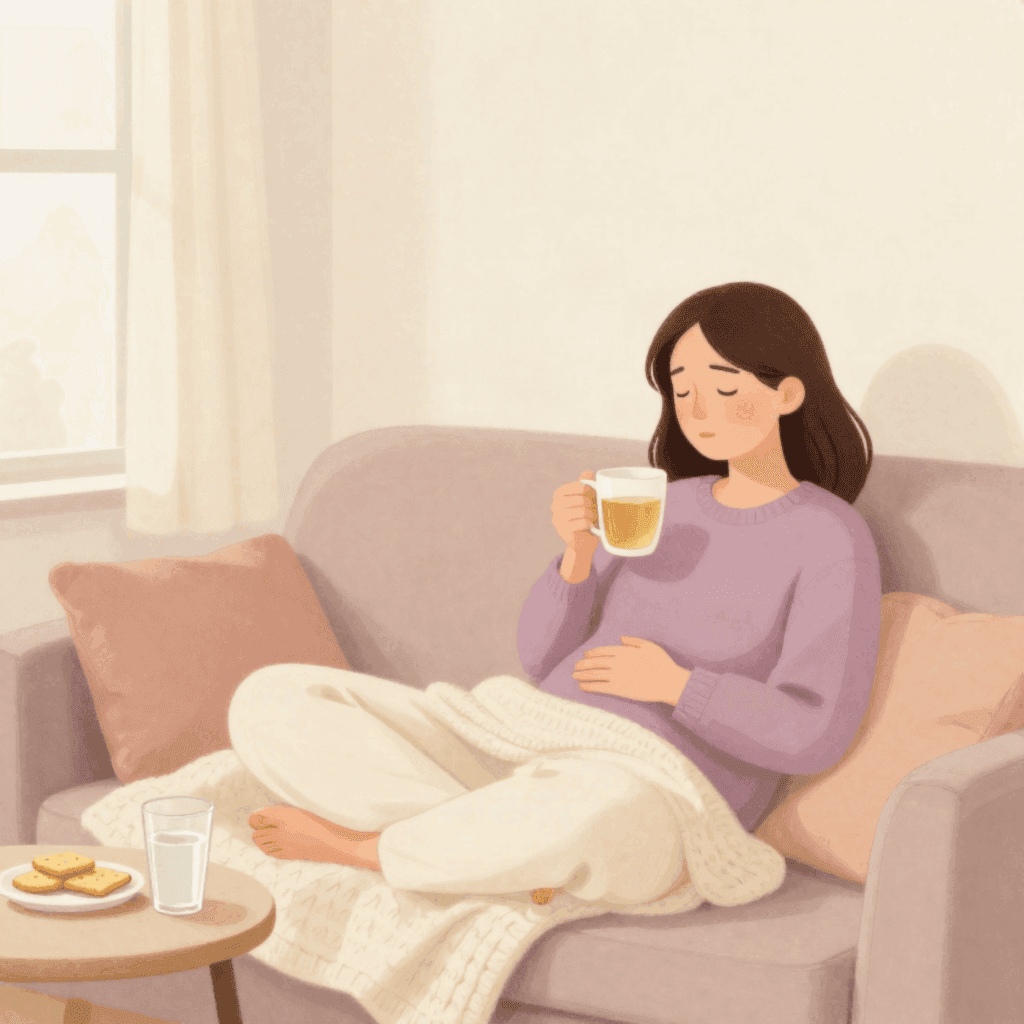

Nausea during your period is common, and it is usually part of strong period pain. Severe cramps can come with nausea, vomiting, diarrhea, headache and dizziness, and these often ease after the first few days of bleeding.
This page explains why you can feel sick on your period, what helps, what to write down, and when nausea points to something other than your period. It is general information and not medical advice.
Is it normal to feel sick on your period?
Yes. Feeling queasy for a day or two at the start of your period is common, especially if your cramps are strong. Some people also throw up on their worst day.
It is less typical when the nausea lasts all through your period, keeps you from drinking, or comes with pain that pain relief does not touch. Those patterns are worth a talk with a doctor, and the sections below explain why.
Why you feel nauseous during your period
The chemicals behind your cramps
Before and during a period, the lining of your womb (uterus) makes chemicals called prostaglandins. They make the muscles of the womb tighten to shed the lining. Prostaglandin levels are high on the first day of your period and drop as bleeding goes on.
That timing matches what many people feel. The cramps are worst on day one or two, and the nausea, loose stools and headache come with them. Our guide to where period cramps are felt covers how that pain can spread to your back, thighs and bowel.
Menstrual migraine
For some people, the nausea comes from a migraine and not from the cramps. Migraine attacks that happen just before or during your period are called menstrual migraines. They are often longer and more severe than attacks at other times. Migraine can make you feel or be sick, and light and sound can feel too much.
Pain relief on an empty stomach
Anti-inflammatory painkillers are the usual first choice for cramps, but they can upset your stomach. Ibuprofen can cause indigestion and stomach aches, and the advice is to take it with or after food. If you already feel queasy and skip food, this can add to the problem.
What helps period nausea
Treat the cramps early
Because nausea tends to ride along with strong cramps, easing the cramps often eases the nausea. Anti-inflammatory medicines such as ibuprofen and naproxen lower the prostaglandins your body makes. They work best at the first sign of your period or pain, and you usually need them for only 1 or 2 days.
If you know your nausea starts on day one, have a small snack ready so you can take your dose with food. These medicines are not for everyone. Do not take them if you have a bleeding disorder, asthma, an aspirin allergy, liver damage, a stomach disorder or an ulcer, unless a doctor says they are safe for you. Ask a pharmacist if you are not sure.
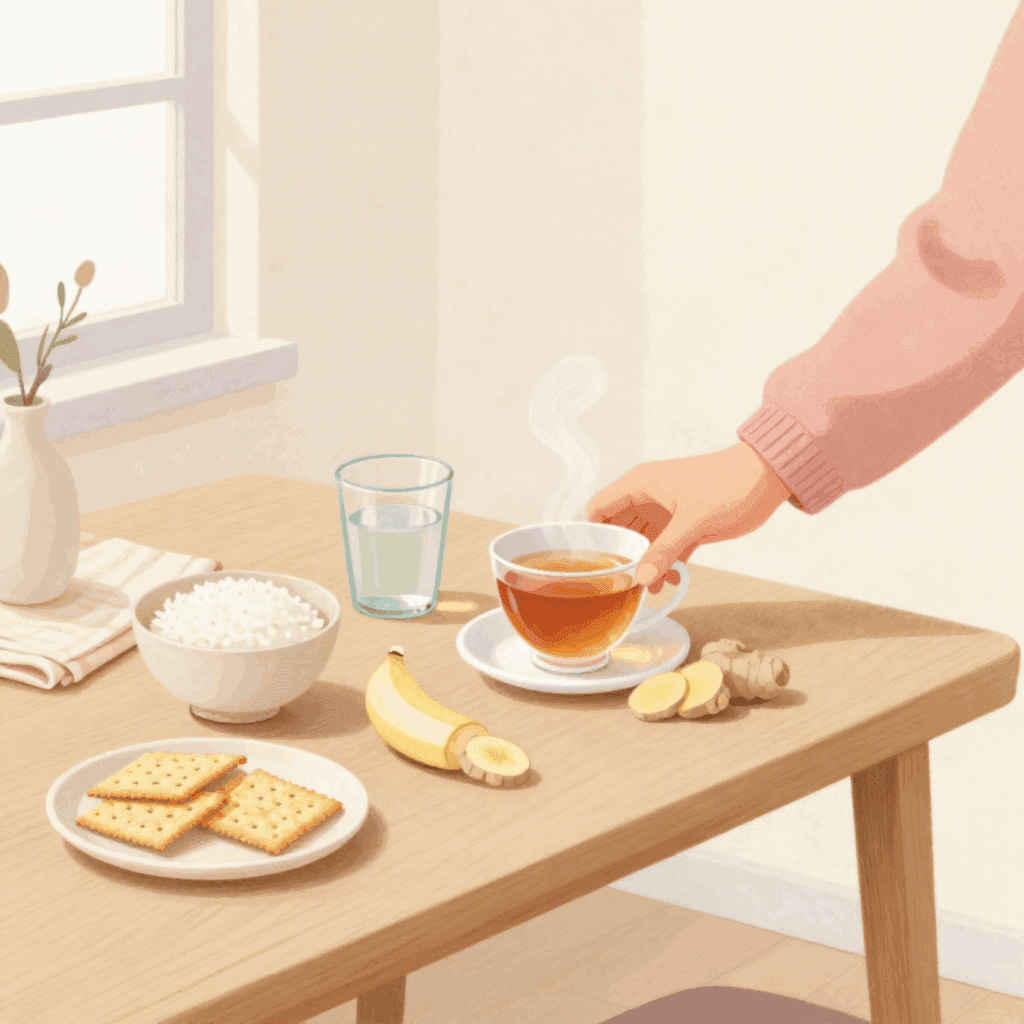
Eat and drink in small amounts
These steps can help you stop feeling sick:
- Take regular sips of a cold drink.
- Try ginger or peppermint tea, or food with ginger in it.
- Eat small meals more often, and eat slowly.
- Stay away from hot, fried or greasy food and strong cooking smells.
- Do not have a large drink with a meal, and do not lie flat soon after eating.
- Wear clothes that are loose around your waist.
If nausea also takes away your appetite, our page on loss of appetite during your period has more ideas for eating enough.
Replace fluids if you are throwing up
Vomiting or diarrhea can make you lose water fast. Keep taking small sips of water or squash, even if you cannot eat. Dark, strong-smelling pee or peeing less than usual are signs of dehydration. A pharmacist can suggest oral rehydration powder that you mix with water.
Ask about anti-sickness medicine
You do not have to put up with nausea that comes back every month. A doctor can look for the cause and may prescribe anti-sickness medicine if you need it. It is worth asking when:
- Nausea or vomiting keeps you from drinking, eating or taking your pain relief.
- You throw up your pain relief before it can work.
- The nausea comes back every cycle and stops you working, studying or sleeping.
- You get migraine with your period. Migraine treatment includes medicines that stop you feeling or being sick.
A doctor may also suggest hormonal birth control to treat painful periods. Less pain often means less nausea.
When nausea may point to something else
Period nausea follows a pattern: it starts around the first day of bleeding and fades as the cramps fade. Look at other causes when your nausea does not fit that pattern.
| Possible cause | Clues |
|---|---|
| Pregnancy | Your period is late or not like your usual bleed |
| Endometriosis | Severe pain, bloating, bowel symptoms, pain outside your period |
| Menstrual migraine | Bad headache, light and sound hurt, feeling sick |
| Dehydration | Dark pee, peeing less than usual |
| A stomach bug | Vomiting or diarrhea with no link to your cycle |
Pregnancy. Morning sickness is a common cause of nausea. If your period is late, or the bleeding is lighter or shorter than usual, and you could be pregnant, take a pregnancy test.
Endometriosis. Endometriosis is one cause of severe period pain. It often brings gut symptoms too, such as bloating, constipation and urgent bowel movements. Nausea and vomiting were more common in people whose endometriosis was on the bowel. If your nausea comes with pain that stops your normal day, pain during sex, or pain when you poo or pee, read how endometriosis pain differs from normal period cramps and what bowel endometriosis can feel like.
Migraine. If nausea arrives with a headache and you want a dark, quiet room, it may be a menstrual migraine. See a GP if you regularly get migraine before or during your period.
Dehydration. Vomiting and diarrhea can leave you low on fluids. Watch for dark, strong-smelling pee or peeing less than usual. If you also feel drained all through your period, our guide to period fatigue explains the common causes.
Something unrelated. A stomach bug or food poisoning is the most common cause of vomiting and diarrhea. It can happen to land on your period.
What to track
If you feel sick every period, a short record helps you and your doctor see the pattern. Note:
- The cycle day the nausea starts and stops
- Whether you threw up, and how many times
- Your cramp level from 0 to 10 at the same time
- What you took for pain, when you took it, and whether you ate first
- Other symptoms such as headache, diarrhea, dizziness or bloating
- Whether you could eat, drink, work or sleep
A line such as "I throw up on day one of every period and cannot keep ibuprofen down" gives a doctor much more to work with than "my periods make me sick". Endolog lets you log nausea, pain and bowel symptoms next to your cycle and share a report with your doctor. Our guide to keeping a pain diary for your doctor shows what to bring.
When to see a doctor
See a doctor if:
- You feel sick and do not feel better in a few days, or the nausea keeps coming back
- Nausea or vomiting stops you from taking your pain relief
- Your period pain is severe, getting worse, or stops your normal activities
- You have pain during sex, or when you poo or pee
- Nausea happens at other times of your cycle too
- You regularly get migraine before or during your period
Get medical advice the same day if you keep being sick and cannot keep fluids down, or you have been sick for more than 2 days.
Get urgent help
Call 911 in the US, or 999 in the UK, or go to the emergency department if you feel sick or throw up and you:
- Vomit blood, or vomit that looks like ground coffee or is green
- Have a sudden, severe tummy ache
- Have a sudden, severe headache, or a stiff neck and pain when you look at bright light
- Feel confused, or have blue, grey or very pale skin or lips
- Have severe difficulty breathing
- Have chest pain that feels tight or heavy, or pain that spreads to your arms, back, neck or jaw
If you could be pregnant and have sudden, severe pain low in your belly, get help at once.
FAQ: nausea during your period
Why do I feel sick on the first day of my period?
On the first day, prostaglandins, the chemicals that make your womb cramp, are high. They drop as bleeding goes on. Strong cramps and nausea often come together, so the first day or two tends to be the worst.
Is it normal to throw up during your period?
Some people throw up on their worst cramp day, and severe period pain can come with vomiting. If you throw up every period, cannot keep fluids down, or cannot keep your pain relief down, see a doctor. Treatment can help.
Can endometriosis cause nausea?
Yes. Endometriosis can cause severe period pain and gut symptoms, and severe pain often brings nausea. Nausea and vomiting are more common when endometriosis is on the bowel. If your nausea comes with pain that stops your usual activities, ask a doctor about endometriosis.
Can you feel nauseous before your period starts?
Yes, for some people. Menstrual migraine can start just before a period, and it often makes you feel sick. If you feel sick and your period is late, take a pregnancy test.
What is the fastest way to stop period nausea?
Take anti-inflammatory pain relief with a small snack at the first sign of cramps, and sip a cold drink or ginger tea. If nothing helps and you feel sick every month, ask a doctor about anti-sickness medicine or other treatment.
Sources
- Dysmenorrhea: Painful Periods, American College of Obstetricians and Gynecologists (ACOG)
- Feeling sick (nausea), NHS
- Ibuprofen for adults, NHS
- Migraine, NHS
- Diarrhoea and vomiting, NHS
- Gastrointestinal symptoms among endometriosis patients: a case-cohort study (Ek M et al. BMC Women's Health, 2015), BMC Women's Health, via PubMed
This article is general information, not medical advice. Read how we write and check our articles in our editorial policy.
Explore this topic
Related articles
January 15, 2026
Loss of Appetite During Your Period: Why It Happens
Losing your appetite on your period is common. Learn why it happens, how to eat enough when you are not hungry, and when to see a doctor.

December 22, 2025
Heavy Feeling in the Pelvis: Causes and When to Worry
A heavy feeling in the pelvis can come from normal cycle changes or from adenomyosis, endometriosis, or fibroids. Learn the causes and when to get help.

January 5, 2026
Vaginal Pain During Your Period: Causes and When to Worry
Vaginal pain during your period is more common than people think. Learn the possible causes, what is typical, and when to see a doctor.

December 18, 2025
Are Painful Periods a Sign of Good Fertility? The Myth Explained
Painful periods are not a sign of good fertility. Learn what research says about period pain and fertility, and when pain can point to a condition.
September 29, 2026
Orilissa (Elagolix) for Endometriosis: What to Expect and What to Track
Orilissa (elagolix) is a daily tablet for moderate to severe endometriosis pain. Learn how the two doses work, the time limits, side effects, bone and mood warnings, contraception and what to track for your doctor.

September 25, 2026
Cramps but No Period: Causes and When to See a Doctor
Cramps but no period? Take a pregnancy test if you could be pregnant. Learn the other causes, from ovulation to endometriosis, and when to see a doctor.
