Period Flu: Symptoms, Fever and When It Is Something Else
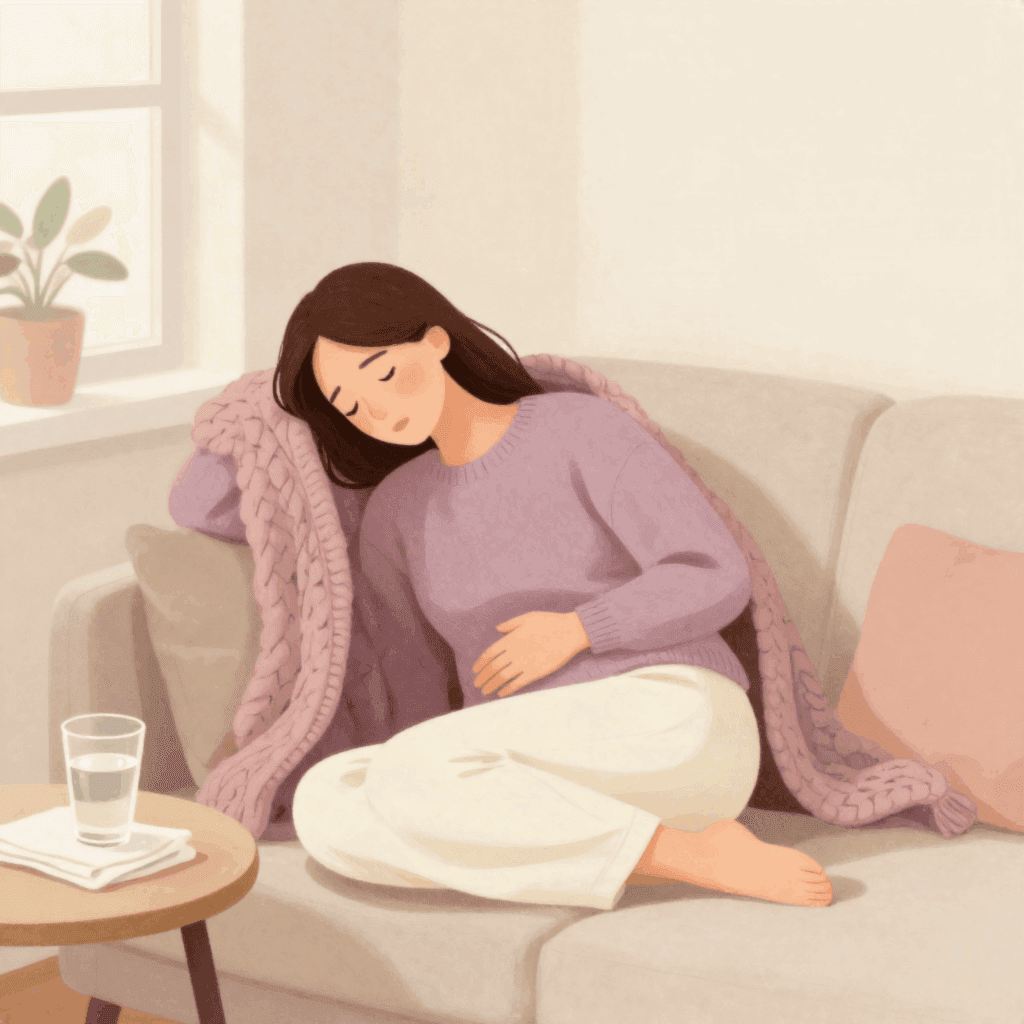

Period flu is the name people use for aches, tiredness, headache and an upset stomach that come just before or at the start of a period. It is not the flu and not a medical diagnosis. It is a form of PMS, and it usually eases once your period gets going.
A true fever is different. A temperature of 38°C (100.4°F) or above is not a normal part of a period, and it points to something else, such as an infection. This guide covers the usual symptoms, why they happen, what helps, and the signs that mean you should get checked.
Period flu symptoms
Most people feel symptoms a few days before their period, and they go away once it starts. The common ones are:
- Body aches and muscle pain
- Tiredness
- Headache
- Nausea, and sometimes vomiting
- Diarrhoea (diarrhea in the US)
- Cramps in your tummy that can spread to your back and thighs
- Feeling a little warm
When period pain is strong, it can come with diarrhoea, nausea, vomiting, headache and dizziness. So the worst "flu" days are often the same days as the worst cramps.
If tiredness is your main symptom, our guide to period fatigue goes into sleep, iron and heavy bleeding. If your bowels are the main problem, see painful bowel movements during your period. For aches that settle in your legs, see leg aches during your period. If you feel lightheaded or faint on heavy days, see dizziness during your period.
Why your period can feel like the flu
Two things cause most of it.
Prostaglandins. Before your period, the lining of your womb (uterus) releases chemicals called prostaglandins. They make the womb contract, and those contractions are your cramps. Prostaglandins can also cause diarrhoea, nausea and sometimes a slightly raised temperature. Levels are highest on the first day of your period and fall as bleeding goes on, which is why the first days are often the hardest.
Hormone changes. Oestrogen (estrogen in the US) and progesterone rise after ovulation. If you do not get pregnant, they drop just before your period. That drop can cause headaches, fatigue and mood swings.
Your temperature also moves with your cycle. After ovulation, core body temperature runs 0.3°C to 0.7°C (about 0.5°F to 1.3°F) higher than in the first half of the cycle, because of progesterone. A shift that small can make you feel warm, but it is not a fever.
Period flu or a real fever?
This table can help you tell the difference. It is a guide, not a diagnosis.
| Sign | Usual period flu | Needs a check |
|---|---|---|
| Temperature | Normal or slightly warm | 38°C (100.4°F) or above |
| Chills | None, or mild | Hot, cold or shivery |
| Timing | Days before your period, or days 1 to 2 | Any time, or getting worse as your period goes on |
| Aches | Tummy, back, thighs, general ache | Severe pain in your arms, legs or whole body |
| Other | Cramps, tiredness, headache | Rash, vomiting that will not stop, confusion |
Feeling hot, cold or shivery can mean a high temperature even if a thermometer reads below 38°C. Trust how you feel. A cold, the flu or another infection can also start during your period, so a fever still needs the same care it would at any other time of the month.
Toxic shock syndrome: know the warning signs
Toxic shock syndrome (TSS) is rare but life-threatening. It can happen when you use a tampon or a menstrual cup, and it comes on quickly. Early on it can look a lot like period flu, so it is worth knowing the signs.
Get urgent medical advice the same day if you use a tampon or cup and you have any of these:
- A high temperature, or feeling hot, cold or shivery with muscle aches
- Vomiting and diarrhoea
- Severe pain in your arms, legs or all over your body
- A rough rash that feels like sandpaper
- Bright red palms, soles, tongue or whites of the eyes
- Swollen or peeling skin
- Feeling sick, dizzy or confused
Call 911 (or 999 in the UK) if you are confused or slurring your speech, have trouble breathing, have blue, grey, pale or blotchy skin or lips, have a rash that does not fade when you press a glass on it, or have large areas of peeling skin.
Take out the tampon or cup, and tell the medical team you were using one. TSS needs hospital treatment.
To lower your risk, wash your hands and follow the product instructions. Do not leave a tampon or cup in longer than needed or recommended. If you have had TSS before, ask your doctor which products are safe for you.
What helps period flu

Warmth, rest and fluids on the heavy days.
- Take an anti-inflammatory painkiller early. Ibuprofen and naproxen are NSAIDs. They lower prostaglandins, so they can ease cramps, body aches and diarrhoea. They work best if you start them at the first sign of your period or pain. Check with a doctor or pharmacist first if you have asthma, a stomach ulcer, a bleeding disorder, liver disease or an aspirin allergy.
- Use heat. A warm bath, a heat pad or a hot water bottle on your tummy can ease cramps and muscle ache.
- Move gently. Walking, swimming, cycling or yoga can help ease period pain. On most days of the month, regular aerobic exercise helps too.
- Sleep. Being well rested before and during your period helps you cope with the discomfort.
- Eat small, regular meals. Smaller meals with snacks in between keep your blood sugar steady. If you feel sick, plain food and sips of water are easier.
- Ask about hormonal contraception. If period flu comes back every month, the pill, patch, ring, implant, injection or hormonal IUD can make periods less painful. Your doctor can help you choose.
If a bad month feels like more than period flu, our guide to an endometriosis flare-up has a flare kit and more ideas for heavy days.
When to see a doctor
Period flu that is mild and goes away in a day or two is common. See a doctor if:
- Your symptoms stop you doing your usual daily activities
- Your periods become more painful, heavier or irregular
- You have pain during sex, or when you pee or poo
- You bleed between periods
- You have a swollen tummy, lose your appetite or lose weight without trying
Ask for an urgent appointment if your pain is severe or worse than usual and painkillers have not helped.
Some conditions make periods feel worse over time. With endometriosis, adenomyosis or fibroids, pain may start a few days before a period, get worse as it goes on, and not stop when the period ends. If that sounds like you, read endometriosis vs normal period cramps.
What to track
A few notes each cycle make it easier to see a pattern and to explain it to your doctor:
- The day of your cycle each symptom starts and stops
- Your temperature, if you feel hot or shivery
- Pain score from 0 to 10, and where it hurts
- Nausea, vomiting and bowel changes
- How heavy your bleeding is
- What you took or did, and whether it helped
- Whether you used a tampon or cup, and for how long
Endolog is a pain and symptom diary for endometriosis. You log symptoms on the days they happen and have a clear record to show your doctor. A paper diary works too. Our pain diary guide shows how to set one up.
Frequently asked questions
Is period flu real?
The symptoms are real, but "period flu" is not a medical diagnosis. It is a common name for flu-like PMS symptoms caused by hormone changes and prostaglandins.
Can your period give you a fever?
Your period can make you feel a little warm. Prostaglandins can cause a slightly raised temperature, and body temperature is 0.3°C to 0.7°C higher after ovulation. A reading of 38°C (100.4°F) or above is a fever. Treat it as a sign of something else, not as part of your period.
How long does period flu last?
For most people it starts a few days before the period and eases once the period starts. Cramps and gut symptoms often last into the first day or two, when prostaglandin levels are highest.
Can a tampon make you feel like you have the flu?
Rarely, yes. Toxic shock syndrome can cause a high temperature, muscle aches and flu-like symptoms. If you have these while using a tampon or cup, take it out and get medical help the same day.
This article is for general information. It is not medical advice and does not replace advice from your own doctor. If you think you have an emergency, call 911.
Sources
- What Is 'Period Flu'? How Your Period Can Cause Flu-Like Symptoms, Cleveland Clinic
- Dysmenorrhea: Painful Periods, frequently asked questions, American College of Obstetricians and Gynecologists (ACOG)
- Period pain, NHS
- High temperature (fever) in adults, NHS
- Toxic shock syndrome, NHS
- Temperature regulation in women: effects of the menstrual cycle (Baker FC, Siboza F, Fuller A. Temperature, 2020), PubMed
This article is general information, not medical advice. Read how we write and check our articles in our editorial policy.
Explore this topic
Related articles
September 30, 2026
Dizziness During Your Period: Causes and Red Flags
Dizziness during your period often comes from pain, heavy bleeding, low iron or too little food and water. Learn what helps and which signs are urgent.

February 5, 2026
Period Fatigue: Why You Feel So Tired on Your Period
Period fatigue often comes from PMS, poor sleep from cramps, or low iron from heavy bleeding. Learn what helps and when tiredness needs a doctor.

September 24, 2026
How to Describe Period Pain (to a Doctor, a Partner or a Boss)
Describe period pain with three things: what it feels like, where it is, and what it stops you doing. Get a word bank, a 0 to 10 scale based on your day, a one-line script for your doctor, and an honest look at the heart attack comparison.

March 11, 2026
Adenomyosis Symptoms: Heavy Periods, Pain, and What to Track
Understand core adenomyosis symptoms like heavy bleeding, knife-like pain, and an enlarged uterus. Learn how to track symptoms for a faster diagnosis.

March 2, 2026
Painful Bowel Movement During Period: Causes and Relief
A painful bowel movement during your period often comes from prostaglandins. Learn when it can point to endometriosis, what helps and when to see a doctor.

February 13, 2026
Endometriosis Pain vs. Normal Period Pain: Key Differences
Learn to distinguish endometriosis symptoms from regular cramps. Compare pain intensity, timing, and locations to better understand your pelvic health journey.
