Dizziness During Your Period: Causes and Red Flags
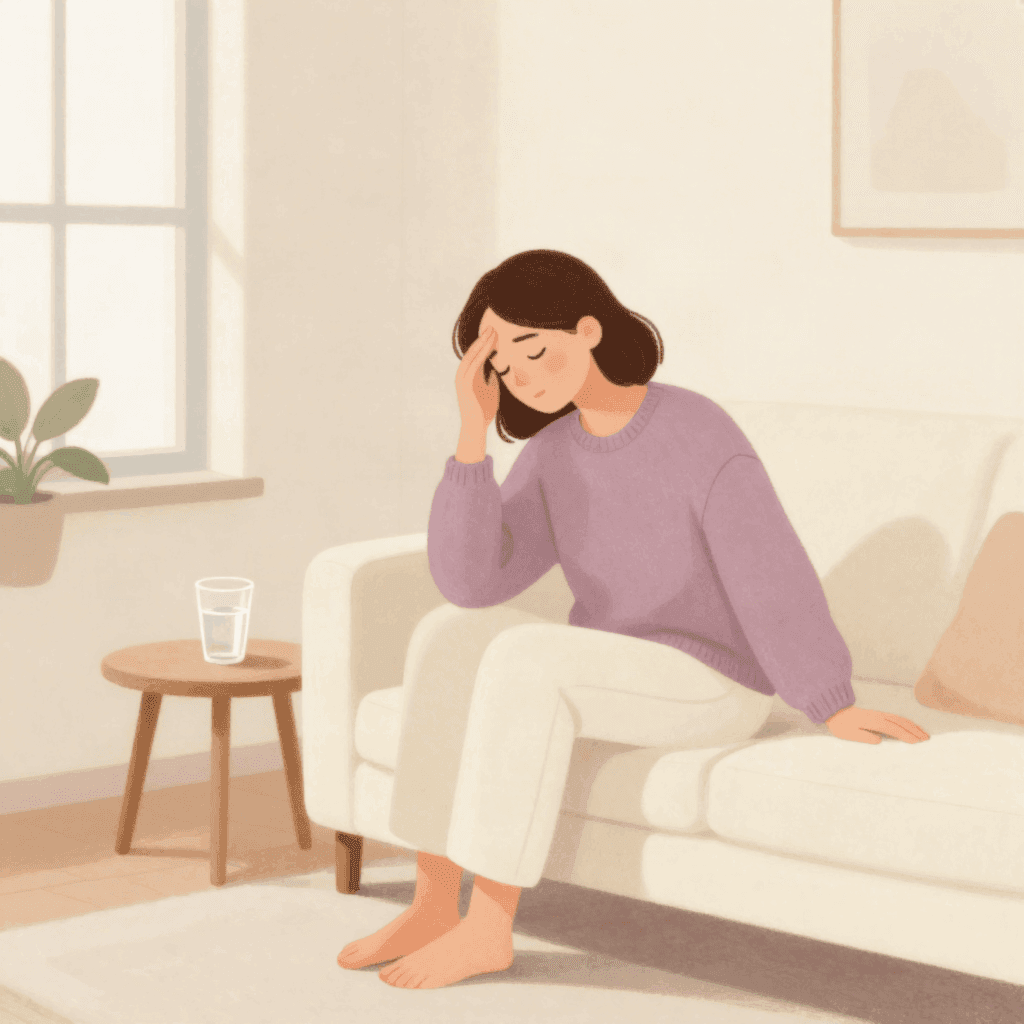

Feeling dizzy or faint during your period usually comes from period pain, from blood loss and low iron, or from not eating and drinking enough. It often passes if you lie down, but fainting, very heavy bleeding, chest pain, or sudden severe pain when you could be pregnant need urgent care.
This guide explains each cause, what to do when a dizzy spell starts, and what to write down for your doctor. It is general information and not medical advice. Your own doctor decides what is right for you.
Why you feel dizzy on your period
Pain can trigger a faint
Strong cramps can set off a vasovagal reaction. Your nervous system overreacts, and your blood pressure and heart rate drop suddenly, so less blood reaches your brain for a short time. Being in pain, standing for a long time and being in a warm place all raise the risk. Severe pain is one of the causes of fainting in general.
The warning signs come about 30 to 60 seconds before a faint. They include lightheadedness, nausea, heavy sweating, sudden warmth, yawning and tunnel vision. If your dizziness comes at the peak of your cramps, this is the most likely reason. To learn more about where cramps hurt and how they spread, see where period cramps are felt.
Heavy bleeding and low iron
Heavy, long or frequent periods are a common cause of iron deficiency anaemia (anemia in the US). The early signs are mild and come on slowly. They include feeling weak or tired more than usual, headaches, dizziness and palpitations.
Low iron does not go away when your period ends, so this kind of dizziness can also come on other days of your cycle, often with tiredness. Our guide to period fatigue explains how a blood test checks your iron and what treatment involves.
Not eating or drinking enough
Cramps and nausea can make it hard to eat or drink on heavy days. Not eating or drinking enough and being too hot can both make you faint. Dehydration is a common cause of dizziness too. Low blood sugar can make you dizzy as well. If you often lose your appetite around your period, read about loss of appetite during your period.
Getting up too fast
A sudden drop in blood pressure when you stand up from sitting or lying down makes you feel dizzy for a moment. On a day when you have lost blood, have not had much to drink and are in pain, this can happen more easily.
Side effects of medicines
Dizziness can be a side effect of medicine, often after you start a new prescription. If your dizziness started when you began a new medicine, check the leaflet and ask your doctor or pharmacist. Do not stop a prescribed medicine on your own.
| Cause | Clues | What helps |
|---|---|---|
| Pain (vasovagal) | Comes at peak cramps, with sweating or nausea | Lie down, treat the pain |
| Low iron | Tired and breathless, lasts after your period | Blood test, then treatment |
| Too little food or water | Skipped meals, hot day | Drink, eat, rest |
| Standing up fast | Seconds after you stand | Get up slowly |
| Medicine | Started with a new prescription | Ask your doctor or pharmacist |
What to do when you feel dizzy or faint
Stop what you are doing and get low, so you cannot fall and hurt yourself.
- Lie down with your legs raised. If you cannot, sit with your head lowered between your knees.
- Drink some water. Fluids help if you are dehydrated or have not eaten.
- Get up slowly. Stay down until the dizziness passes, then sit for a while before you stand.
- Do not rush back to your feet. A faint can happen again if you stand within 30 minutes of the first one.
- If you cannot lie down, cross your legs while standing, or rock up and down on your toes.
- Stay safe. Do not drive, climb a ladder or use heavy machinery while you are dizzy.

If pain is the trigger, treating the cramps early can help stop the next dizzy spell. Talk to your doctor about pain relief that suits you.
When dizziness on your period is an emergency
Call 911 in the US or 999 in the UK if you or someone with you faints and:
- They are not breathing, or cannot be woken within 1 minute.
- They have chest pain, or a pounding, fluttering or irregular heartbeat.
- They have not fully recovered, or have trouble speaking or moving.
- They are shaking or jerking, have seriously hurt themselves, or fainted while exercising or lying down.
Call 911 or 999 if you could be pregnant and you have sharp, sudden, intense tummy pain and feel very dizzy or faint. These can be signs of a ruptured ectopic pregnancy. The bleeding from an ectopic pregnancy can look like a period, but it is often different: it starts and stops, and may be watery and dark brown. Pain low down on one side and pain at the tip of your shoulder are other signs.
Get medical help straight away if:
- You soak through a pad or tampon every hour for 2 to 3 hours.
- Your bleeding is bad enough to make you weak or lightheaded.
- You have bleeding and you are pregnant or could be pregnant.
See a doctor soon if:
- You have fainted, even once. It is probably nothing serious, but it is important to get checked.
- Your dizziness does not go away or keeps coming back.
- You feel tired, breathless or dizzy most days, which can be a sign of low iron.
What to track
A dizzy spell is over in minutes, and it is easy to forget the details by your appointment. Note these for each spell over two or three cycles:
- Cycle day. Day 1 is the first day of bleeding.
- Time and length. When it started and how long it lasted.
- What you were doing. Standing, getting up, in a hot room, or at the worst of your cramps.
- Pain. How bad it was from 0 to 10.
- Bleeding. How often you changed pads or tampons, and any clots.
- Food and drink. Whether you had skipped a meal or drunk little.
- Fainting. Whether you passed out, and any other signs such as sweating or a racing heart.
- Medicines. Anything new you started that cycle.
This record shows your doctor whether the dizziness follows your pain, your bleeding or the whole month. Our guide to a pain diary for your doctor explains how to share it. Endolog is a pain and symptom diary app. You can log dizziness on the same day as pain and bleeding, so the pattern is clear without relying on memory.
Dizziness and endometriosis
Feeling faint during a period is one of the less talked about symptoms of endometriosis. Endometriosis can cause severe period pain and heavy bleeding, and both can make you dizzy. If your dizziness comes with pain that stops your normal activities, ask your doctor about endometriosis. For help with bad days, see our guide to an endometriosis flare-up.
Frequently asked questions
Is it normal to feel dizzy on your period?
Dizziness during a period often links to pain, blood loss or too little to drink. A short spell that passes when you lie down is not usually serious. See a doctor if it keeps coming back, if you faint, or if your bleeding is heavy.
Can low iron from heavy periods make you dizzy?
Yes. Heavy periods can cause iron deficiency anaemia, and dizziness is one of its signs. A blood test can show it.
Why do I feel faint when my cramps are bad?
Strong pain can trigger a vasovagal reaction, where your blood pressure and heart rate drop for a short time. Lie down with your legs raised until it passes.
Should I go to the hospital for dizziness on my period?
Call 911 or 999 if you or someone with you faints and the person is not breathing, cannot be woken within 1 minute, or has chest pain or an irregular heartbeat. Call too if you could be pregnant and have sudden severe tummy pain and feel very dizzy. Get help straight away if you soak a pad or tampon every hour for 2 to 3 hours, or if your bleeding makes you weak or lightheaded. The full list of emergency signs is above. For dizziness that passes but keeps coming back, book a normal appointment with your doctor.
This article is for general information. It does not replace care from a doctor. If you think you have an emergency, call 911 in the US, or 999 in the UK.
Sources
- Vasovagal syncope, Cleveland Clinic
- Fainting, NHS
- Dizziness, NHS
- Iron deficiency anemia, MedlinePlus Medical Encyclopedia, National Library of Medicine
- Vaginal or uterine bleeding, MedlinePlus Medical Encyclopedia, National Library of Medicine
- Ectopic pregnancy: symptoms, NHS
This article is general information, not medical advice. Read how we write and check our articles in our editorial policy.
Explore this topic
Related articles
September 30, 2026
Period Flu: Symptoms, Fever and When It Is Something Else
Period flu is the name for achy, tired, flu-like symptoms around your period. Learn why it happens, what helps, and why a real fever needs a doctor.

February 5, 2026
Period Fatigue: Why You Feel So Tired on Your Period
Period fatigue often comes from PMS, poor sleep from cramps, or low iron from heavy bleeding. Learn what helps and when tiredness needs a doctor.

September 24, 2026
How to Describe Period Pain (to a Doctor, a Partner or a Boss)
Describe period pain with three things: what it feels like, where it is, and what it stops you doing. Get a word bank, a 0 to 10 scale based on your day, a one-line script for your doctor, and an honest look at the heart attack comparison.

March 11, 2026
Adenomyosis Symptoms: Heavy Periods, Pain, and What to Track
Understand core adenomyosis symptoms like heavy bleeding, knife-like pain, and an enlarged uterus. Learn how to track symptoms for a faster diagnosis.

March 2, 2026
Painful Bowel Movement During Period: Causes and Relief
A painful bowel movement during your period often comes from prostaglandins. Learn when it can point to endometriosis, what helps and when to see a doctor.

February 13, 2026
Endometriosis Pain vs. Normal Period Pain: Key Differences
Learn to distinguish endometriosis symptoms from regular cramps. Compare pain intensity, timing, and locations to better understand your pelvic health journey.
