
Food
Meals and symptoms on the same page
A meal at lunch and cramps at four o'clock are easy to link on the day and hard to remember a month later. A food diary keeps both, with the time.

Log what you eat and how you felt after, with stomach pain, bloating, bowel symptoms and stress. Over a few weeks, your IBS diary shows what goes with your bad days.
IBS can cause stomach pain or cramps, bloating, diarrhea and constipation, with better days and worse days. Flare-ups can follow certain foods, alcohol, caffeine, or stress and anxiety, and many women with IBS have more symptoms during their periods.
That is why one common tip is to keep a diary of what you eat and any symptoms you get. A doctor looking at IBS asks about your symptoms over the last few months, what you eat and stressful events. One bad day tells you little. A few weeks of entries can show a pattern you would not see from memory. Endolog is also a tracker for endometriosis and other pelvic pain conditions, which can share gut symptoms with IBS.
Patterns in IBS show over weeks, not in a single day.
Food
A meal at lunch and cramps at four o'clock are easy to link on the day and hard to remember a month later. A food diary keeps both, with the time.
Good days and bad days
IBS can be quiet for a week and then bad for three days. Logging every day, not only the bad ones, shows how long each stretch really lasts.
Appointments
How often does it hurt? What were you eating? Was it a stressful week? Your diary has the dates, so you do not have to guess in the room.
One diary for your gut, your meals and the rest of your day.
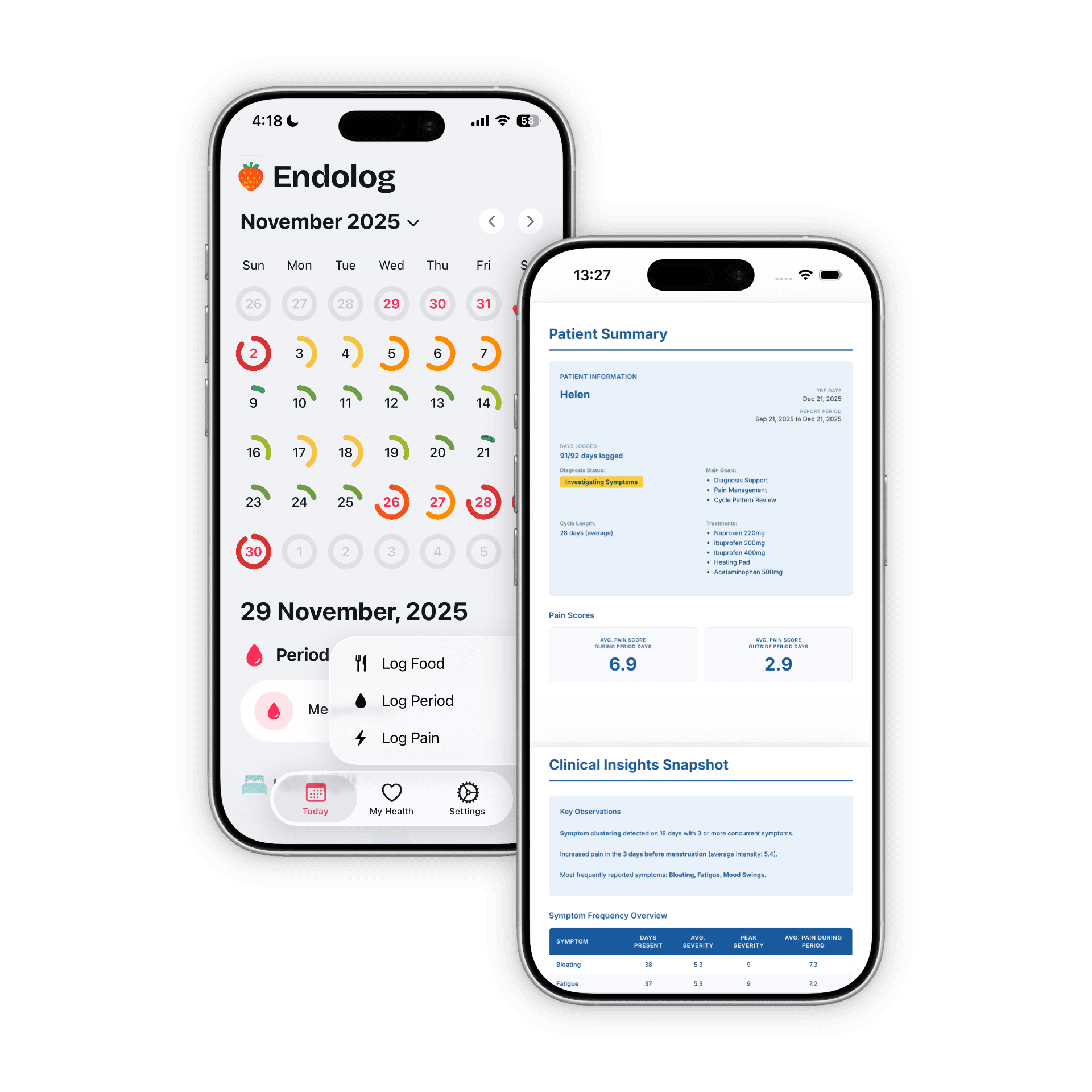
The food diary is the heart of an IBS log. Add a meal, then come back and note how you felt after it.
Rate the pain on a number scale and tap the pelvic body map to show where it is.
Log bloating, bowel symptoms and other digestive symptoms on the day you have them, next to your meals.
Mark the stressful days. A hard week at work sits in the same diary as the symptoms that came with it.
Add bleeding days and cycle notes, so you can see if your gut symptoms change at the same point each month.
Export your entries as one PDF. Print it, or send it to the practice before your appointment.
Many people try a period app first. It is built to predict your cycle, not to record what your gut did.
| Comparison point | Generic period tracker | Endolog |
|---|---|---|
| Meals | Not part of the log | Each meal next to how you felt after it |
| Gut symptoms | A bloating toggle, if any | Bloating, bowel and digestive symptoms, logged by day |
| Pain | One cramps option | A pain score and where it hurts on a body map |
| Stress | Rarely in the log | Logged on the same calendar as your symptoms |
| If you have no periods | Built around the date of your next period | Works the same, with or without a cycle |
Guides to bloating and bowel changes, and what is worth writing down.
Why your bowels can change around your period, and when to ask a doctor about it.
Read the guide
Bloating that comes and goes, and how to log it next to food and your cycle.
Read the guide
The same diary, set out for endometriosis symptoms and flares.
See the page
Before you download
What you eat and how your gut feels is health data. Read how Endolog handles it in the privacy policy, or see a finished report on the example report page. Prefer paper first? Print the free food diary for bloating.
Answers about using Endolog as an IBS tracker.
Yes. You log what you ate and how you felt after, in the same diary as your stomach pain, bloating, bowel symptoms and stress. Each entry has a date, so you can look back over weeks.
No. Endolog records what you eat and how you felt after, so you and your doctor can look for patterns together. It does not find triggers for you, and it does not give you a diet plan.
If you have periods, log your bleeding days next to your gut symptoms. The calendar then shows if bad days tend to fall at the same point in your cycle.
No. Many people start a diary before their first appointment about gut symptoms. A record of what happened and when gives your doctor something to start from.
Any doctor you see about your symptoms, such as your GP, a gastroenterologist or a gynecologist. The report is a summary of your own entries.
Endolog is a free download from the Apple App Store for iPhone and iPad, with an optional in-app subscription.
Track pelvic pain, bleeding, digestive symptoms, fatigue, and flare patterns in one place. Endolog turns those daily logs into clean PDF reports you can bring to your next appointment.