Diarrhea During Your Period: Why It Happens and What Helps

Diarrhea during your period is common, and it usually comes from prostaglandins. Your body releases these chemicals just before your period to help your uterus shed its lining, and they can act on your bowel in the same way, so you poop more often and your poop gets looser.
Most period poop is short-lived and not a sign of a problem. This guide covers why it happens, what helps, when it can point to endometriosis, and the signs that need a doctor.
Why your period gives you diarrhea
Before your period, prostaglandins relax the smooth muscle of your uterus so it can shed its lining. The same prostaglandins can have a similar effect on your bowel, so you poop more often and your stools can turn loose.
Hormone changes also play a part. Progesterone can cause diarrhea in some people and constipation in others. This is why some people get constipated in the middle of the cycle and then get loose stools when the period starts.
If you already have a gut condition such as irritable bowel syndrome (IBS), period poop problems can be more severe.
You are far from alone with this. In a study of 156 healthy women with no bowel or gynecological condition, 28% had diarrhea during their period and 24% in the days before it. More than half had belly pain in both phases. Diarrhea was also more common in women who had symptoms of depression.
Diarrhea before your period
Diarrhea can start before you bleed. The prostaglandin release begins just before your period, so your bowel can change before you see any blood. For many people, loose stools before a period are an early sign that it is on its way.
Why do I poop more on my period?
You poop more on your period because of the same prostaglandins. They make your bowel contract more, so you need to go more often, even when your poop is not watery. Cramps from your uterus can also feel like they are in your stomach, which makes it hard to tell period cramps from bowel cramps.
If pooping hurts during your period, read our guide to painful bowel movements during your period. If you also feel sick on heavy cramp days, see nausea during your period.
What helps with period diarrhea
In adults, diarrhea usually stops within 5 to 7 days. These steps can make those days easier.
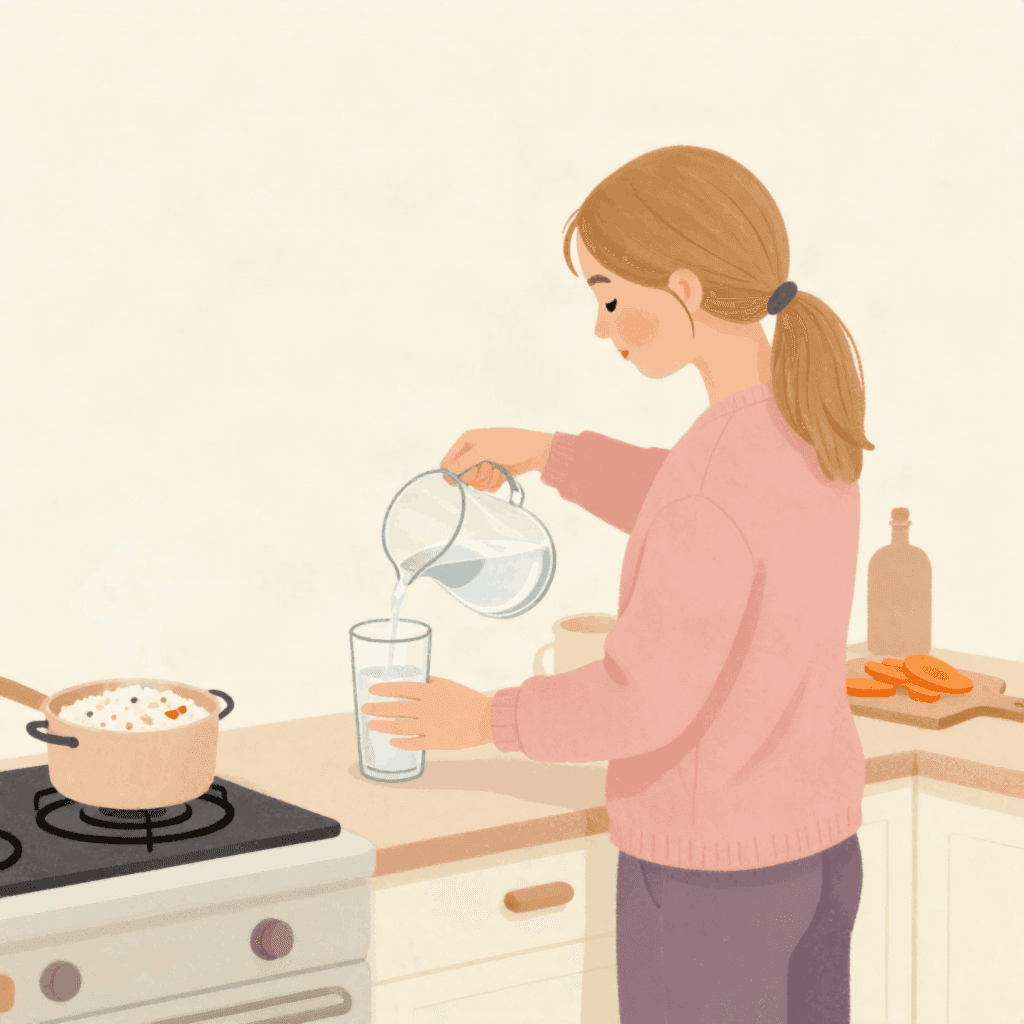
- Drink plenty of water. Diarrhea can lead to dehydration. Sip water through the day. A pharmacist can also suggest an oral rehydration powder that you mix with water.
- Skip coffee for a few days. Coffee has a laxative effect that you do not need while your bowel is already fast.
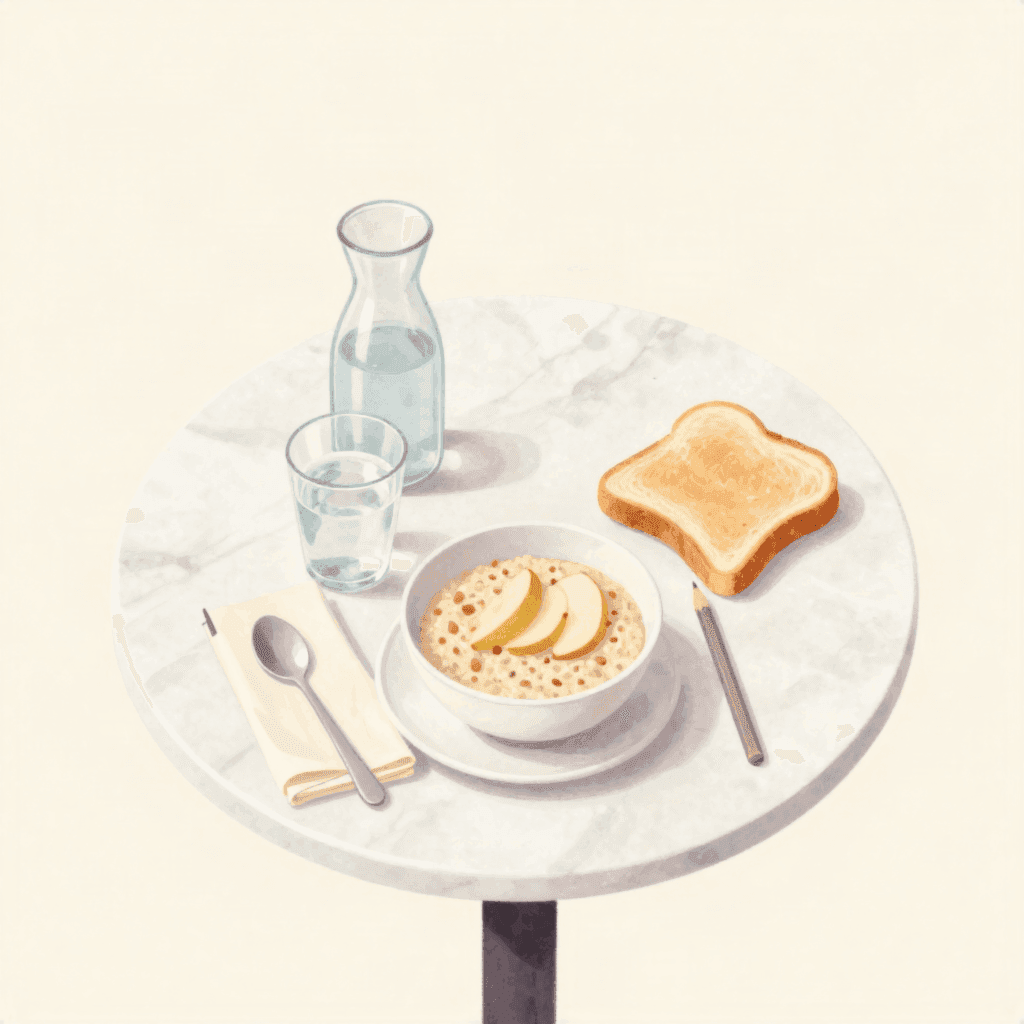
- Eat simple meals when you feel able to. You do not need to stop eating. Eat when you feel able, get plenty of natural fiber, and try not to give in to junk food cravings before your period.
- Try ibuprofen early. Ibuprofen taken just before your period starts may stop the release of prostaglandins, which can ease both cramps and period poops. Read the label, and ask a pharmacist if you are not sure it is safe for you.
When period diarrhea can point to endometriosis
Endometriosis is tissue like the lining of the uterus growing in other places, sometimes on or near the bowel. Bowel symptoms are common with it. In one study, 77% of women with endometriosis had gut symptoms such as diarrhea, frequent pooping, constipation or wind, against 29% of women without it.
Timing is the clue. The NICE guideline tells doctors to suspect endometriosis when gut symptoms are period-related or cyclical, in particular painful bowel movements. This matters if you were told your symptoms are "only IBS" but they follow your cycle month after month.
Talk to your doctor about endometriosis if your period diarrhea comes with other signs of it, such as:
- period pain that stops you from doing your usual activities
- pain during or after sex
- pelvic pain that lasts for a long time
- pain when you poop
Our guide to bowel endometriosis symptoms covers these signs, tests and treatment in more detail. You can also check your symptoms with the endometriosis symptom quiz.
When to see a doctor
Diarrhea that comes only with your period and stops after a few days is usually not a concern. See your doctor if:
- you have diarrhea or softer poo that is not usual for you, including diarrhea that also happens outside your period
- you lose weight without trying
- you see blood in your poo, which can look red or black
- you have pain together with blood in your stool, even if it only happens on your period
- you have severe cramps with your period
Get urgent medical advice the same day if you have bloody diarrhea or bleeding from your bottom, diarrhea for more than 7 days, or signs of dehydration that do not get better after you use oral rehydration sachets.
Track the pattern to show your doctor
A few months of notes show whether your diarrhea follows your cycle. Keeping a pain and symptom diary can help your talks with your doctor. Write down the day of your cycle, how often you pooped, what your stool was like, any pain or blood, and what you ate. The free printable food and symptom diary has columns for all of these.
Endolog is a free download where you can log bowel and digestive symptoms, pain and bleeding, and keep a food diary in the same place. You can then show your doctor how your symptoms line up with your cycle.
Related guides
Sources
- Here's the Deal with Period Poops, Cleveland Clinic
- Gastrointestinal symptoms before and during menses in healthy women (Bernstein MT et al. BMC Women's Health, 2014), BMC Women's Health (via PubMed Central)
- Different nutrient intake and prevalence of gastrointestinal comorbidities in women with endometriosis (Schink M et al. Journal of Physiology and Pharmacology, 2019), PubMed
- Endometriosis: diagnosis and management (NG73), NICE
- Diarrhoea and vomiting, NHS
- Symptoms of bowel cancer, NHS
This article is general information, not medical advice. Read how we write and check our articles in our editorial policy.
Explore this topic
Related articles
March 2, 2026
Painful Bowel Movement During Period: Causes and Relief
A painful bowel movement during your period often comes from prostaglandins. Learn when it can point to endometriosis, what helps and when to see a doctor.
March 4, 2026
Where Is Ovary Pain Felt? Location, Spread, and Causes
Ovary pain is felt low in the tummy on one side, and it can spread to the back, hip, or thigh. Learn what it can mean, including in early pregnancy.

March 3, 2026
What Triggers Endo Flare Up? 12 Common Triggers to Watch
Discover common endometriosis flare triggers from inflammatory foods to stress. Learn how to identify your personal patterns and manage chronic pelvic pain.

February 23, 2026
Warning Signs an Endo Flare Is Coming: Early Detection Guide
Learn to recognize the early warning signs of an endometriosis flare. Discover how tracking fatigue and digestion helps you prepare with early detection.
February 13, 2026
Endometriosis Pain vs. Normal Period Pain: Key Differences
Learn to distinguish endometriosis symptoms from regular cramps. Compare pain intensity, timing, and locations to better understand your pelvic health journey.
February 9, 2026
What Is an Endometriosis Flare-Up? Signs, Length, and Relief
An endo flare is a spell of worse endometriosis symptoms. Learn how it differs from a bad period, how long flares last, what helps, and when to get help.
Stop the medical gaslighting
Track pelvic pain, bleeding, digestive symptoms, fatigue, and flare patterns in one place. Endolog turns those daily logs into clean PDF reports you can bring to your next appointment.