Period Headaches and Menstrual Migraine: What Helps


A period headache usually comes from the drop in estrogen just before your period starts. It can be a dull, tight headache or a full migraine, and it most often starts up to two days before bleeding and lasts into the first three days.
Most period headaches get better with early pain relief, fluids, food and rest. Some need a plan from a doctor. A few headache signs need urgent care on any day of your cycle, and they are listed near the end of this page.
This page is general information and not medical advice. If you get headaches often, ask your own doctor what is right for you.
Why headaches come with your period
Estrogen rises and falls through your cycle. When it drops in the days before a period, the risk of a migraine attack goes up. The same drop happens in the pill-free week of combined birth control. The bleed in that week counts as a period when doctors look for menstrual migraine.
The link is common. Of the people who have periods and get migraines, at least 60% notice attacks around their period.
Strong period pain can also bring other body symptoms in the same days. If you also feel very tired on these days, see our page on period fatigue. Headache with aches and tiredness is often called period flu. If you feel faint or light-headed, read about dizziness during your period.
Menstrual migraine or tension headache?
Two kinds of headache are common around a period. They feel different, and they respond to slightly different care.
| Menstrual migraine | Tension headache | |
|---|---|---|
| Where | Often on one side | All over the head |
| Feel | Throbbing, can be severe, worse when you move | Dull pressure, like a tight band |
| Other symptoms | Nausea, vomiting, light and sound hurt | Usually no nausea or vomiting |
A migraine attack usually lasts 4 hours to 3 days. Attacks near a period are often longer and more severe than attacks at other times. They can last up to 35% longer, with stronger pain and more sensitivity to light and sound.
Some people get an aura before a migraine. That can be zigzag lines or flashing lights, pins and needles, dizziness or trouble speaking. Tell your doctor if you get an aura.
When doctors call it menstrual migraine
Doctors use timing to name it. Attacks that start between 2 days before your period and the third day of bleeding, in at least 2 of 3 cycles, count as menstrual migraine. If you only get attacks in that window, it is called pure menstrual migraine. If you also get attacks at other times of the month, it is called menstrually related migraine.
You need a record of at least three cycles to see this pattern. The tracking guide below shows what to write down.
What helps a period headache
Take pain relief early
Take a painkiller as soon as the headache starts. Ibuprofen and paracetamol (acetaminophen in the US) help many people. For tension headaches, aspirin, ibuprofen, naproxen or acetaminophen can help.
Do not take painkillers on more than 2 days a week. Taking them more often can give you more headaches and make migraine harder to treat. If you need them more often, see your doctor.
Drink water, eat and rest
- Drink regularly. Try to stay well hydrated in the days before and during your period.
- Eat well-balanced meals at regular times. Skipping meals and too much caffeine are common migraine triggers.
- Get enough sleep and keep your bedtime steady around your period.
- During a migraine, lie down or sleep in a dark room.
- For a tension headache, ice or heat, massage and relaxation can help.
Ask your doctor about short-term prevention
If your headaches come at the same point in each cycle, your doctor can plan treatment around those days. Options to ask about:
- Anti-inflammatory painkillers before your period. Your doctor may suggest an NSAID such as naproxen from 2 or 3 days before your period until your bleeding ends.
- Triptans. These are prescription migraine medicines. The triptans studied worked better than placebo for menstrual migraine attacks. Frovatriptan, naratriptan and zolmitriptan have also been studied as a short course on the days an attack is expected.
- Changes to birth control. If you take the combined pill, a doctor may change the type or dose, or switch you to a continuous pill with no break to avoid the drop in hormones.
- Daily preventive medicine. If you also get migraines at other times of the month, your doctor may suggest a daily preventive medicine.
There is no single standard treatment for menstrual migraine yet. Your record of which days you get attacks helps your doctor choose.
If you take a hormone treatment for endometriosis, headache can be a side effect. Our pages on Orilissa and dienogest list how often it happens.
How to track period headaches
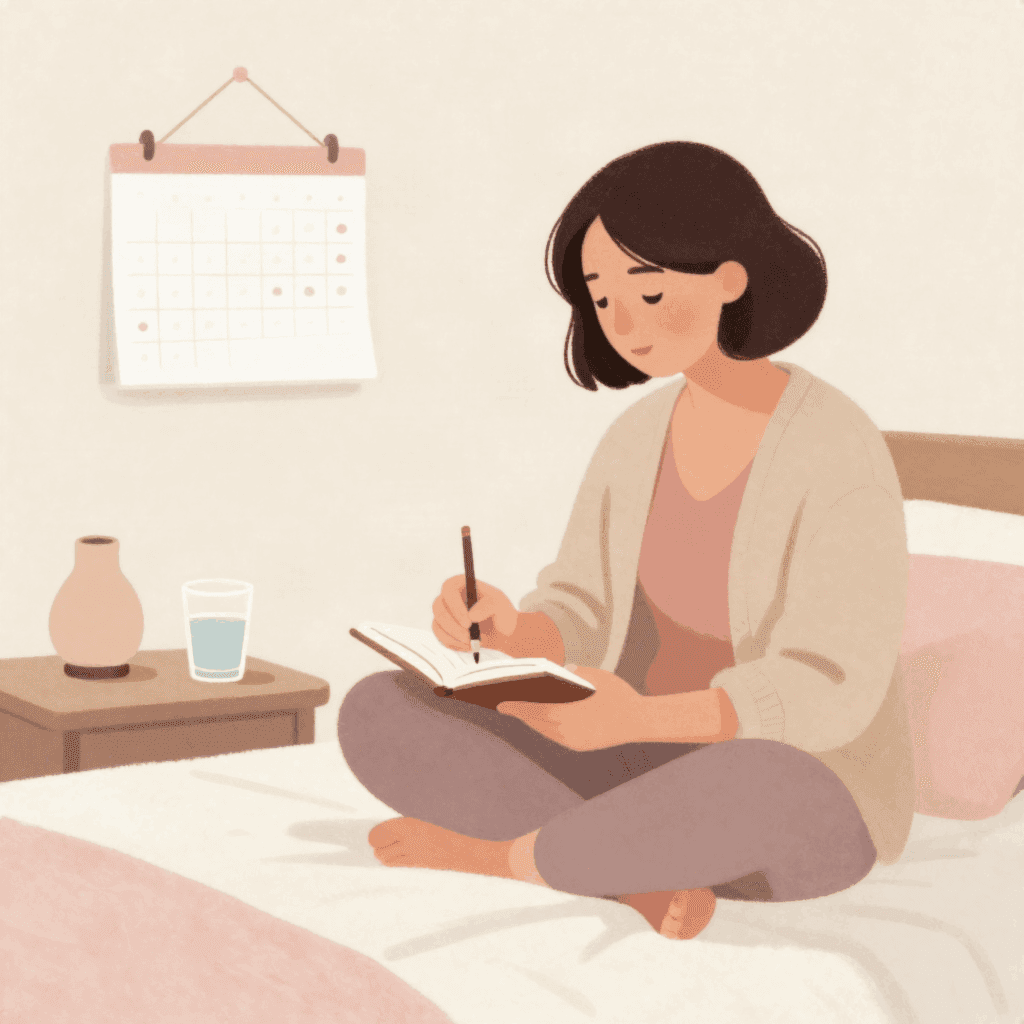
A diary shows if your headaches follow your cycle. It also shows your doctor what you have tried. Keeping a migraine diary can help you work out your triggers.
Track for at least three cycles. Day 1 is the first day of bleeding. On each headache day, write down:
| What to log | Example |
|---|---|
| Cycle day | Day -1 (1 day before bleeding) |
| Start time and how long | 6 am, 14 hours |
| Where and how it feels | Left side, throbbing |
| Pain score, 0 to 10 | 7 |
| Other symptoms | Nausea, light hurts, aura |
| Medicine, dose and time | Ibuprofen 400 mg at 7 am |
| Did it help? | Partly, after 2 hours |
| Sleep, meals, fluids | 5 hours sleep, skipped lunch |
| Missed work or plans | Left work early |
On days with no headache, still log your cycle day and any painkillers you took. Then you can count your painkiller days each week.
After three cycles, look at your record:
- Do most headaches fall between day -2 and day 3? This is the pattern for menstrual migraine.
- Do you also get headaches at other times? Then it may be menstrually related migraine, or another headache type.
- Did you take painkillers on more than 2 days a week? Tell your doctor, because this can cause more headaches.
- Did anything help? Early pain relief, sleep or food may make a clear difference.
The Endolog symptom tracker app logs your headaches next to your cycle days, so you can see this pattern and share it at your appointment. Our guide to a pain diary for your doctor explains how to bring the record to a visit. If you track endometriosis symptoms too, see our page on the early signs of an endo flare.
When to see a doctor
Make an appointment if:
- You get severe headaches with your period
- Your migraines happen more often or get worse
- Your headaches change in pattern or strength
- Headaches wake you up or stop you falling asleep
- A headache lasts more than a few days
- You need painkillers on more than 2 days a week
When to get urgent help
Call 911 (or your local emergency number) if you have a headache and any of these:
- It comes on suddenly and is explosive, or it is the worst headache you have ever had, even if you get headaches often
- Slurred speech, a change in vision, trouble moving your arms or legs, loss of balance, confusion or memory loss
- Weakness on one side of your body or face
- Fever, a stiff neck, nausea and vomiting
- It is severe and just in one eye, with redness in that eye
- It started after a head injury
- It gets worse over 24 hours
- It is the first severe headache of your life and it stops your daily activities
Do not wait to see if it matches your usual period headache. These signs need a check straight away.
Frequently asked questions
Why do I get headaches before my period?
Estrogen drops just before your period starts, and that drop can set off a headache or migraine.
How long does a period headache last?
A menstrual migraine can start up to two days before your period and last into the first three days. One attack can last 4 hours to 3 days.
What is the fastest way to stop a period headache?
Take a painkiller as soon as it starts, drink water and rest in a dark, quiet room. If this does not work, ask your doctor about triptans or a plan for the days before your period.
Can birth control cause period headaches?
Headaches can come in the pill-free week of combined birth control, when hormone levels drop. A doctor may switch you to a continuous pill to avoid that drop.
Is a period headache a sign of something serious?
Most are not. Get urgent help for a sudden, explosive headache, or a headache with vision or speech changes, weakness, or fever and a stiff neck. See the urgent help list above.
This article is for general information. It is not medical advice and does not replace advice from your own doctor. If you think you have an emergency, call 911.
Sources
- Menstrual Migraines (Hormone Headaches), Cleveland Clinic
- Migraine, NHS
- Menstrual migraine is caused by estrogen withdrawal: revisiting the evidence (Raffaelli B et al. The Journal of Headache and Pain, 2023), The Journal of Headache and Pain
- Acute and preventive treatment of menstrual migraine: a meta-analysis (Khoo CCW et al. The Journal of Headache and Pain, 2024), The Journal of Headache and Pain
- Tension headache, MedlinePlus, U.S. National Library of Medicine
- Headaches - danger signs, MedlinePlus, U.S. National Library of Medicine
This article is general information, not medical advice. Read how we write and check our articles in our editorial policy.
Explore this topic
Related articles

October 1, 2026
Blood Clots During Period: What Is Normal and When to Worry
Blood clots during your period are usually normal. Learn what size is common, when large clots mean heavy bleeding, the causes, and when to get help.
September 30, 2026
Dizziness During Your Period: Causes and Red Flags
Dizziness during your period often comes from pain, heavy bleeding, low iron or too little food and water. Learn what helps and which signs are urgent.
September 30, 2026
Period Flu: Symptoms, Fever and When It Is Something Else
Period flu is the name for achy, tired, flu-like symptoms around your period. Learn why it happens, what helps, and why a real fever needs a doctor.

September 29, 2026
Nausea During Your Period: Why It Happens and What Helps
Nausea during your period is common on heavy cramp days. Learn why it happens, what eases it, what to track, and when feeling sick needs a doctor.

March 11, 2026
Adenomyosis Symptoms: Heavy Periods, Pain, and What to Track
Understand core adenomyosis symptoms like heavy bleeding, knife-like pain, and an enlarged uterus. Learn how to track symptoms for a faster diagnosis.

February 5, 2026
Period Fatigue: Why You Feel So Tired on Your Period
Period fatigue often comes from PMS, poor sleep from cramps, or low iron from heavy bleeding. Learn what helps and when tiredness needs a doctor.
