Period Bloating: Why It Happens, When It Ends, What Helps
Period bloating happens because the hormone changes around your period make your body hold on to more water and change how fast food moves through your gut. Bloating during your period usually starts in the days before you bleed, is worst on the first day of your period, and then eases off as the period goes on.
Bloating is very common, and there are things you can do to ease it. This guide covers why it happens, when it starts and stops, gas during your period, what helps, and the signs that your bloating needs a doctor.
Why you get bloated on your period
Two things make your belly feel full and swollen around your period: water retention and gut changes.
Water retention. Estrogen makes your body hold water. When estrogen spikes and progesterone drops, fluids can build up. Salt makes this worse, because salt also causes water retention.
Gut changes. Your hormones also act on your digestive system. Estrogen and progesterone can cause intestinal gas by slowing down or speeding up how food moves through your gut. Prostaglandins, the chemicals that make your uterus contract during your period, can also make the smooth muscle of the bowel contract, which can add to belly pain and loose stools.
You are far from alone. In a survey of 156 healthy women, 62% had bloating in the 5 days before their period and 51% during it. Bloating was the gut symptom they had most often.
When period bloating starts and stops
For most people, bloating follows the same pattern each month. A study that followed 62 healthy women through 765 cycles with daily diaries found this pattern:
| Time in your cycle | Bloating |
|---|---|
| Days before your period | Builds up |
| First day of bleeding | Worst |
| About a week after your period starts | Lowest |
| Around ovulation, mid-cycle | Rises a little again |
So bloating before your period and bloating on the first day of bleeding are both normal. It should ease as your period goes on. Some people also feel a smaller wave of bloating in the middle of the cycle, around ovulation.
Gas during your period
Gas during your period is common too. The same hormone shifts that cause bloating can cause intestinal gas by changing how fast food moves through your gut. When there is more gas in your gut, your tummy can feel full and rumble, and you may be farting more than usual.
Some foods and drinks add to the gas. On the days around your period, it can help to:
- eat less of the foods that are known to cause gas, such as cabbage, beans and lentils
- cut back on fizzy drinks
- chew with your mouth closed and eat slowly, so you swallow less air
- go for a walk, because walking helps move gas through your gut
A pharmacist can also tell you about medicines such as simeticone that ease bloating.
What helps period bloating
Small changes in the week before your period can make the bloat smaller. They work best when you keep them up through the month, not only on bloated days.
- Eat less salt. Cut back on salt, fat and sugar. Processed foods are high in salt and fat and low in fiber, so cooking simple meals at home helps.
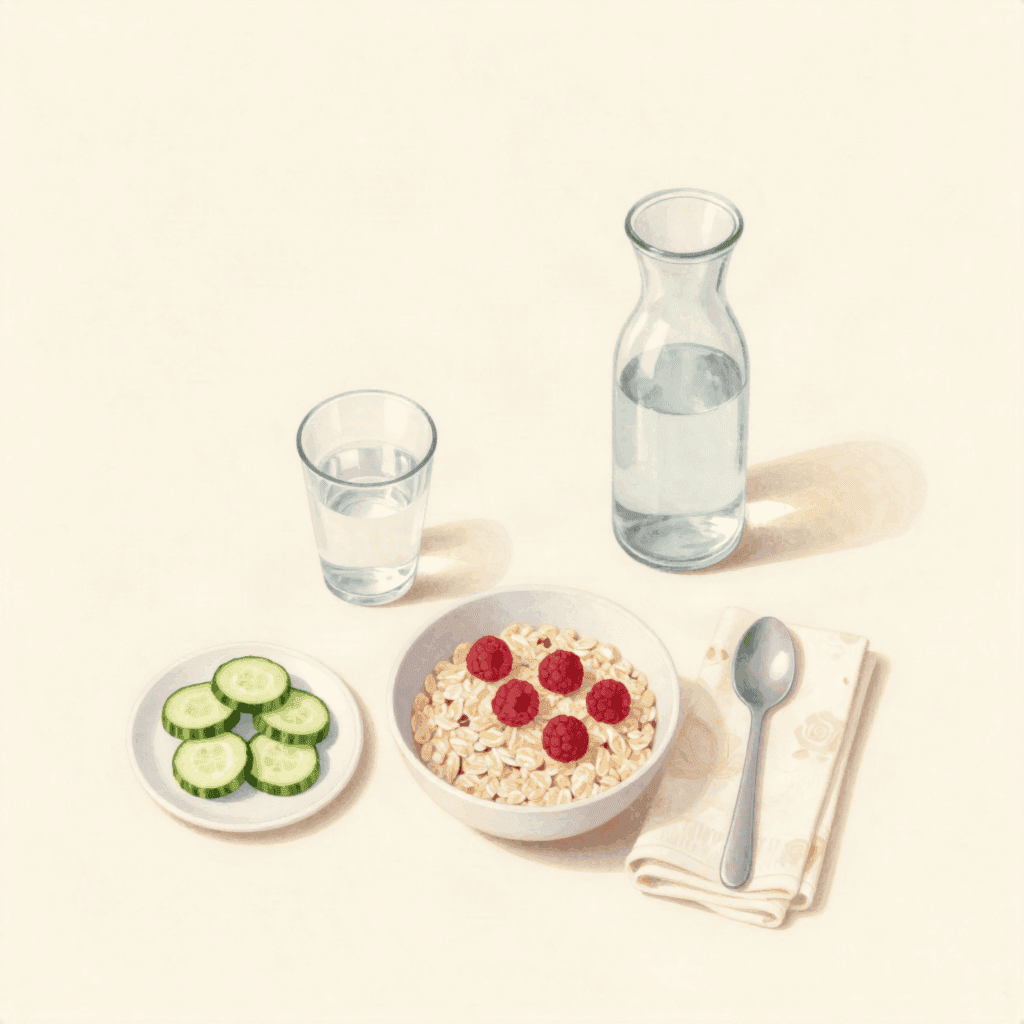
- Drink plenty of water. It can feel odd to drink more when you hold water, but drinking plenty of water helps reduce bloating.
- Cut down on caffeine and alcohol. Avoid caffeine and alcohol in the days before your period.
- Eat smaller meals more often. Try six small meals a day instead of three large ones, and do not eat a large meal late at night.
- Move every day. Physical activity helps prevent water retention and keeps your bowels moving. Aim for at least 30 minutes of aerobic exercise, such as brisk walking or cycling, on most days.
- Ease constipation. If you are also constipated, foods high in soluble fibre, such as oats or linseed, can help.
For more food ideas for the days around your period, see foods that help period cramps.
Medicines a doctor may suggest
If lifestyle changes do not help enough, talk to your doctor. Options include:
- Magnesium. Magnesium supplements may help reduce water retention ("bloating"). Talk to your doctor before you start any supplement.
- Water pills (diuretics). A doctor can prescribe a diuretic if water retention is a major symptom for you. Tell them about other medicines you take, because diuretics taken with NSAIDs such as ibuprofen may cause kidney problems.
- Hormonal birth control. Methods that stop ovulation may lessen the physical symptoms of PMS, such as bloating.
When bloating can be something else
Period bloating comes and goes with your cycle. Bloating that does not follow your cycle, or that does not go away, can have another cause.
- Endometriosis. Severe bloating with endometriosis is often called endo belly. Our guide to endo belly explains how it differs from normal period bloating. If you have adenomyosis, see adenomyosis belly.
- Gut problems. Bloating can also come from constipation, a food intolerance, coeliac disease or irritable bowel syndrome (IBS).
- Ovarian causes. Sometimes, bloating that does not go away can be a sign of ovarian cancer. The warning sign is a swollen tummy or bloating that happens often, roughly 12 or more times a month, in particular together with pelvic pain, feeling full quickly or needing to pee more often.
When to see a doctor
See a doctor if your bloating:
- lasts more than a week or is very painful
- happens often, or does not get better after you change your diet
- comes with weight loss you did not try for, or blood in your poo
- comes with any of the other symptoms of ovarian cancer, or keeps coming back after a doctor has already checked you
Get an urgent appointment the same day if you have bloating with vomiting, a stomach ache, a high temperature, a lump in your tummy, or you cannot pee, poo or fart.
Call an ambulance or go to the emergency department if you have a swollen stomach with a severe stomach ache that came on very suddenly, vomit that has blood in it or looks like ground coffee, or severe difficulty breathing.
Track your bloating to see the pattern
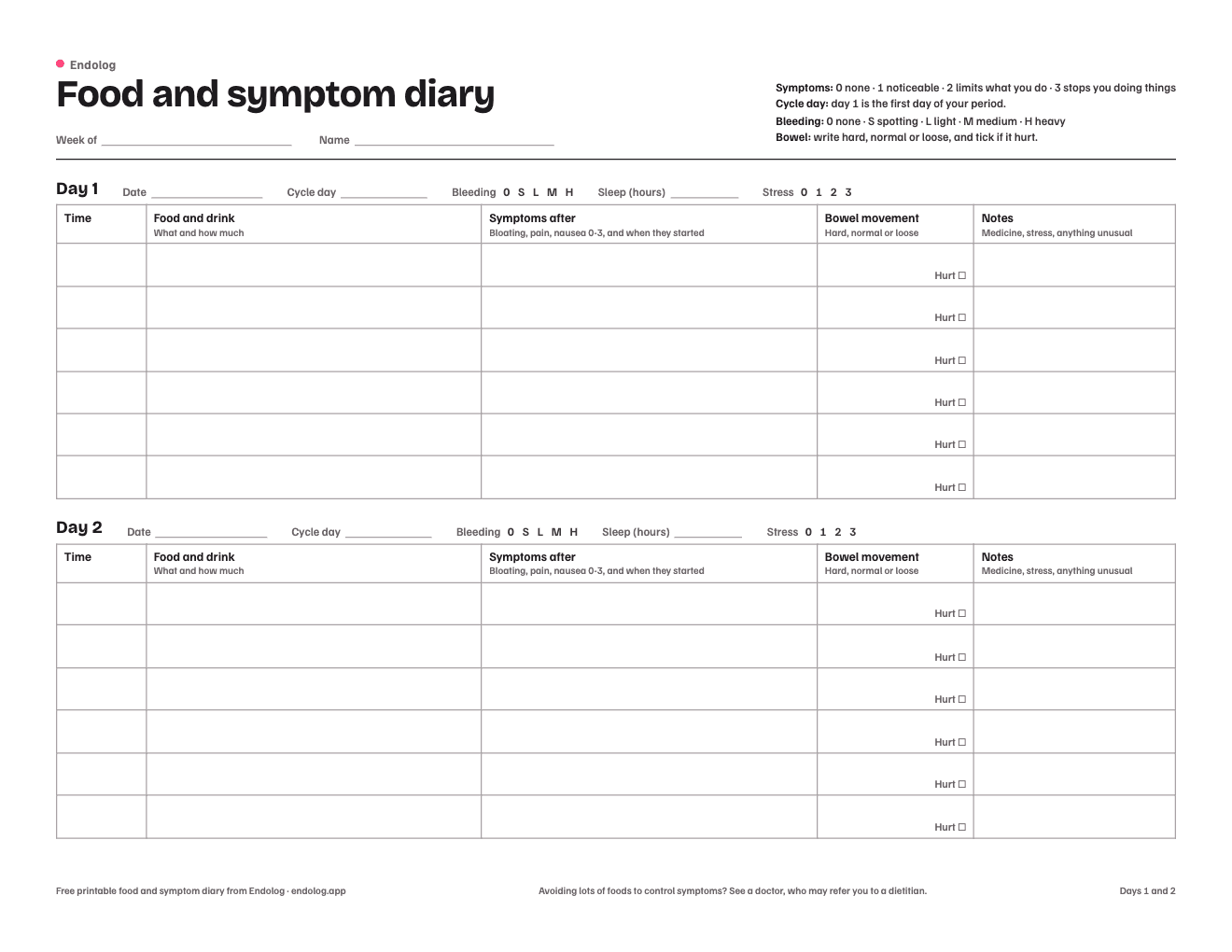
A few months of notes show whether your bloating follows your cycle. Each day for at least 2 to 3 months, write down and rate your symptoms, and record the dates of your periods. Note what you ate too, so you can see if salt, fizzy drinks or certain foods make it worse.
Endolog is a free download where you can log digestive symptoms, pain and bleeding, and keep a food diary in the same place, so you can show your doctor the pattern.
Related guides
Sources
- Bloated stomach, Cleveland Clinic
- Bloating, NHS
- Premenstrual Syndrome (PMS), ACOG
- Fluid Retention over the Menstrual Cycle: 1-Year Data from the Prospective Ovulation Cohort (White CP et al. Obstetrics and Gynecology International, 2011), Obstetrics and Gynecology International (via PubMed Central)
- Gastrointestinal symptoms before and during menses in healthy women (Bernstein MT et al. BMC Women's Health, 2014), BMC Women's Health (via PubMed Central)
- Ovarian cancer: symptoms, NHS
This article is general information, not medical advice. Read how we write and check our articles in our editorial policy.
Explore this topic
Related articles
November 9, 2026
Constipation Before Period: Why It Happens and What Helps
Constipation before your period is common and often comes from progesterone. Learn why period constipation happens, what helps, and when to see a doctor.
November 4, 2026
Diarrhea During Your Period: Why It Happens and What Helps
Diarrhea during your period is common and often comes from prostaglandins. Learn why period poop changes, what helps, and when it needs a doctor.
March 2, 2026
Painful Bowel Movement During Period: Causes and Relief
A painful bowel movement during your period often comes from prostaglandins. Learn when it can point to endometriosis, what helps and when to see a doctor.
November 6, 2026
Brown Discharge After Your Period: What It Usually Means
Brown discharge after a period is usually old blood leaving the uterus. Learn when it is normal, what else can cause it and when to see a doctor.
November 5, 2026
Spotting Between Periods: Common Causes and When to Check
Spotting between periods is light bleeding outside your period. See the common causes, from ovulation to the pill, what to note and when to see a doctor.
October 8, 2026
Endo Belly Diet: What Helps and How to Find Your Triggers
No diet cures endo belly, but a short low-FODMAP diet with a dietitian can ease bloating. See what research shows and how a food diary finds your triggers.