Cramps but No Period: Causes and When to See a Doctor


Cramps but no period can come from early pregnancy, ovulation, an ovarian cyst, endometriosis or adenomyosis, or from your bowel or bladder. If you could be pregnant, take a pregnancy test first.
After that, the pattern of the pain gives the best clues. This guide goes through the common causes, the signs that need help straight away, and a simple way to log pain on days when you are not bleeding. It is general information. Your own doctor decides what is right for you.
Take a pregnancy test first if you could be pregnant
If you have had sex since your last period, a pregnancy test is the quickest thing to rule in or out. The NHS says most tests work from the first day of a missed period. If you do not know when your period is due, do the test at least 21 days after you last had unprotected sex (NHS).
A positive result is almost certainly correct. A negative result is less reliable. If you get a negative result and still think you could be pregnant, wait a few days and test again. See a doctor if a second test is negative and your period still has not come (NHS).
If you have pelvic pain and you are pregnant or may be pregnant, get urgent advice from a doctor, urgent care or NHS 111 (NHS). One reason is ectopic pregnancy, where a pregnancy grows outside the womb. The NHS says it is a rare cause of pelvic pain, and ACOG names it as a cause of sudden pain that may need care right away (ACOG).
Get urgent help for these signs
Call 911 in the US, or 999 in the UK, or go to the emergency department if you have cramps or pelvic pain with any of these (NHS):
- Pain that is severe or getting worse, or hurts when you move or touch the area
- You feel faint, dizzy or lightheaded, or you pass out
- Pain at the tip of your shoulder
- Heavy bleeding from your vagina
- Trouble breathing, or you suddenly feel confused
Get urgent advice from a doctor, urgent care or NHS 111 if you have pelvic pain and (NHS):
- A positive pregnancy test, or you might be pregnant, with pain or bleeding. This can be a sign of ectopic pregnancy.
- A very high temperature, or you feel hot, cold or shivery
- Vomiting and diarrhoea, or you feel sick
- Trouble peeing or pooing, pain when you pee, or blood in your pee or poo
- Unusual discharge, fluid or bleeding from your vagina
Sudden, sharp pain on one side can also come from an ovarian cyst that has twisted or burst (ACOG). If you are not sure which organ it is, our guide on ovary pain or appendicitis explains why only a doctor can tell them apart.
Common causes of cramps without a period
Your pelvis holds your womb, ovaries, bladder and bowel, plus the muscles and nerves around them. ACOG notes that some causes of pelvic pain come from the urinary tract or the bowel, not the reproductive organs. Some people have more than one cause at the same time (ACOG).
Ovulation
Ovulation pain happens about 14 days before a period. It lasts from a few minutes to 1 or 2 days. It often feels like a dull pain or sharp, sudden twinges, and it is on one side of your lower tummy (NHS). So mid-cycle cramps with no bleeding can be ovulation.
The NHS adds that pain around ovulation can also come from endometriosis, ovarian cysts, sexually transmitted infections such as chlamydia, scar tissue, or an ectopic pregnancy. See a doctor if the pain is severe, keeps coming back, or you think you could be pregnant (NHS). Our guide on ovulation pain vs endometriosis covers how the two patterns differ.
Ovarian cysts
The NHS lists ovarian cysts among the common causes of pelvic pain in women (NHS). A cyst that twists or bursts causes sudden pain that needs care right away (ACOG). For a longer look at the dull ache and the sudden kind, read what ovarian cyst pain can feel like.
Endometriosis
Endometriosis often causes painful periods, but the pain does not always stay on period days. ACOG says endometriosis may be the cause of your pelvic pain if you have pain throughout the month or during sex. Other clues are period pain that gets worse over time, pain that lasts past the first 1 or 2 days of your period, and bowel or bladder symptoms that get worse during your period (ACOG).
NICE, which writes guidance for doctors in England, tells doctors to suspect endometriosis if a person has 1 or more of these (NICE NG73):
- Chronic (long-term) pelvic pain
- Period pain that affects daily activities and quality of life
- Deep pain during or after sex
- Bowel symptoms linked to periods or to the cycle, in particular painful bowel movements
- Urinary symptoms linked to periods or to the cycle, in particular blood in the pee or pain when peeing
- Trouble getting pregnant, with 1 or more of the above
Doctors should also ask if a close relative, such as your mother or sister, has endometriosis, because that makes it more likely (NICE NG73). For more signs, read our list of 20 symptoms of endometriosis.
Adenomyosis
In adenomyosis, the lining of the womb grows into the muscle wall of the womb. ACOG lists it among the conditions that can cause pelvic pain. Its main signs are heavy periods and period pain that gets worse with age (ACOG). If your belly also feels swollen, our guide to adenomyosis belly explains what to track.
Bowel causes
Constipation and irritable bowel syndrome (IBS) can cause pelvic pain (NHS). ACOG calls IBS one of the most common conditions linked with chronic pelvic pain (ACOG). In one study in the RCOG guideline, 50% of women referred to a gynaecology clinic for pain had symptoms that suggest IBS. The figure was 28% in women at ear, nose and throat or skin clinics (RCOG).
Bowel pain can change with your cycle too. The RCOG guideline says about half of women with IBS find their symptoms get worse around their period. It also says that pain with a strong monthly pattern is likely to come from the womb or ovaries (RCOG). If pooing hurts in a monthly pattern, read about bowel endometriosis symptoms.
Bladder causes
A urinary tract infection (UTI) can cause pelvic pain (NHS). ACOG also names kidney stones, repeated UTIs and painful bladder syndrome, which is also called interstitial cystitis. In painful bladder syndrome, the bladder wall is inflamed. Signs include pelvic pain, peeing often and a sudden, strong need to pee (ACOG). Our guide on bladder endometriosis covers bladder pain that follows the cycle.
Pelvic floor and other muscles
Tight or cramping muscles can cause pelvic pain too. ACOG lists lower back pain, disc injuries and spasms of the pelvic muscles. It also describes trigger points, which are tender spots in a muscle that cause pain nearby. Trigger points in the belly, the vagina or the lower back may lead to chronic pelvic pain (ACOG). A pelvic floor physical therapist is one of the specialists ACOG says may help. The NHS also lists physiotherapy, such as pelvic floor exercises, among the treatments a doctor may suggest (NHS).
Infections
Sexually transmitted infections can cause pelvic pain (NHS). Pelvic inflammatory disease (PID) is an infection of the reproductive organs. It can cause unusual discharge, fever and pain low in the pelvis, but many cases cause no symptoms (ACOG). The RCOG guideline says sexually active women with chronic pelvic pain should be offered tests for sexually transmitted infections (RCOG).
Changes to your contraception
Hormonal contraception changes how your cycle works. The NHS says a doctor may suggest the pill or the implant to stop ovulation, and with it ovulation pain (NHS). ACOG lists the pill, the implant, the injection and the hormonal IUD as ways to manage painful periods and endometriosis (ACOG).
So if you have just started, stopped or switched a method, write down the date. Your doctor will want to know it when you talk about new cramps or a change in your bleeding. If you use a method that makes your periods light or stops them, pain that goes on is still worth raising with your doctor.
When cramps without a period go on for months
Pelvic pain that lasts 6 months or longer is called chronic pelvic pain. It can come and go, or it can be there all the time. It does not have to happen every day to count as chronic. It may happen only at certain times, such as before or after eating, when you pee or poo, or during sex (ACOG). The RCOG guideline uses a similar definition: pain for at least 6 months that does not happen only with periods or sex (RCOG).
Finding the cause can take time. Your doctor will ask about your medical history and may do a pelvic exam. Tests depend on your symptoms. They can include blood tests, an ultrasound scan, a laparoscopy (keyhole surgery to look inside the pelvis), or a camera test of the bladder or bowel. You may see a specialist for the bowel, the bladder, the pelvic floor or pain (ACOG).
Sometimes no cause is found. ACOG says your pain is real even so. After a long time in pain, the nerves and brain can start to make pain on their own, even after the first problem has gone. Treatments can help the brain send pain signals in a different way (ACOG).
See a doctor soon, but not as an emergency, if (NHS; RCOG):
- The pain comes and goes, or does not go away
- You lose weight without trying, or you feel full quickly
- Bloating, constipation or diarrhoea do not go away
- You bleed from your bottom, or bleed after sex
- You are over 40 and have irregular bleeding from your vagina
- You are over 50 and have new bowel symptoms, or you have new pelvic pain after the menopause
If the pain makes you feel you cannot go on, or you have thoughts of harming yourself, tell your doctor or get help today. The RCOG guideline lists these thoughts as a red flag (RCOG).
How to track cramps on days without bleeding
With cramps but no period, the days without bleeding are the ones to log. The RCOG guideline says a daily pain diary for 2 to 3 cycles may help you and your doctor find what sets the pain off and when it happens (RCOG). NICE tells doctors to let people with suspected endometriosis know that a pain and symptom diary can help the discussion (NICE NG73).
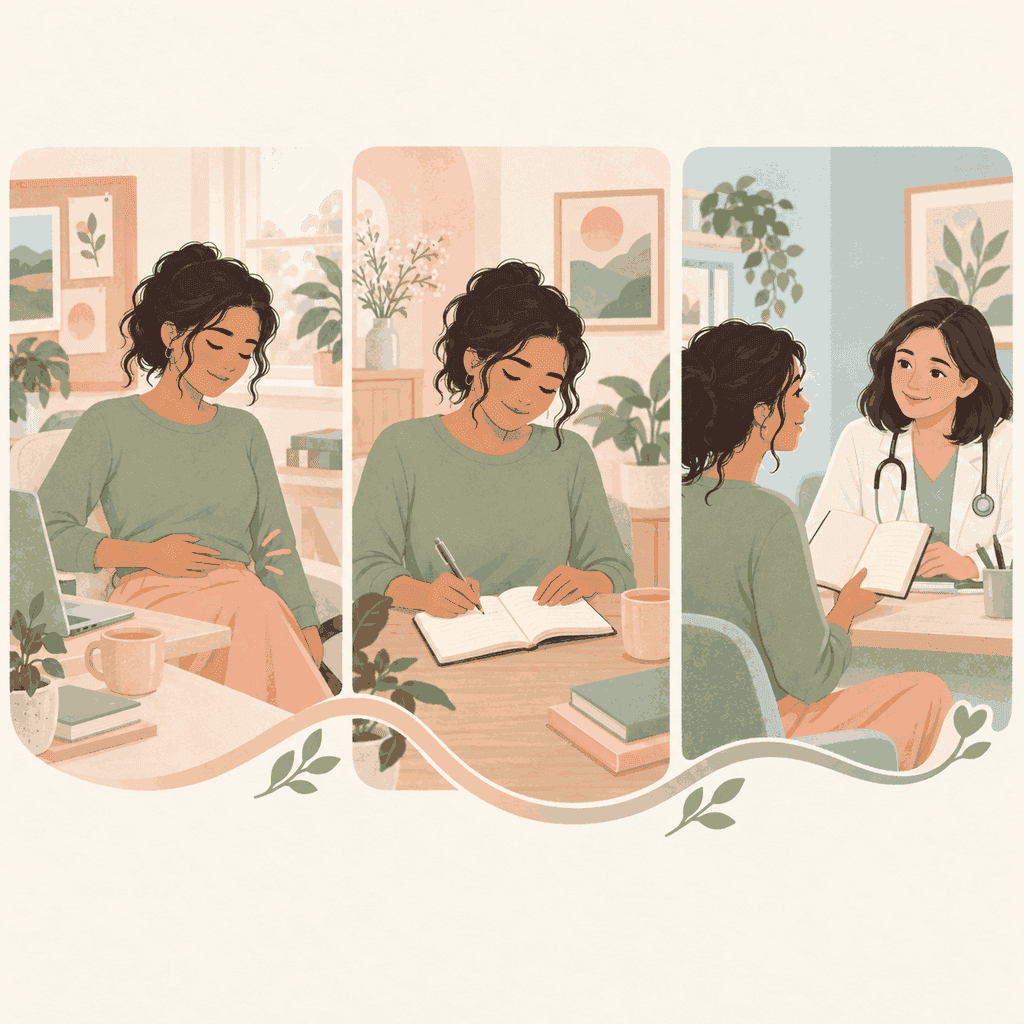
From left to right: noticing a cramp between periods; writing it down; showing the notes to a doctor.
Every day, in under a minute
- Your pain from 0 to 10. Write 0 on pain-free days too, so the gaps show.
- Your cycle day, and whether you are bleeding, spotting or not bleeding.
- Any pregnancy test and its result.
When a cramp happens
ACOG suggests these points for a pain journal (ACOG):
- The time of day, and whether it came before, during or after eating, peeing, a bowel movement, sex, exercise or sleep.
- What it feels like: a sharp stab or a dull ache, in waves or steady.
- How long it lasts and how strong it is.
- Where it is: one place or a wide area, and whether it is always in the same place.
- What makes it better or worse, and any medicine you took.
Also note what the pain stopped you doing, such as work or plans you cancelled. The RCOG guideline says this helps your doctor measure how you are doing over time (RCOG).
Once a week, in ten minutes
- Count the days with pain but no bleeding.
- Look at which cycle days they fell on. Pain on one side about 14 days before a period can fit ovulation (NHS). Pain throughout the month is worth raising as a possible sign of endometriosis (ACOG).
- Check for links with food, your bowels, your bladder or sex.
- Add any change in contraception, a new medicine, or an illness.
After 2 to 3 cycles
Take the record to your doctor. Start with one sentence, such as: "I have cramps on about 8 days a month when I am not bleeding, mostly low on the left, and they stop me going to work twice a month." Our guide to a pain diary for your doctor has more on how to share it.
Endolog is a pain and symptom diary app for this. You log pain on any day, with or without bleeding, plus where it is and how bad it is. Your doctor then sees a record of the pattern, so you do not have to rely on memory in a short appointment.
Frequently asked questions
Why do I have lower cramps but no period?
The common causes are early pregnancy, ovulation, an ovarian cyst, endometriosis, adenomyosis, constipation or IBS, a bladder problem such as a UTI, tight pelvic muscles, and an infection. If you could be pregnant, take a pregnancy test first. Then note when the cramps come and what else happens with them.
Can I have cramps but no period and not be pregnant?
Yes. Many causes on this page have nothing to do with pregnancy. A negative test is less reliable than a positive one, so the NHS says to test again after a few days if you still think you could be pregnant, and to see a doctor if the second test is negative and your period has not come (NHS).
Can endometriosis cause cramps when I am not on my period?
Yes. ACOG says pain throughout the month or during sex can point to endometriosis (ACOG). A diary of pain on days without bleeding helps your doctor see this pattern.
When should I see a doctor about cramps without a period?
Get help right away for severe pain, fainting, shoulder tip pain, heavy bleeding, or pain with a positive pregnancy test. See a doctor soon if the pain keeps coming back or does not go away, or if you have a high temperature, you feel sick, you lose weight without trying, or you have changes when you pee or poo (NHS).
This article is for general information. It does not replace care from a doctor. If you think you have an emergency, call 911 in the US, or 999 in the UK.
Sources
- Pelvic pain, NHS
- Doing a pregnancy test, NHS
- Ovulation pain, NHS
- Chronic Pelvic Pain: frequently asked questions, American College of Obstetricians and Gynecologists (ACOG)
- The Initial Management of Chronic Pelvic Pain (Green-top Guideline No. 41), Royal College of Obstetricians and Gynaecologists (RCOG)
- Endometriosis: diagnosis and management (NG73), National Institute for Health and Care Excellence (NICE)
This article is general information, not medical advice. Read how we write and check our articles in our editorial policy.
Explore this topic
Related articles
March 28, 2026
Why Does My Hip Hurt During Ovulation? Causes and Relief
Discover why you experience hip pain during ovulation. Learn about mittelschmerz, endometriosis, and how tracking your symptoms can help you find relief.

March 18, 2026
Can You Have Endometriosis and Adenomyosis Together?
Learn about the 42% comorbidity rate of endometriosis and adenomyosis, how symptoms overlap, and why tracking with Endolog helps get an accurate diagnosis.
March 11, 2026
Adenomyosis Symptoms: Heavy Periods, Pain, and What to Track
Understand core adenomyosis symptoms like heavy bleeding, knife-like pain, and an enlarged uterus. Learn how to track symptoms for a faster diagnosis.

February 8, 2026
Is My Fatigue Normal? The Endo Exhaustion Nobody Talks About
Struggling with debilitating endometriosis fatigue? Learn why chronic inflammation causes exhaustion and how to track symptoms for better medical support.
February 5, 2026
Ovulation Pain vs Endometriosis: Key Differences Explained
Learn the differences between mittelschmerz and endometriosis. Understand how tracking timing and severity can help you discuss pelvic pain with your doctor.
February 2, 2026
Bladder Endometriosis: Symptoms to Take Seriously
Understand bladder endometriosis symptoms like pain and urgency, and why tracking these cyclical patterns can be key to a diagnosis and better management.
